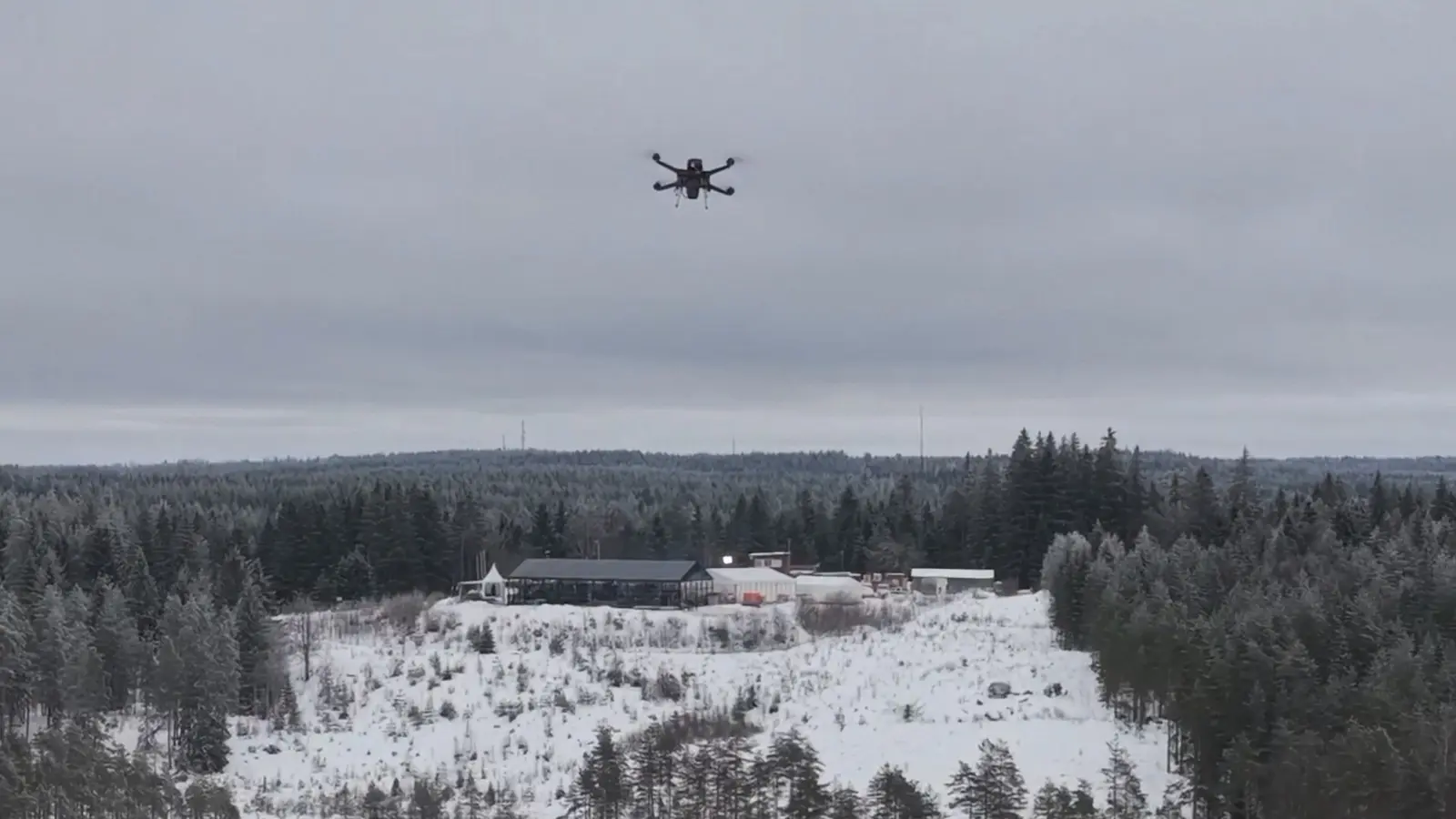
Precision Targeting via Onboard Intelligence
A Swedish technology firm has successfully tested an autonomous combat drone capable of identifying and engaging targets without human intervention. The system utilizes the Nvidia Jetson Orin Nano to process visual data locally. This breakthrough allows the aircraft to operate in environments where external communication or remote piloting is impossible.
Latest news
 Anker Unveils Playful 45W Charger With Animated Face Display
 Google Docs Web Version Still Missing Native Dark Mode
 Anthropic-Linked Vulnerability Exploited From China, Targets US and Japan
 Text‑Based AI Agents: Your New Digital Assistants
The drone relies on compact, non-frontier computer vision models to distinguish between various objects. By running these algorithms directly on the onboard hardware, the device eliminates the need for cloud processing or satellite links. This design ensures the drone remains functional even if adversaries employ electronic warfare to jam signals.
The integration of the Jetson Orin Nano represents a shift toward decentralized military robotics. Because the AI model is lightweight, the drone can maintain high performance without consuming excessive battery power. The system scans the terrain, classifies potential threats, and initiates strikes based on pre-programmed parameters.
Can Autonomous Systems Redefine Modern Warfare?
Engineers focused on creating a self-sufficient platform that requires zero human oversight once deployed. By removing the human-in-the-looprequirement, the drone can react to battlefield changes in milliseconds. This speed is critical for neutralizing fast-moving targets that might otherwise evade traditional remote-controlled systems.
The capability to operate in total radio silence provides a significant tactical advantage. Traditional drones are often vulnerable to signal interception or GPS spoofing. This new platform bypasses those risks by functioning as a closed-loop system, making it nearly invisible to conventional electronic detection methods.
As these autonomous tools become more accessible, military doctrine will likely evolve to account for decentralized strike capabilities. While the technology promises increased efficiency, it also raises complex questions regarding accountability and the ethics of machine-led engagement. Future developments will focus on refining object recognition accuracy to prevent collateral damage in complex urban environments.
Frequently Asked Questions
What hardware powers the drone's decision-making process? The drone uses the Nvidia Jetson Orin Nano, a compact computing module designed for edge AI applications. This hardware allows the aircraft to process visual data locally without needing external servers.
Does the drone require a constant internet connection? No, the system is designed for complete autonomy. It does not rely on external communications, GPS, or remote pilot input, making it immune to signal jamming.
How does the drone identify its targets? It utilizes specialized computer vision models that scan and classify objects in real-time. The onboard AI matches these observations against programmed criteria to select and engage targets independently.
Comments
Leave a comment