AI as the Catalyst for Consolidation
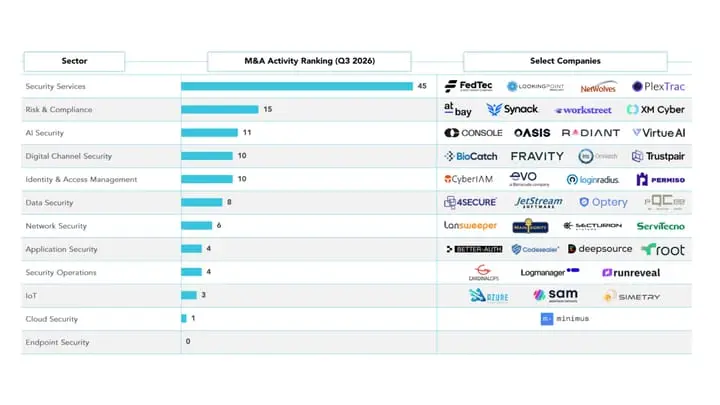
The past year has seen a surge in mergers and acquisitions within the cybersecurity sector, with 117 deals announced across the globe. Companies are racing to acquire advanced AI tools, threat‑intelligence platforms, and cloud‑security solutions to stay ahead of evolving cyber threats.
Latest news
 Corsair Vengeance DDR5-6000 Kit Offers Ideal Speed for AMD Builds
 Hide.me VPN releases major Android update
 Hackers launch massive PHP2Shell attack wave
 Googlebooks are not yet ready for prime time
The trend reflects a growing belief that artificial intelligence is the key to detecting and neutralizing attacks faster than ever before. Firms are investing heavily to integrate AI capabilities into their product portfolios, hoping to offer customers a more proactive defense posture.
How the Deal Flow Is Shaping the Market?
Industry analysts note that the rapid advancement of AI has lowered the barrier to entry for sophisticated threat detection. Smaller startups that have developed niche AI‑driven analytics are now attractive acquisition targets for larger vendors looking to expand their capabilities quickly. „AI can process terabytes of log data in real time, something that would take a human analyst days,” says a leading cybersecurity researcher. This speed advantage is driving larger companies to acquire these startups to avoid falling behind.
In addition, regulatory pressure around data privacy has pushed firms to adopt AI for automated compliance monitoring. The cost of building such systems from scratch is prohibitive, so buying ready‑made solutions becomes a practical alternative. The result is a flurry of deals that combine traditional security offerings with cutting‑edge AI technology.
What Will Smaller Companies Face?
The sheer volume of transactions indicates a maturing market where consolidation is becoming a standard growth strategy. Mid‑market players are often the focus of these deals, as they offer a balance between innovation and scale. The deals span a range of geographies, but the United States and Europe dominate, reflecting the concentration of both capital and talent in those regions.
Financially, the average transaction size has risen by 15% compared to the previous year, suggesting that investors are willing to pay a premium for AI capabilities. This premium is justified by the expectation that AI will reduce time‑to‑detect and time‑to‑respond metrics for customers, translating into higher subscription revenues for the acquirers.
Outlook: A Consolidated, AI‑Powered Future
Smaller firms that develop AI‑driven security tools may find themselves either bought out or forced to partner with larger vendors to survive. „It’s a survival of the smartest,” notes a venture capitalist who has backed several AI security startups. Those that fail to secure a deal risk being outpaced by competitors who can bundle AI into a broader suite of services.
Conversely, the consolidation trend offers a pathway for smaller companies to scale quickly. By becoming part of a larger organization, they gain access to resources, global distribution channels, and a larger customer base. This can accelerate product development cycles and improve market penetration.
Frequently Asked Questions
The cybersecurity landscape is likely to become increasingly consolidated, with AI at its core. Companies that fail to integrate AI capabilities risk obsolescence, while those that acquire or develop such technology stand to gain a competitive edge. The next wave of M&A may focus on specialized AI functions such as behavioral analytics, automated threat hunting, and predictive risk modeling.
Investors will continue to monitor the ROI of AI acquisitions, particularly their impact on customer retention and upsell opportunities. As cyber threats grow more sophisticated, the demand for AI‑enhanced security solutions will only intensify, ensuring that M&A activity remains robust in the coming years.
Comments
Leave a comment