How Does GPU Acceleration Improve Oscilloscope Functionality
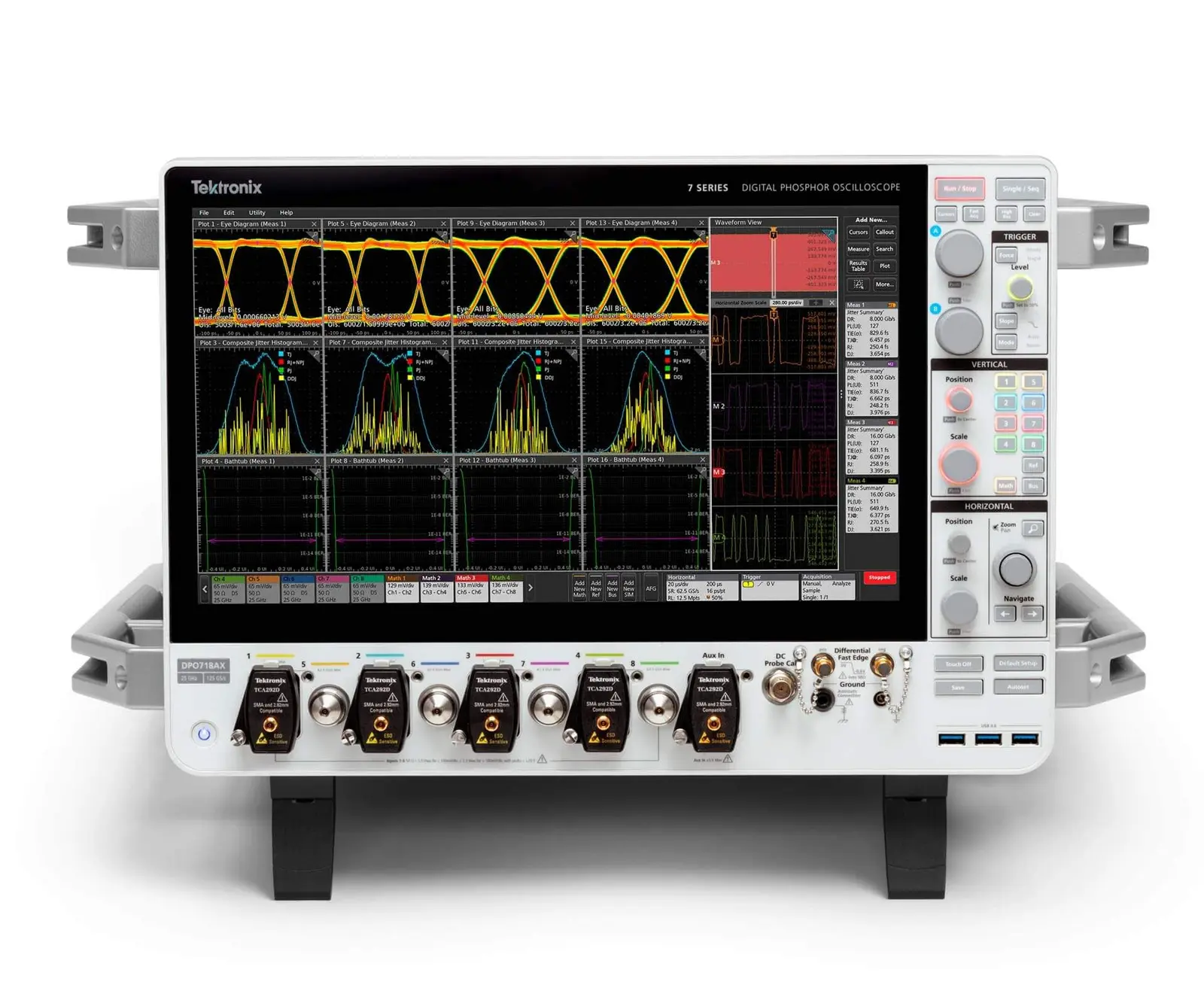
Tektronix has introduced the DPO718AX oscilloscope, a 38-kilogram instrument featuring an AMD EPYC 12-core CPU, Nvidia T1000 GPU, 96GB of RAM, and a 1.6TB NVMe SSD. Announced on September 24, 2026, the device runs Windows 10 and includes a 15.6-inch Full HD display. Priced at $308,000, it is designed for advanced signal analysis in research and development environments requiring extreme precision and processing power.
Latest news
 Minisforum Unveils High‑End Ryzen AI Max+ PRO 495 Workstation
 NASA Eyes Revival of SR‑71 Blackbird
 My Home Wi‑Fi Was Crowded by 14 Neighbors—A Free App Helped Me Find a Clear Channel
 YouTube is tightening rules for low-effort Shorts
The core innovation lies in its eight synchronized 25GHz channels, enabling simultaneous capture of high-speed electronic signals with minimal timing skew. This capability is critical for validating next-generation communication systems, including 6G prototypes and high-speed serial interfaces. The integrated workstation-class hardware allows real-time processing of massive data sets directly on the oscilloscope, reducing reliance on external computers. Engineers can run complex analysis software, machine learning algorithms, or custom scripts without latency, streamlining workflows in labs where signal integrity and timing accuracy are paramount.
What Challenges Might Users Face with Such a Complex Instrument
The Nvidia T1000 GPU enables parallel processing of waveform data, significantly accelerating tasks like Fourier transforms, jitter analysis, and protocol decoding. By offloading these computations from the CPU, the oscilloscope maintains responsiveness even when handling long-record-length captures at high sample rates. This architecture supports advanced features such as live eye diagram generation and automated mask testing, which are essential for debugging high-bandwidth designs. Tektronix states that the GPU integration reduces analysis time by up to 70% compared to traditional CPU-only systems, particularly in applications involving PCIe 6.0 or USB4 validation.
Despite its capabilities, the DPO718AX presents a steep learning curve for teams accustomed to conventional oscilloscopes. The Windows 10 environment, while familiar, introduces potential software compatibility and security considerations in regulated industries. Additionally, the instrument’s weight and power requirements necessitate reinforced benches and dedicated cooling. Training and calibration protocols must be updated to leverage its full potential. Tektronix offers optional training modules and remote diagnostics to assist adoption, emphasizing that the system is intended for expert users in aerospace, semiconductor, and defense sectors where performance justifies the investment.
What operating system does the DPO718AX use? The oscilloscope runs Windows 10, providing a familiar interface for running standard analysis tools and custom applications directly on the device.
Frequently Asked Questions
How much does the Tektronix DPO718AX weigh? The instrument has a mass of 38 kilograms, reflecting its rugged build and integrated high-performance computing components.
Can the oscilloscope function without an external computer? Yes, thanks to its internal CPU, GPU, SSD, and RAM, the DPO718AX can operate as a standalone workstation for signal acquisition and analysis.
Comments
Leave a comment