Why 192GB of Memory Matters for Local AI
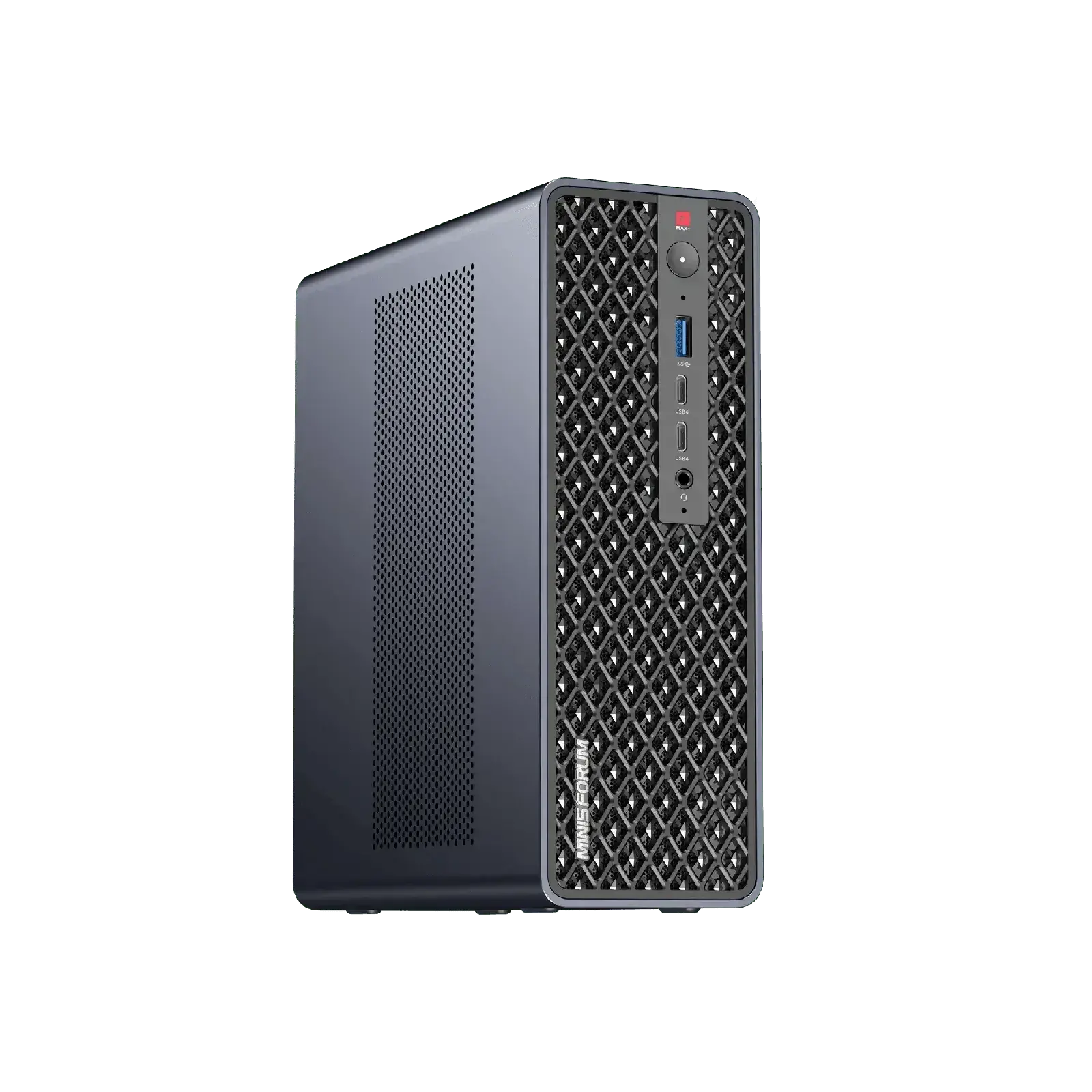
Minisforum has introduced the MS-S1 MAX-P495, a compact AI workstation priced at $7,399. The device launches in late 2026 and targets professional developers. It combines high-speed processing power with an unusually large memory footprint for a mini PC. The system aims to handle complex local AI workloads without cloud dependency.
Latest news
 Anthropic Unveils Claude Duet For Background AI Tasks
 Eiliko Creator Hires Independent Security Firm After Flawy Robot Charm Exposed
 Musk Compares Optimus Robot Training to Raising a Toddler
 Atari VCS Software Store Closes in February 2027
The hardware configuration prioritizes raw throughput for artificial intelligence tasks. The processor delivers sixteen cores operating at a maximum frequency of 5.2 GHz. This speed ensures rapid execution of neural network inference and training jobs. The integrated AI engine provides 55 TOPS of performance. This metric indicates strong capability for running large language models locally. However, the most significant specification is the 192GB of system memory. This capacity far exceeds standard offerings in the mini PC market.
Memory capacity often becomes the primary bottleneck in AI development. Large language models require substantial RAM to load weights efficiently. Standard workstations typically ship with 32GB or 64GB of memory. These limits restrict the size of models that can run simultaneously. The MS-S1 MAX-P495 removes this constraint entirely. Users can load massive datasets directly into memory. This allows for faster iteration cycles during model fine-tuning. Developers can test multiple architectures without swapping data to slower storage drives. The extra bandwidth reduces latency in data-intensive applications.
Is the Premium Price Justified for Niche Users?
The design philosophy suggests a shift in how professionals approach local computing. Cloud services remain popular but carry recurring costs. Privacy concerns also drive many organizations toward on-premise solutions. A machine with nearly 200GB of RAM enables complex simulations. Researchers can run concurrent processes without resource contention. The high clock speed complements the memory bandwidth effectively. Together, these components create a balanced system for heavy computational loads. The compact form factor makes it suitable for dense server racks.
The $7,399 price tag positions the unit firmly in the premium segment. Competitors usually offer lower memory options at significantly lower prices. Buyers must weigh the cost against their specific workflow requirements. For general computing, this system is likely overkill. However, for dedicated AI engineers, the value proposition changes. The ability to run larger models locally saves time. It also eliminates monthly subscription fees for cloud GPU access. The total cost of ownership improves over several years. Early adopters will likely focus on specialized research projects. They may find the investment worthwhile compared to renting cloud instances.
The launch marks a clear trend in the mini PC industry. Manufacturers are moving beyond basic productivity machines. They now target serious data science workflows. This expansion opens new markets for compact hardware vendors. Future iterations may include even higher memory configurations. The success of this model could influence other brands. They might follow suit with similar high-memory options. The AI sector continues to grow rapidly. Demand for powerful local hardware will likely increase further.
Frequently Asked Questions
How much memory does the MS-S1 MAX-P495 include? The system ships with 192GB of RAM. This amount is significantly higher than typical mini PCs. It supports large AI model loading.
What is the AI performance rating of the processor? The integrated engine delivers 55 TOPS. This figure measures trillion operations per second. It indicates strong local AI inference capability.
Who is the ideal buyer for this workstation? Professional AI developers and data scientists benefit most. They need large memory pools for local model training. General users may find it excessive.
Comments
Leave a comment