A New Era for Shape-Shifting Robots
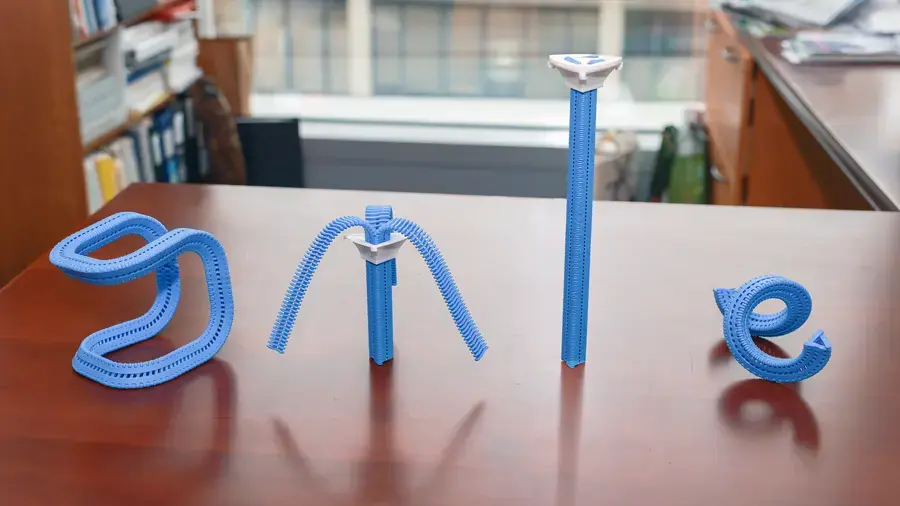
Researchers at MIT have brought a 40-year-old concept to life using 3D printing, creating a shape-shifting robot component. The team developed a three-sided zipper that can rapidly transform floppy structures into rigid ones. This innovation was achieved through the use of 3D printing technology.
Latest news
 Anker Unveils Playful 45W Charger With Animated Face Display
 Google Docs Web Version Still Missing Native Dark Mode
 Anthropic-Linked Vulnerability Exploited From China, Targets US and Japan
 Text‑Based AI Agents: Your New Digital Assistants
The ' Y-Zipper', as it's called, is a 3D-printed mechanism that can turn flexible tentacle-like structures into stiff beams in a matter of seconds. This is made possible by the unique triangular design of the zipper, which allows for the simultaneous closure of three sides. The researchers' work has opened up new possibilities for the creation of deployable structures and robots that can change shape as needed.
Can 3D Printing Revolutionize Robotics?
The use of 3D printing has been instrumental in bringing this concept to life, allowing for the creation of complex geometries that would be difficult or impossible to produce using traditional manufacturing methods. The Y-Zipper's potential applications are vast, ranging from robotics and aerospace to biomedical devices and beyond.
The development of the Y-Zipper is expected to have significant consequences for the field of robotics, enabling the creation of more versatile and adaptable machines. As the technology continues to evolve, we can expect to see new and innovative applications emerge.
What is the Y-Zipper? The Y-Zipper is a 3D-printed, three-sided zipper mechanism that can transform floppy structures into rigid ones. It's designed for use in shape-shifting robots and deployable structures.
Frequently Asked Questions
How does the Y-Zipper work? The Y-Zipper works by simultaneously closing three sides of a triangular structure, allowing it to change from a flexible to a rigid state.
What are the potential applications of the Y-Zipper? The Y-Zipper has a wide range of potential applications, including robotics, aerospace, and biomedical devices.
Comments
Leave a comment