How High-Altitude Platforms Could Transform Emergency Response
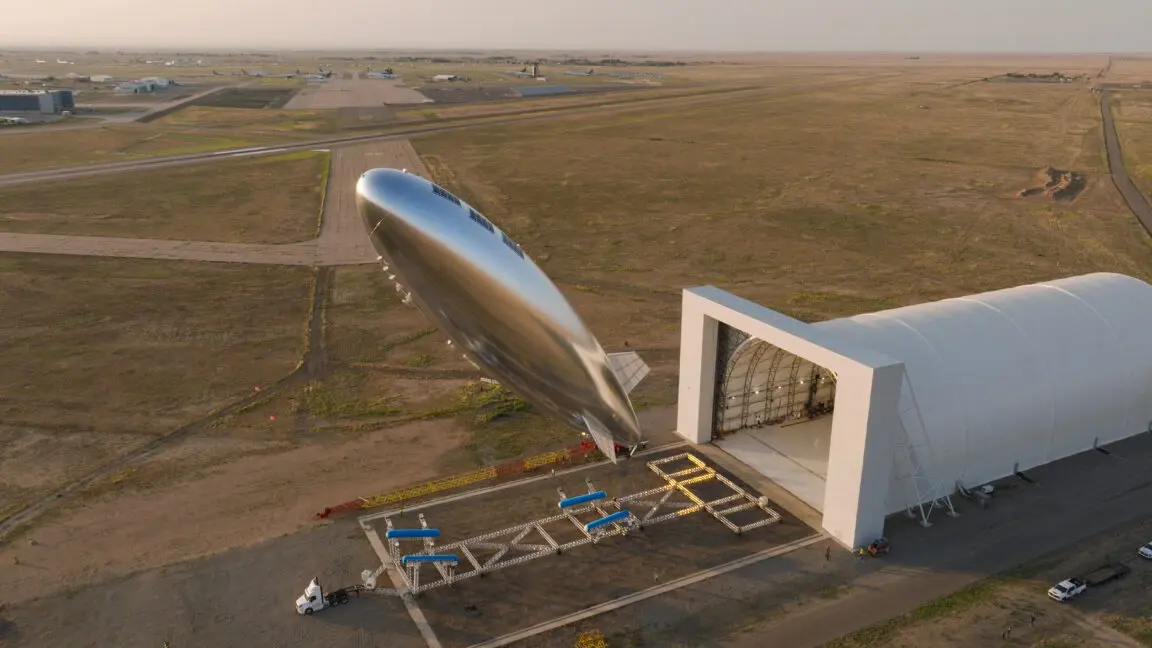
An experimental high-altitude airship operated by Sceye completed a round-trip flight from New Mexico to Japan and back, marking a significant milestone in airborne communications technology. The journey, which retraced part of the historic route taken by the Graf Zeppelin nearly a century ago, demonstrated the potential of stratospheric platforms to provide emergency connectivity in disaster zones where ground infrastructure is damaged or unavailable.
Latest news
 Smart TVs frequently lose their Wi-Fi connection, leaving viewers staring at a spinning loading icon
 Why Ignoring Car Software Updates Is Risky
 Apple's foldable iPhone Duo introduces dual-display multitasking capabilities
 FCC Weighs Reciprocal Limits on Foreign Satellite Firms
The airship, designed to operate at altitudes above 60,000 feet, carried payloads simulating cellular network equipment during the flight. Engineers monitored its ability to maintain stable positioning and transmit signals over vast distances, evaluating how such systems could be rapidly deployed after hurricanes, earthquakes, or other crises. Unlike satellites, these platforms can be launched and recovered more easily, offering a flexible alternative for temporary network restoration.
Sceye’s technology relies on helium-filled envelopes and solar-electric propulsion to remain airborne for extended periods. During testing, the airship successfully relayed data between ground stations, simulating how it could connect first responders, relief agencies, and affected communities when terrestrial networks fail. The flight path included traversing diverse weather patterns and air traffic zones, validating operational resilience across international airspace.
Can Stratospheric Airships Replace Traditional Disaster Comms?
Officials noted that the mission’s value lay not in distance alone but in proving sustained station-keeping and signal integrity under real-world conditions. „We’re not just flying for endurance,” said a company engineer involved in the project. „We’re validating that these platforms can act as reliable, sky-based cell towers when they’re needed most.” Data collected will inform future designs aimed at improving battery life, payload capacity, and autonomous navigation.
While promising, the technology still faces challenges including regulatory approval for persistent flight over populated areas, all-weather durability, and cost-effective scaling. Sceye plans additional test flights to refine control systems and expand payload capabilities, with goals toward eventual deployment in partnership with emergency management agencies. Success could mean faster restoration of critical communications after disasters, reducing reliance on fragile ground-based towers.
Frequently Asked Questions
How long can Sceye’s airship stay airborne? The airship is designed for flights lasting weeks or even months, powered by solar panels and energy storage systems that allow continuous operation day and night.
What altitude does it operate at? It flies in the stratosphere, typically above 60,000 feet, where it avoids most weather and commercial air traffic while maintaining wide-line-of-sight coverage.
Is this technology already being used in real disasters? Not yet, but the recent trans-Pacific test brings it closer to operational readiness, with future trials focused on simulating actual emergency scenarios.
Comments
Leave a comment