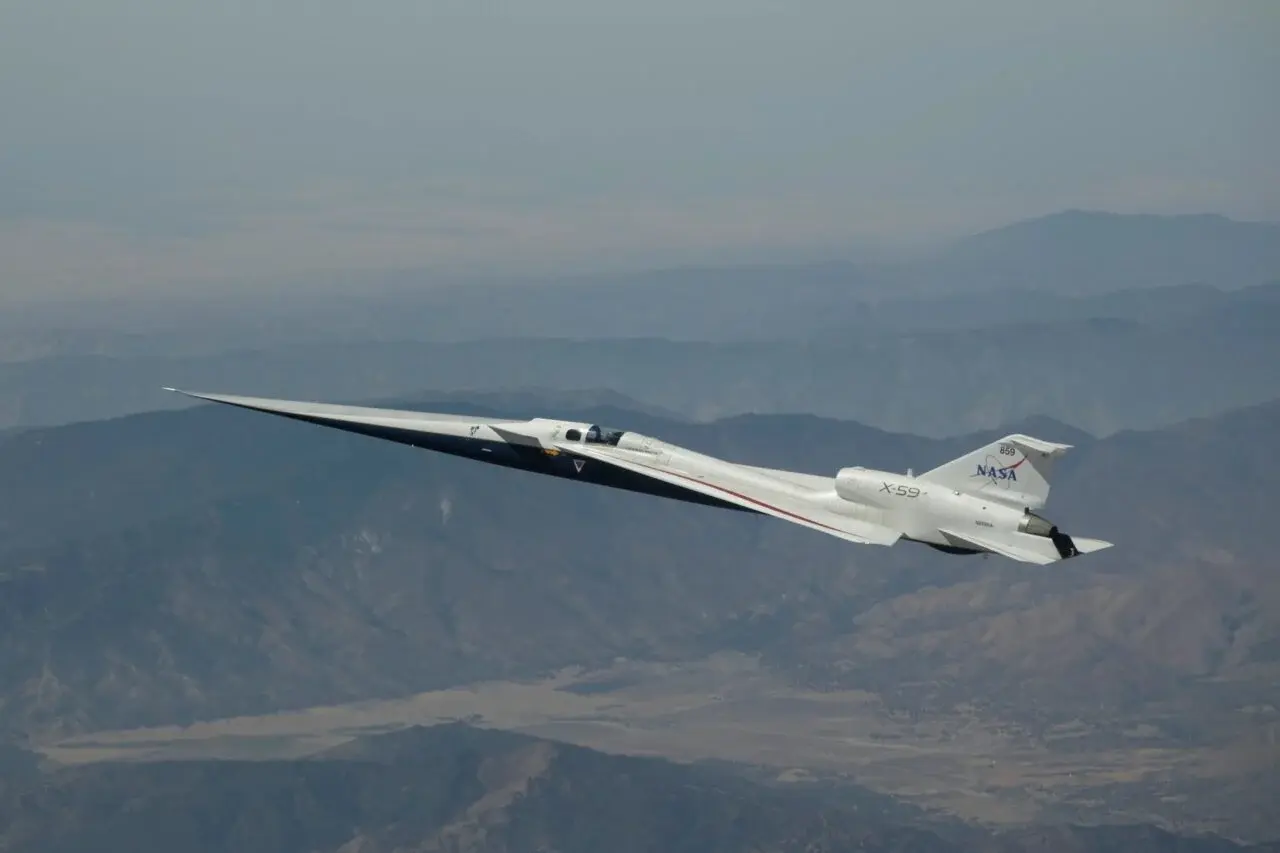
How the X-59 Reduces Sonic Boom Noise
NASA’s experimental X-59 supersonic jet completed its 25th flight on August 21, taking off from the Armstrong Flight Research Center in Edwards, California. The aircraft flew for 72 minutes, adding to its growing flight history as engineers prepare to measure how quiet it really is during upcoming acoustic tests later this year.
Latest news
 Minisforum Unveils High‑End Ryzen AI Max+ PRO 495 Workstation
 NASA Eyes Revival of SR‑71 Blackbird
 My Home Wi‑Fi Was Crowded by 14 Neighbors—A Free App Helped Me Find a Clear Channel
 YouTube is tightening rules for low-effort Shorts
The X-59 is designed to fly faster than sound without producing the loud sonic boom typically associated with supersonic travel. Instead, it aims to generate a softer „thump” that could allow supersonic flight over land—currently banned due to noise concerns. This latest flight was part of a series of successful test runs validating the jet’s systems and performance.
What Will the Noise Tests Involve?
The X-59’s unique shape, including a long tapered nose and carefully engineered wings, helps spread out shockwaves so they don’t combine into a loud boom. Engineers have used wind tunnel tests and computer simulations to refine the design, aiming for a perceived sound level of about 75 decibels—comparable to closing a car door. Flight tests are now focusing on verifying these predictions in real-world conditions.
Later this year, NASA plans to fly the X-59 over populated areas to measure how the sound is heard on the ground. Microphone arrays will record the noise levels, and residents may be surveyed about what they hear. The data will help determine whether the jet’s quiet supersonic technology meets the threshold needed to potentially change regulations and enable future commercial supersonic travel over land.
What makes the X-59 different from other supersonic jets? Unlike older designs like the Concorde, the X-59 is shaped to prevent shockwaves from merging into a loud boom, instead producing a much softer thump.
Frequently Asked Questions
When will the noise testing begin? NASA plans to conduct the community overflight noise tests later this year, though exact dates have not been announced.
Why is reducing sonic boom important for aviation? Current regulations prohibit supersonic flight over land due to noise; proving the X-59 is quiet enough could lead to new rules and faster commercial air travel.
Comments
Leave a comment