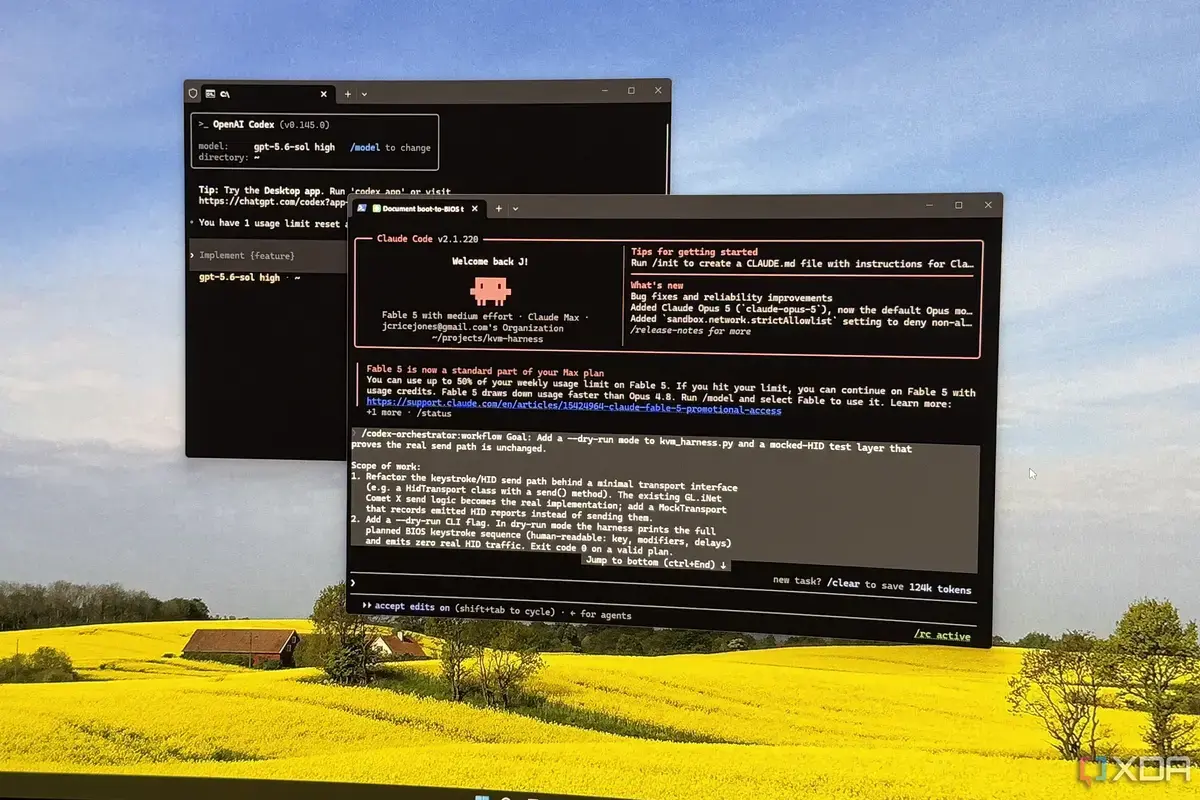
Orchestrating AI Agents: How Claude Directs Codex
In July 2026, technology journalist Joe Rice‑Jones unveiled a new development method that pairs Anthropic’s Claude with OpenAI’s Codex agents. The hybrid system, tested on a freelance basis, promises faster code generation while keeping human oversight intact. It marks a shift toward AI‑driven orchestration in everyday programming tasks.
Latest news
 Bitdefender Unveils Free AI Guardian for Mac to Safeguard Against Rogue AI Agents
 DigitalBridge to become SoftBank’s third‑party infrastructure partner
 Early Prime Day Deals Hit Apple Products, Including AirPods, iPads, and MacBook Air
 John Ternus Steps Into Hands-On Role Leading Apple's Design Teams
Rice‑Jones discovered the workflow while tackling a complex web‑app prototype. Claude acted as a conductor, assigning specific coding subtasks to multiple Codex instances. Each agent produced snippets, which Claude then reviewed and merged. The process reduced manual debugging time by roughly 30 percent, according to the writer’s own metrics. By letting the AI verify its own output, developers can focus on higher‑level design decisions.
Can AI Verify Its Own Code Effectively?
Claude receives a high‑level description of the desired feature and breaks it into discrete modules. It then dispatches each module to a dedicated Codex agent, which writes the corresponding code block. After generation, Claude runs a quick static analysis, flags anomalies, and requests revisions if needed. The journalist notes that this „human‑in‑the‑loop” loop feels like a collaborative sprint, with the AI handling repetitive logic while the developer guides overall architecture. The system also logs every decision, creating a traceable audit trail for future reference.
The biggest question is whether an AI can reliably validate its own work. Rice‑Jones reports that Claude’s built‑in verification step catches about 85 percent of syntax errors before they reach the developer. However, deeper logical flaws still require manual review. „Claude is a smart assistant, not a replacement for critical thinking,” the writer cautions. The approach encourages a „trust but verify” mindset, where the AI’s confidence scores inform the developer’s next move. Early adopters claim the method cuts iteration cycles, but they also stress the need for continuous human oversight.
The hybrid workflow could reshape how software teams allocate tasks. By automating routine coding and preliminary checks, developers may redirect effort toward architecture, security, and user experience. As AI models improve, the verification layer may become more sophisticated, potentially narrowing the gap between machine‑generated and human‑crafted code. For now, the combination of Claude and Codex offers a pragmatic boost to productivity without abandoning quality control.
Frequently Asked Questions
What platforms support Claude‑orchestrated Codex agents? The setup runs on standard cloud environments that host both Anthropic and OpenAI APIs, requiring only API keys and modest compute resources.
Is the workflow suitable for large codebases? It works best for modular projects where tasks can be isolated. Complex, monolithic systems may need additional segmentation before AI orchestration.
Comments
Leave a comment