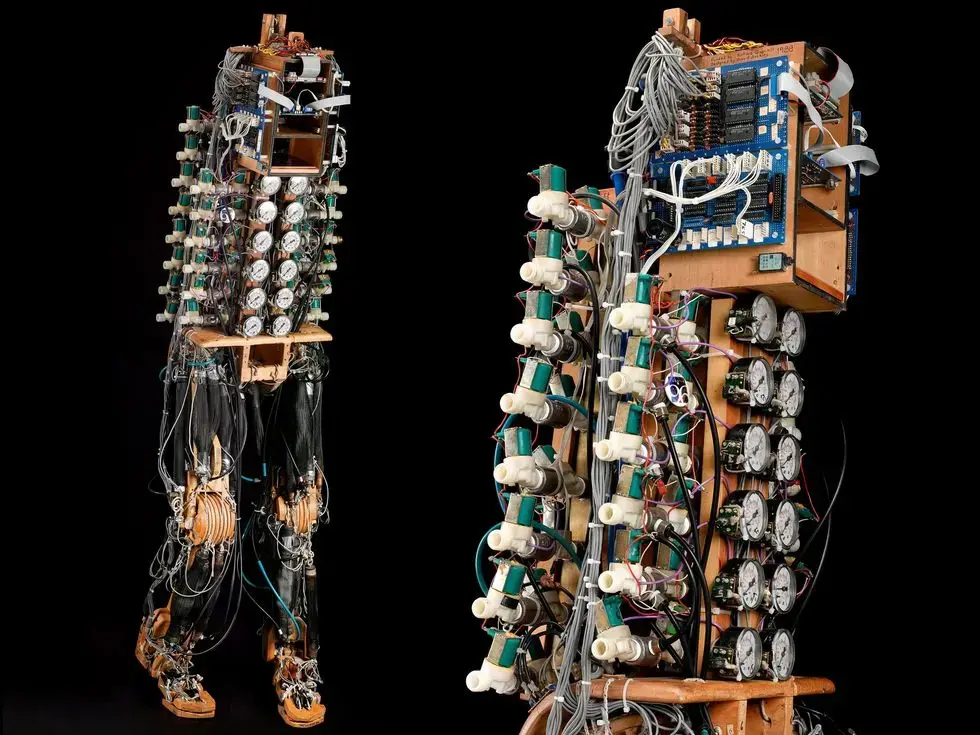
A Novel Approach to Robotics
Richard Greenhill, a British photographer, started building a life-size humanoid robot in 1987 at Intergalactic Robots. He aimed to create a machine that could carry luggage. Despite having no robotics training, Greenhill was fascinated by the field.
Latest news
 Surge in AI-Generated Child Sexual Abuse Material Reported by Watchdog
 Apple Intelligence Faces Extended Delay for European Union Customers
 Secure Connections: How eSIMs Could Protect Business Travelers
 Florida Woman Arrested After AI Chatbot Reveals Violent Intentions
Greenhill couldn't convince his colleagues to build the robot, so he took on the project himself. He used pneumatic air-musclesinstead of traditional motors. This innovative approach allowed him to create a more lifelike robot.
Greenhill's robot was designed to mimic human movement. The pneumatic air-musclesprovided a more natural gait. This was a significant departure from traditional robotics, which often relied on stiff motors.
Can Pneumatic Robots Replace Traditional Machines?
The robot's design was influenced by Greenhill's background in photography. He was accustomed to experimenting with different techniques. This skillset served him well in his robotics endeavors.
The use of pneumatic air-musclespresented several advantages. The robot was more flexible and had a more human-like movement. However, it also had its limitations. The robot's control system was complex, and it required a significant amount of compressed air.
Despite these challenges, Greenhill's robot demonstrated the potential of pneumatic robots. They could be used in applications where a more natural movement was required.
Frequently Asked Questions
Q: What inspired Richard Greenhill to build a humanoid robot? A: Greenhill was fascinated by robotics and wanted to create a machine that could perform useful tasks. He was inspired by the potential of robots to assist humans.
Q: How did Greenhill's background in photography influence his robotics work? A: Greenhill's experience with experimentation and technique served him well in his robotics endeavors. He was able to apply his creative problem-solving skills to the field.
Q: What are the advantages of using pneumatic air-musclesin robotics? A: Pneumatic air-musclesprovide a more natural movement and flexibility. They can be used to create robots that mimic human movement more closely.
Comments
Leave a comment