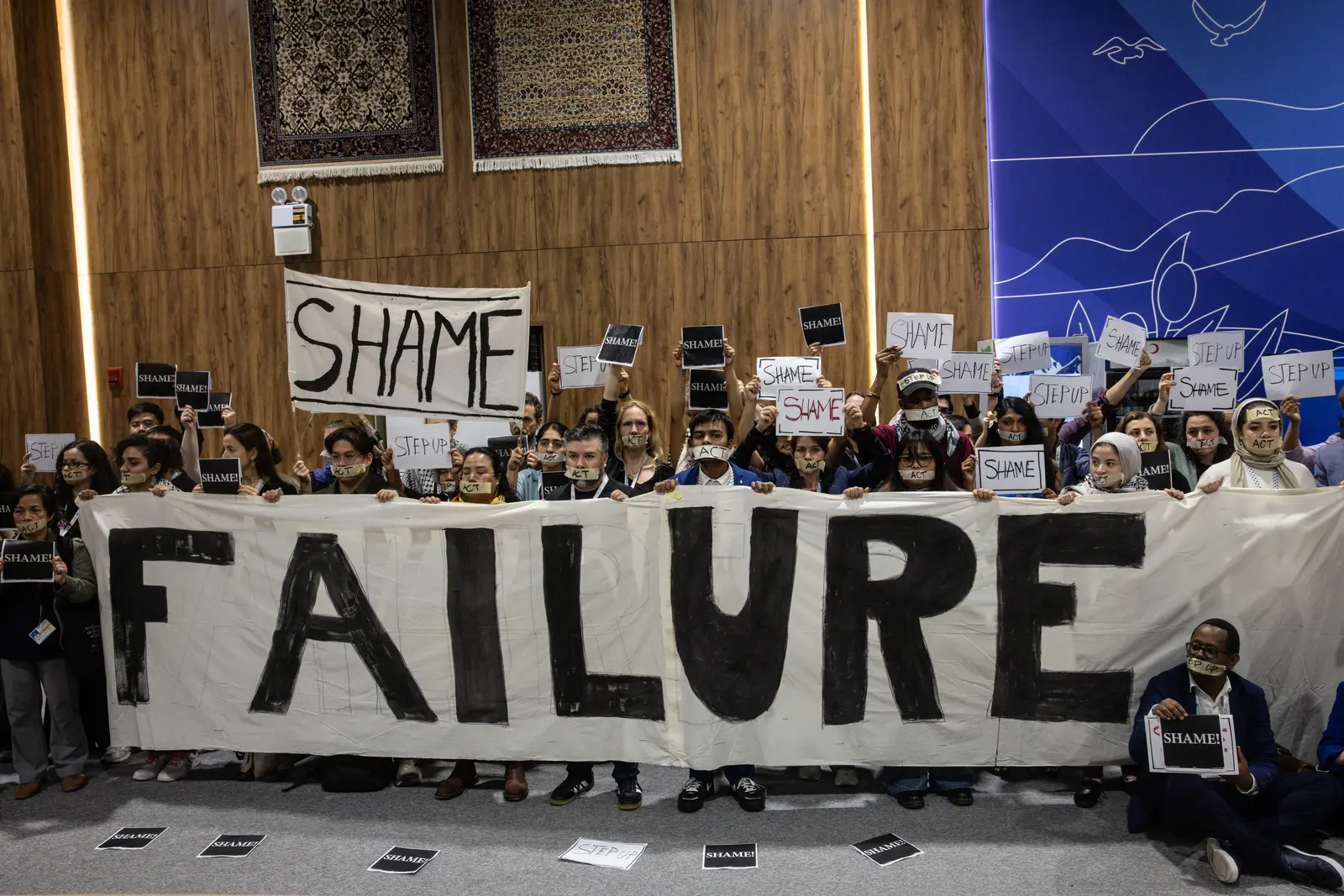
A chaotic close in Antalya
The UN climate summit, known as COP31, ended Sunday in Antalya, Turkey. It left behind a mood of disappointment and diplomatic chaos. Delegates from around the world faced a complex new challenge: the ecological impact of AI-powered data centers. This issue completely shifted the negotiation dynamics. Digital infrastructure became a central actor in the fight against climate change.
Latest news
 Smart TVs frequently lose their Wi-Fi connection, leaving viewers staring at a spinning loading icon
 Why Ignoring Car Software Updates Is Risky
 Apple's foldable iPhone Duo introduces dual-display multitasking capabilities
 FCC Weighs Reciprocal Limits on Foreign Satellite Firms
The electrification paradox
The clean energy revolution relies on electrifying the entire global economy. But the exponential growth in data center energy demand complicates this goal. Each year, participants try to honor the 2015 Paris Climate Agreement. It aims to limit global warming. Preventing extreme weather, coastal floods, and droughts requires drastic cuts in greenhouse gas emissions. Society must switch homes and vehicles from oil and gas to solar and wind power.
One of the most anticipated outcomes was an agreement to raise electricity's share of global energy consumption to 35% by 2035. Currently, it sits at about 20%. However, this target becomes much harder to reach when electricity demand explodes due to data centers. This situation turned the rush to build new AI data centers into a climate issue in itself. It sits alongside discussions on transitioning from fossil fuels to renewables.
Missing the 35% target
Chris Bowen, Australia’s Minister for Climate Change and Energy and COP31 negotiator, told Politico at the summit’s start: „Every climate minister in the world is thinking about this. It is part of the broader energy transition, so it will be unavoidable in discussions.” Although this was the longest COP to date, with debates running two days over schedule, official talks collapsed spectacularly. Delegates failed to gather enough support to pass the „agreement” they had negotiated for two weeks.
Officials acknowledge the challenge
The European Union, the UK, and several small, climate-vulnerable nations rejected the agreement as too weak. The document omitted the term „fossil fuels,” even though many states demanded stronger commitments to phase out oil, coal, and gas. The United States, the epicenter of data center construction and the largest historical climate polluter, was absent. Trump’s pro-fossil administration had withdrawn the country from the Paris Agreement (twice).
Major players absent or dissenting
With official talks failing and nations making only voluntary pledges on AI and electrification, environmental and humanitarian groups called this year’s COP „the worst” in history. To meet Paris targets, nations must cut greenhouse gas emissions by roughly half by 2030, before reaching net zero by mid-century.
Many tech companies made similar pledges in recent years, including Google, Microsoft, and Meta. Yet due to the AI boom, these goals have been set aside. Meta stated in its annual sustainability report, published Thursday, that it is „reassessing” its timeline to reach net zero emissions, focusing on AI. Meta reported a 45% year-on-year increase in climate pollution. Google and Microsoft carbon footprints are also rising, despite their climate pledges.
Voluntary pledges and corporate shifts
Data center electricity consumption is projected to double by 2030, according to an International Energy Agency forecast. Bruce Douglas, CEO of Global Renewables Alliance, told The Verge via email: „This is a huge climate risk: the increased energy demand from data centers is not yet sustainable, and the AI boom cannot be allowed to become a fossil fuel boom.” Data centers were „a key subject” at COP31, according to Douglas, whose organization co-hosted a panel on this issue during the event.
Energy demand set
In the United States, the country with the most data centers, energy sector emissions could rise by 42% by 2030. This is as utilities build more fossil fuel infrastructure to meet data center electricity demand, according to a recent Sierra Club analysis. A separate Harvard study recently found that US hyperscale data centers create more climate pollution than the country of Denmark.
US emissions may rise 42%
To stop data centers from generating more pollution, they should be powered by new renewable energy sources, Douglas argues. He adds that data centers now compete with all other consumers for grid connection, financing, and electricity generation capacity – and against more essential loads like heating, air conditioning, and transport electrification.
Many tech companies offset their electricity use through renewable energy purchases. But if they do not help build new green energy sources to meet their added electricity demand, they risk monopolizing limited renewable capacity. And if more fossil fuels cover the difference, total greenhouse gas emissions continue to rise.
Competing for green electrons
„Should new green electrons be used for air conditioning, electrification, or data centers?” Douglas asks. „In many cases, data centers offer higher prices than other consumers.”
Comments
Leave a comment