Exploitation Patterns and System Compromise
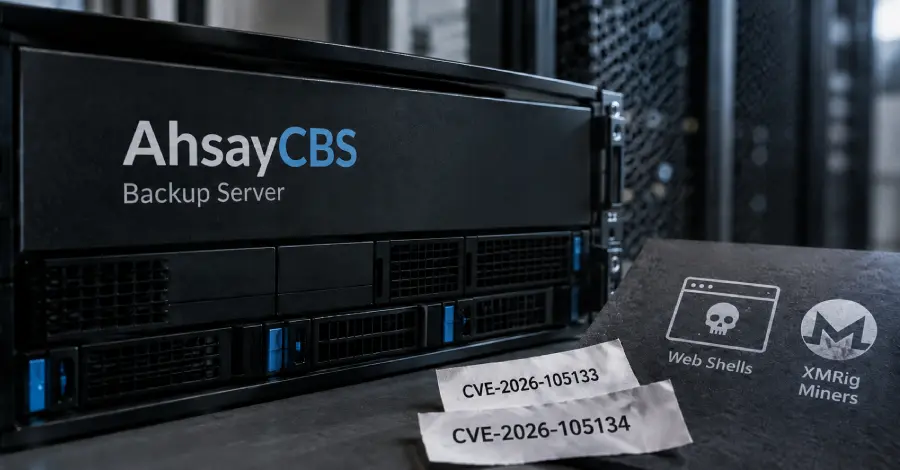
Ahsay Backup, headquartered in Singapore, has released critical software updates to resolve two severe security flaws within its AhsayCBS platform. These vulnerabilities have been actively exploited by malicious actors to deploy dangerous web shells and unauthorized XMRig cryptocurrency mining software on compromised systems, forcing the company to issue corrective patches this week.
Latest news
 Anthropic Unveils Claude Duet For Background AI Tasks
 Eiliko Creator Hires Independent Security Firm After Flawy Robot Charm Exposed
 Musk Compares Optimus Robot Training to Raising a Toddler
 Atari VCS Software Store Closes in February 2027
The security gaps, officially tracked as CVE-2026-105133 and CVE-2026-105134, were previously addressed with incomplete fixes that failed to fully secure the environment. Attackers successfully chained these two flaws together to bypass existing security controls. This allowed unauthorized parties to gain remote access and execute arbitrary code on servers running the backup software.
Once attackers gain entry through these chained vulnerabilities, they prioritize establishing persistence. The deployment of web shells allows intruders to maintain long-term access to the server infrastructure. By installing XMRig miners, the attackers utilize the victim's hardware resources to generate cryptocurrency, often leading to significant performance degradation and elevated operational costs for the affected organizations.
Are Your Backup Servers Currently at Risk?
The initial patches provided by the vendor were insufficient to neutralize the threat entirely. This failure highlights the importance of thorough vulnerability remediation. Security researchers noted that the persistence of the exploit forced the company to refine its code and release secondary updates to ensure the environment is fully hardened against further intrusion attempts.
System administrators using AhsayCBS must verify their software version immediately to ensure the latest security patches are applied. Failure to update leaves servers vulnerable to ongoing exploitation efforts by threat actors who are actively scanning for unpatched instances. Organizations should also conduct a thorough audit of their systems to check for unauthorized web shells or suspicious mining processes that may have been installed during the period of vulnerability.
Frequently Asked Questions
The ongoing exploitation of these flaws serves as a stark reminder of the risks associated with backup infrastructure. Because these servers often hold sensitive data, they remain high-value targets for cybercriminals. Swift application of vendor-provided updates is the only way to effectively close these security gaps and prevent further unauthorized access to critical corporate data.
What should administrators do if they find signs of a breach? Administrators should immediately isolate the affected server from the network and initiate an incident response protocol. This includes removing unauthorized web shells and performing a full forensic analysis to determine the extent of the data exposure.
Why were the previous patches considered incomplete? The initial updates failed to adequately address the underlying logic flaws that allowed the vulnerabilities to be chained. Attackers were able to circumvent the partial protections, necessitating the release of more comprehensive security updates to fully resolve the issue.
Comments
Leave a comment