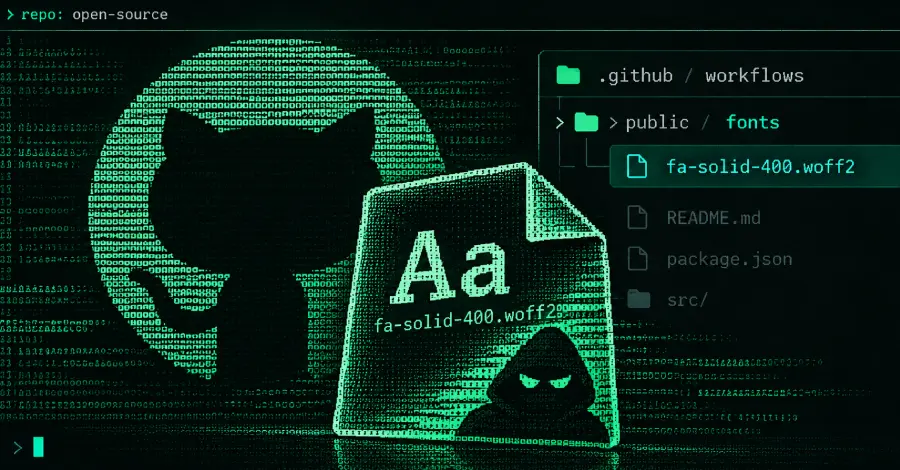
How the Fake Font Conceals Its True Purpose
The GhostAction group has broadened its attack tactics, now targeting open‑source developers with a credential‑stealing malware hidden inside a counterfeit font file. The malicious payload was discovered in 94 GitHub repositories, all of which had previously been compromised by the group’s supply‑chain attack. The operation, uncovered by OpenSourceMalware, shows the attackers are actively refining their methods to evade detection and increase the reach of their phishing campaigns.
Latest news
 Anthropic Unveils Claude Duet For Background AI Tasks
 Eiliko Creator Hires Independent Security Firm After Flawy Robot Charm Exposed
 Musk Compares Optimus Robot Training to Raising a Toddler
 Atari VCS Software Store Closes in February 2027
The new vector operates by replacing legitimate font files with a disguised executable that masquerades as a font package. When developers clone or update these repositories, the fake font installs silently, harvesting login credentials and other sensitive data. The malware then exfiltrates the stolen information to the attackers’ command‑and‑control servers. The use of a font file allows the threat actors to bypass many standard security checks, as fonts are common and rarely scrutinized in codebases.
OpenSourceMalware researchers explain that the attackers bundle the executable with a font file that carries the same name and file extension. The font’s metadata is altered to appear legitimate, and the repository’s README files reference it as a standard dependency. When a developer runs a typical build or installation script, the operating system loads the file as a font, but the embedded code executes instead. This technique exploits the trust developers place in third‑party assets and the lack of rigorous verification for font files in many build pipelines.
Why Open‑Source Projects Are a Prime Target
The attackers have also introduced subtle code comments that mimic those of legitimate projects, further reducing suspicion. By embedding the malware in a file type that is rarely flagged by antivirus tools, they increase the likelihood that the payload will reach its target. The group’s previous use of malicious GitHub Actions workflows is now complemented by this stealthier approach, allowing them to maintain a persistent foothold across multiple open‑source ecosystems.
Open‑source developers often rely on community‑maintained libraries and fonts to accelerate development. This dependency creates a wide attack surface, especially when contributors are not fully vetted. The GhostAction group has identified that many of the affected repositories are popular libraries with high download counts, ensuring that the malware spreads quickly through the developer community. The attackers’ strategy is to harvest credentials that can be used to compromise corporate accounts, cloud services, or other high‑value targets.
Security experts warn that this tactic underscores the importance of scrutinizing all third‑party assets, even those that appear benign. „It’s not enough to check the source code; you must also verify the integrity of every dependency,” says a senior analyst at CybSafe. „The use of a fake font is a clever way to slip past conventional defenses.”
What Can Developers Do to Protect Themselves?
Developers can mitigate the risk by implementing strict dependency management practices. This includes verifying the digital signatures of fonts and other assets, using hash checks, and employing tools that flag unusual file types in build scripts. Regularly scanning repositories for known malicious signatures and monitoring for unexpected network activity can also help detect compromised fonts before they cause damage. Additionally, maintaining an up‑to‑date inventory of all third‑party components ensures that any anomalies are quickly identified.
The GhostAction group’s latest move signals a shift toward more sophisticated supply‑chain attacks that exploit overlooked aspects of software development. As the threat landscape evolves, developers must stay vigilant and adopt comprehensive security measures to safeguard their projects and the sensitive data they handle.
Frequently Asked Questions
What is the primary method the GhostAction group uses to steal credentials? They embed a malicious executable within a fake font file, which is then installed as part of a repository’s dependencies and harvests credentials during normal use.
Which repositories were affected by this attack? The malware was found in 94 GitHub repositories, all of which had previously been compromised by the group’s supply‑chain tactics.
How can developers detect if a font file is malicious? By checking the file’s hash against known good values, verifying digital signatures, and ensuring that the font’s metadata matches legitimate sources. Regular dependency scans and monitoring for unusual network traffic are also essential.
Comments
Leave a comment