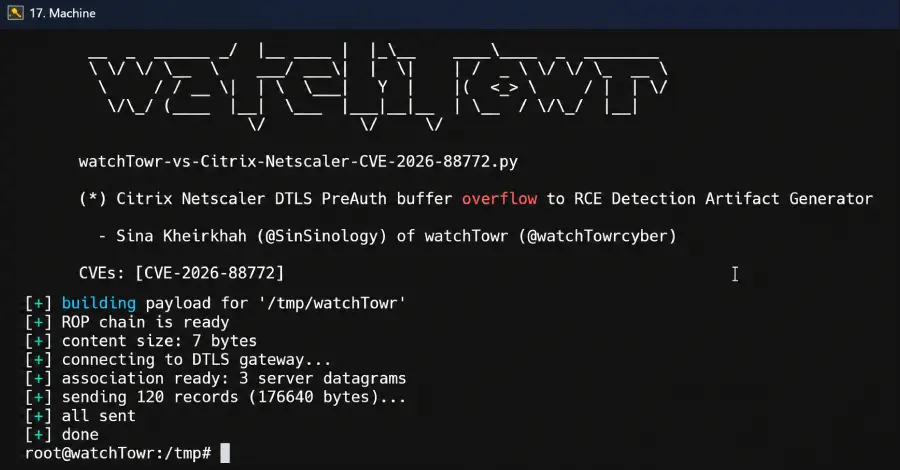
How the Exploit Works: From Packet to Privilege Escalation
Cybersecurity researchers have exposed the technical workings of a critical flaw in Citrix NetScaler ADC and Gateway that has already been exploited in the wild. The vulnerability, identified as CVE‑2026‑88772 and rated 9.5 on the CVSS scale, allows attackers to inject shellcode into the system before authentication, bypassing all security checks.
Latest news
 Anthropic Unveils Claude Duet For Background AI Tasks
 Eiliko Creator Hires Independent Security Firm After Flawy Robot Charm Exposed
 Musk Compares Optimus Robot Training to Raising a Toddler
 Atari VCS Software Store Closes in February 2027
The flaw lies in the way NetScaler handles memory allocation for specific HTTP requests. By sending a crafted packet, an attacker can cause a buffer overflow that overwrites critical control data. Once the overflow occurs, the attacker’s payload can execute with elevated privileges. Citrix released a patch on September 15, 2026, but many organizations have yet to apply it, leaving them exposed to ongoing attacks.
Why This Matters: The Risk to Critical Infrastructure
The exploit begins with a simple, unauthenticated HTTP request. The attacker sends a request that includes an oversized parameter, triggering a memory corruption in the NetScaler’s request parser. This corruption allows the attacker to overwrite a return address on the stack, redirecting program flow to malicious code. Because the request does not require user credentials, the attacker can launch the attack from any network segment that can reach the NetScaler appliance.
Researchers demonstrated the complete attack chain in a lab environment. They first sent the crafted packet, then confirmed that the return address was overwritten. Finally, they executed a reverse shell, gaining full control of the appliance. The payload could be tailored to perform any action, from data exfiltration to installing ransomware.
What Should Organizations Do Now?
Citrix’s response was swift. The vendor released a security update that patches the vulnerable memory handling routine and adds additional input validation. However, the patch’s deployment has been uneven. Many enterprises still run older firmware versions, partly because of compatibility concerns with legacy applications.
NetScaler appliances are widely used by governments, financial institutions, and healthcare providers to secure web traffic. A successful exploitation could expose sensitive data, disrupt services, or provide a foothold for further attacks. The pre‑authentication nature of the vulnerability means that attackers do not need to compromise user credentials or bypass access controls. They can simply send a malicious packet from any IP address that can reach the appliance.
Security analysts warn that attackers may already be scanning for vulnerable NetScaler installations. If the vulnerability remains unpatched, the attack surface will continue to grow. The potential for widespread damage is significant, especially for organizations that rely on NetScaler for load balancing and application delivery.
Frequently Asked Questions
Organizations must verify whether their NetScaler appliances are running the latest firmware. A quick audit of IP addresses and firmware versions can identify exposed assets. If a device is found to be vulnerable, the Citrix patch should be applied immediately. In addition, network segmentation can reduce the risk by limiting external access to the appliance’s management interface.
Cybersecurity teams should also monitor for unusual outbound connections that could indicate a compromised NetScaler. Implementing intrusion detection systems that flag abnormal traffic patterns can help detect early signs of exploitation.
Comments
Leave a comment