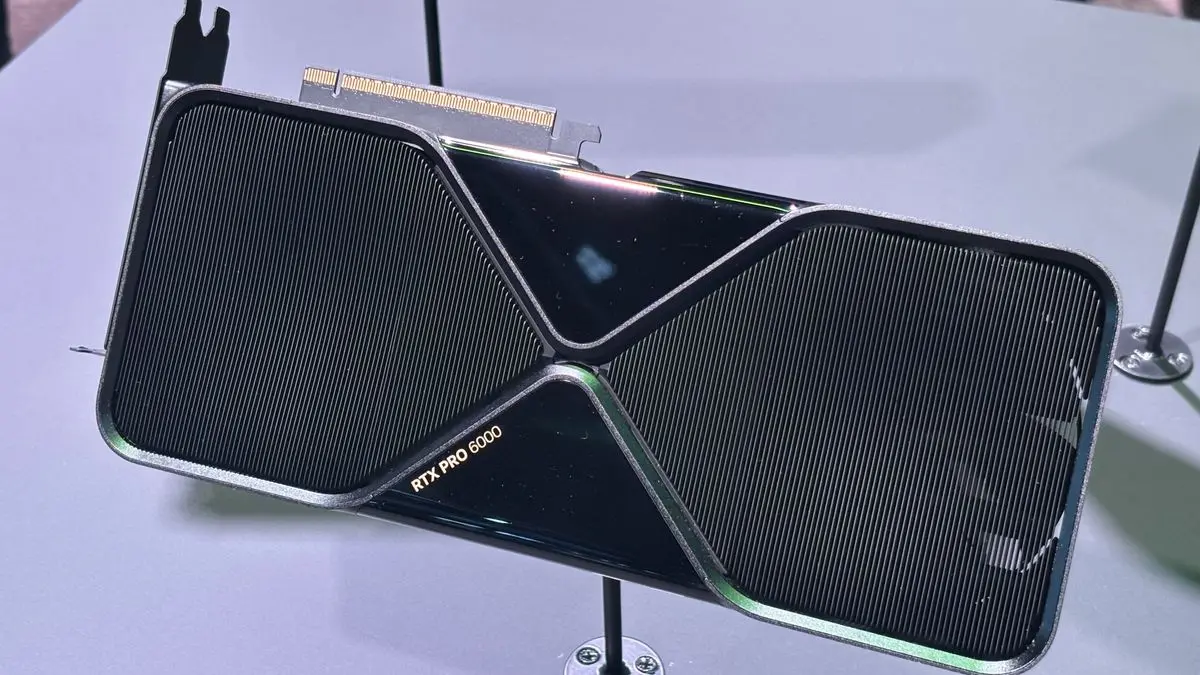
Data‑Center Growth Drives the Shift
Nvidia’s forthcoming RTX 60 graphics cards are expected to debut in 2028, according to a prominent insider leak. The claim suggests a significant delay for consumers, as the company reportedly prioritises data‑center solutions over gaming hardware.
Latest news
 Anker Unveils Playful 45W Charger With Animated Face Display
 Google Docs Web Version Still Missing Native Dark Mode
 Anthropic-Linked Vulnerability Exploited From China, Targets US and Japan
 Text‑Based AI Agents: Your New Digital Assistants
The leaker, known online as Kopite7kimi, shared the information on a popular tech forum. Kopite7kimi’s disclosure is based on internal documents that outline Nvidia’s roadmap. The documents indicate that the RTX 60 series will be built on a new architecture that requires extensive testing and certification before it can reach the retail market. The delay is attributed to Nvidia’s focus on expanding its data‑center portfolio, which has become a major revenue driver for the company.
Will Gamers Accept a 2028 Release?
Nvidia’s revenue from data‑center products has surged in recent years, outpacing the gaming segment. The company’s AI‑accelerated servers and cloud‑based inference services have attracted large enterprise clients. As a result, Nvidia has allocated more resources to research and development in this area. The RTX 60 series, while still a consumer product, is being developed alongside new data‑center GPUs that share similar manufacturing processes. The overlap in production lines has stretched the company’s capacity, pushing the consumer release date further out.
Industry analysts note that the shift reflects a broader trend in the semiconductor market. Companies are increasingly balancing consumer demand with the growing need for AI and machine‑learning hardware. Nvidia’s strategic decision to delay the RTX 60 launch is seen as a calculated move to maintain its leadership in both markets.
What Does This Mean for the GPU Market?
The gaming community has expressed frustration over the potential delay. Many gamers rely on the latest GPU technology to run demanding titles at high resolutions and frame rates. A 2028 release would mean that current generation cards, such as the RTX 40 series, will remain the standard for several more years. Some experts argue that this could slow innovation in the gaming sector, as developers may be less inclined to optimise for newer hardware that is not yet available.
However, the delay could also allow Nvidia to deliver a more mature and powerful product. The RTX 60 series is expected to feature significant improvements in ray‑tracing performance, power efficiency, and AI‑driven rendering techniques. If the company can incorporate lessons learned from its data‑center GPUs, the final consumer product may offer a leap forward in visual fidelity and performance.
Frequently Asked Questions
The announcement has already sparked speculation among competitors. AMD and Intel are likely to accelerate their own development timelines to capture market share. Meanwhile, PC builders and enthusiasts may shift focus to the current generation, investing in upgrades that can be supported by existing hardware. The delay also raises questions about the sustainability of Nvidia’s business model, which increasingly relies on high‑margin data‑center sales.
In the long term, the 2028 release could position Nvidia as a leader in both consumer and enterprise GPU markets. By aligning its product roadmap with the growing demand for AI acceleration, the company may secure a stronger foothold in the future of computing.
Comments
Leave a comment