Beneath the Ice: How the Alpine Submarine Operates
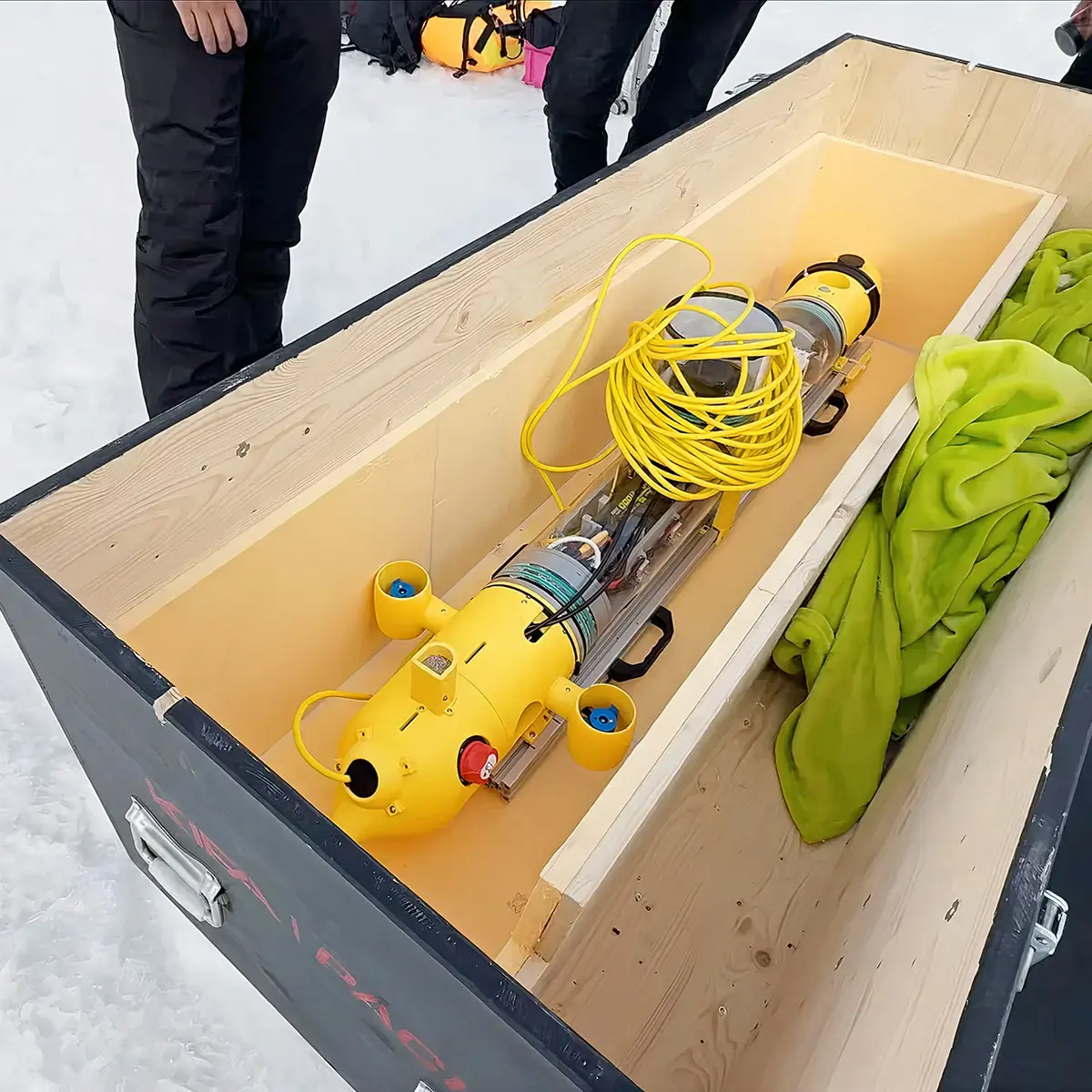
A team of engineering students from ETH Zurich launched an autonomous robot named Alpine Submarine on August 15, 2026. The device was lowered into a high‑altitude lake deep within the Swiss Alps, where thick ice and fresh snowfall conceal structural weaknesses. Researchers aim to map hidden cracks and assess safety risks that surface inspections often miss.
Latest news
 Why Meta's New AI Tool Fails to Win Over Daily Users
 Assessing Risks in Open-Source Artificial Intelligence
 Autonomous AI Agents Launch Cyberattacks Against North American Government Portals
 Warlock Group Targets SharePoint Servers in Critical Infrastructure
Winter snow adds weight to the ice sheet, compressing it and creating new layers that hide thin spots or fissures. Traditional visual checks cannot detect these hidden flaws, which can lead to sudden break‑throughs. The Alpine Submarine is equipped with sonar and temperature sensors that scan the ice from below, generating a three‑dimensional map of its integrity. By collecting real‑time data, the robot helps scientists understand how snow load and temperature fluctuations affect ice stability.
The robot measures 1.2 meters in length and fits through a small borehole drilled in the ice. Once submerged, it navigates autonomously using a combination of inertial guidance and acoustic positioning. Sonar pulses bounce off the ice underside, revealing thickness variations as fine as a few centimeters. Onboard temperature probes record thermal gradients that influence ice strength. Data are transmitted wirelessly to a surface station, where engineers visualize the results on a tablet. „The system gives us a live cross‑section of the ice,” said Lina Krämer, the project’s lead student. „We can spot dangerous thin zones before they become a hazard.”
Can Robots Replace Human Inspectors?
The Alpine Submarine does not eliminate the need for human expertise, but it dramatically reduces the time and risk associated with manual drilling. Humans must physically climb onto the frozen surface, exposing themselves to potential collapse. The robot can perform repeated surveys across multiple lakes in a single season, providing a broader safety picture. However, extreme weather can interfere with wireless communication, and the device cannot yet assess surface conditions such as snow depth. Researchers view the robot as a complementary tool that enhances, rather than replaces, traditional inspection methods.
The successful deployment marks a step forward for alpine safety and climate research. Continuous monitoring of frozen lakes could inform local authorities about when to close popular winter recreation areas, potentially preventing accidents. Moreover, long‑term data sets may reveal how warming trends alter ice formation patterns in high‑altitude regions. ETH Zurich plans to refine the robot’s sensors and expand its use to other mountainous locales across Europe.
Frequently Asked Questions
What types of lakes can the Alpine Submarine explore? The robot is designed for high‑altitude alpine lakes with ice thickness between 30 cm and 1 m, where traditional inspection is difficult.
How is the data transmitted to researchers? Acoustic modems send sonar and temperature readings to a surface antenna, which relays the information to a laptop for analysis.
Will the robot operate in warmer seasons? Current missions focus on frozen conditions, but developers are testing adaptations for use in partially thawed water bodies.
Comments
Leave a comment