The Rise of Autonomous Mobile Robots in Fulfillment Centers
Amazon, the world’s largest online retailer, has deployed over one million robotic workers across its global fulfillment network. By the end of 2026, the company plans to double that number, pushing the boundaries of warehouse automation and sparking debate about the future of human employment.
Latest news
 Corsair Vengeance DDR5-6000 Kit Offers Ideal Speed for AMD Builds
 Hide.me VPN releases major Android update
 Hackers launch massive PHP2Shell attack wave
 Googlebooks are not yet ready for prime time
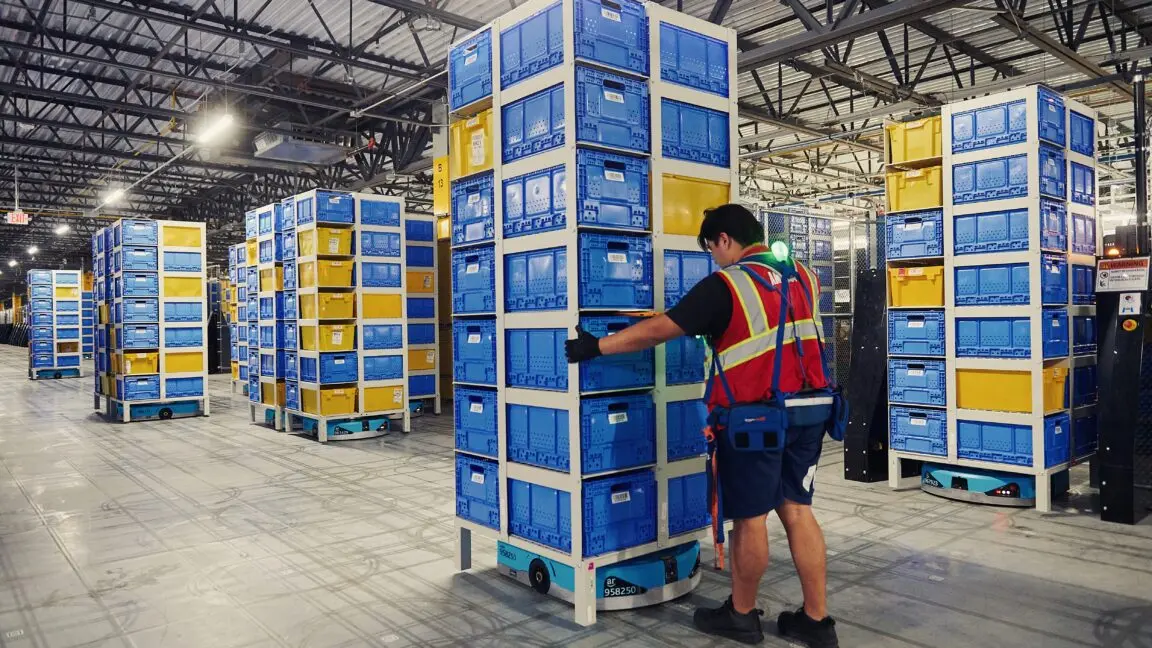
The company’s investment in robotics began in the early 2010s, when it introduced autonomous mobile robots (AMRs) that transport inventory pods around its massive distribution centers. These wheeled machines, equipped with sensors and AI, navigate complex layouts without human intervention. Today, Amazon’s robots handle a wide range of tasks—from picking and packing to sorting and palletizing—reducing the need for manual labor in high‑volume areas.
Will Human Workers Be Replaced or Re‑skilled?
Amazon’s AMRs are the backbone of its „robotic arms race.” Each robot can carry up to 1,200 pounds of goods and operates 24/7, increasing throughput while cutting labor costs. The company’s logistics chief, Maria Sanchez, explained that the robots „allow us to scale rapidly without compromising speed or accuracy.” In 2025, Amazon’s fulfillment centers processed more than 30 million packages per day, with robots handling roughly 70% of the movement.
The technology behind the robots combines LIDAR, computer vision, and machine learning. Sensors map the warehouse in real time, enabling robots to avoid obstacles and adjust routes as inventory levels shift. This adaptability has made AMRs more reliable than earlier, rigid robotic systems. Amazon’s investment in software development has also enabled predictive maintenance, reducing downtime and extending robot lifespans.
How Will Automation Affect Customer Experience?
The shift toward automation raises questions about job displacement. While some roles—such as manual picking—may decline, new positions are emerging in robot maintenance, software engineering, and logistics management. „We’re not eliminating jobs; we’re transforming them,” said Sanchez. Amazon has launched training programs to upskill workers, offering courses in robotics maintenance and data analytics.
However, critics argue that automation could widen income inequality. A study by the Economic Policy Institute estimated that by 2030, up to 15% of warehouse workers could be displaced without adequate retraining. In response, Amazon has pledged to invest $2 billion in workforce development initiatives, aiming to provide 10,000 new tech roles by 2035.
What Does the Future Hold for Automation in Retail?
Automation has already accelerated delivery times. Amazon’s Prime members now receive same‑day or next‑day shipping on millions of items. The company attributes this speed to its robotic infrastructure, which reduces human error and speeds up order fulfillment. Customers report higher satisfaction rates, with a 2026 survey showing 92% approval for Amazon’s delivery performance.
Moreover, the data collected by robots feed into Amazon’s demand‑forecasting algorithms, allowing the company to stock inventory more efficiently. This creates a virtuous cycle: faster deliveries lead to higher sales, which in turn justify further investment in robotics.
Frequently Asked Questions
Looking ahead, Amazon plans to integrate drones for last‑mile delivery and explore collaborative robots that work alongside humans in shared spaces. These developments could further blur the line between human and machine labor. Industry analysts predict that by 2035, automation could account for up to 60% of warehouse operations worldwide.
As Amazon continues to lead the way, the broader retail sector may follow suit, adopting similar technologies to stay competitive. The challenge will be balancing efficiency gains with social responsibility, ensuring that workers are not left behind in the quest for speed and scale.
Comments
Leave a comment