Breaking Down Complex Tasks
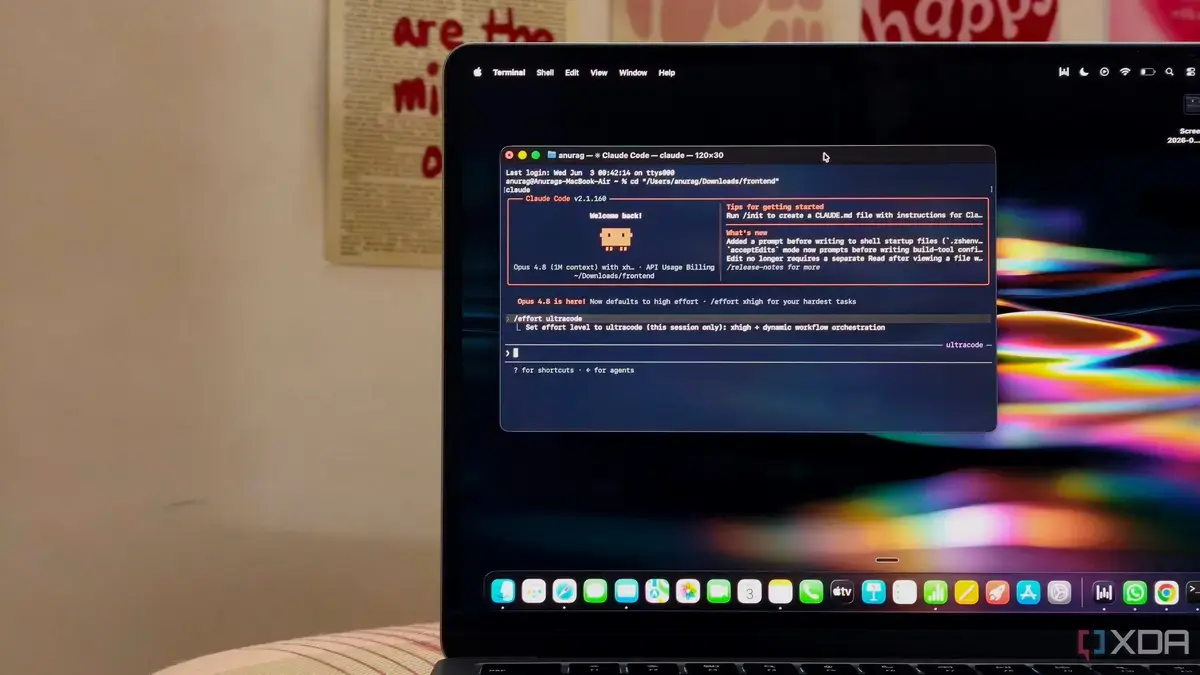
Anurag Singh replaced Claude Code with a team of tiny specialists in July 2026, achieving better results without incurring additional costs. This unconventional approach was tested and proved effective. The team of specialists worked together seamlessly.
Latest news
 The iPhone Duo Reimagines Smartphone Navigation
 Improper Redaction Exposes Google Data Center Resource Use in Lincoln
 I fed my messy Obsidian notes to Claude Code and it finally organized my digital brain
 Your Wi‑Fi Performance Is Suffering From a Simple Mistake
By dividing tasks among multiple specialists, Singh was able to tackle complex problems more efficiently. This approach allowed for a more focused and detailed output. The specialists worked together to produce a cohesive result.
Can Simplicity Be the Key to Success?
Singh's experiment showed that sometimes, simpler solutions can be more effective than relying on a single, complex tool. The team of tiny specialists was able to outperform Claude Code, a more comprehensive AI tool. This raises questions about the potential benefits of breaking down complex tasks into smaller, more manageable components.
The success of this experiment has significant implications for how we approach problem-solving in the future. As technology continues to evolve, it is likely that we will see more innovative approaches to task management and problem-solving.
What inspired Anurag Singh to try this approach? Singh was looking for a more efficient and cost-effective solution. He experimented with different configurations before settling on a team of tiny specialists.
Frequently Asked Questions
How did the team of specialists work together? The specialists were designed to work together to produce a cohesive result. Their outputs were combined to achieve the desired outcome.
What are the potential benefits of this approach? This approach can lead to more efficient and effective problem-solving. It also highlights the potential benefits of simplicity in complex systems.
Comments
Leave a comment