Capturing the Invisible
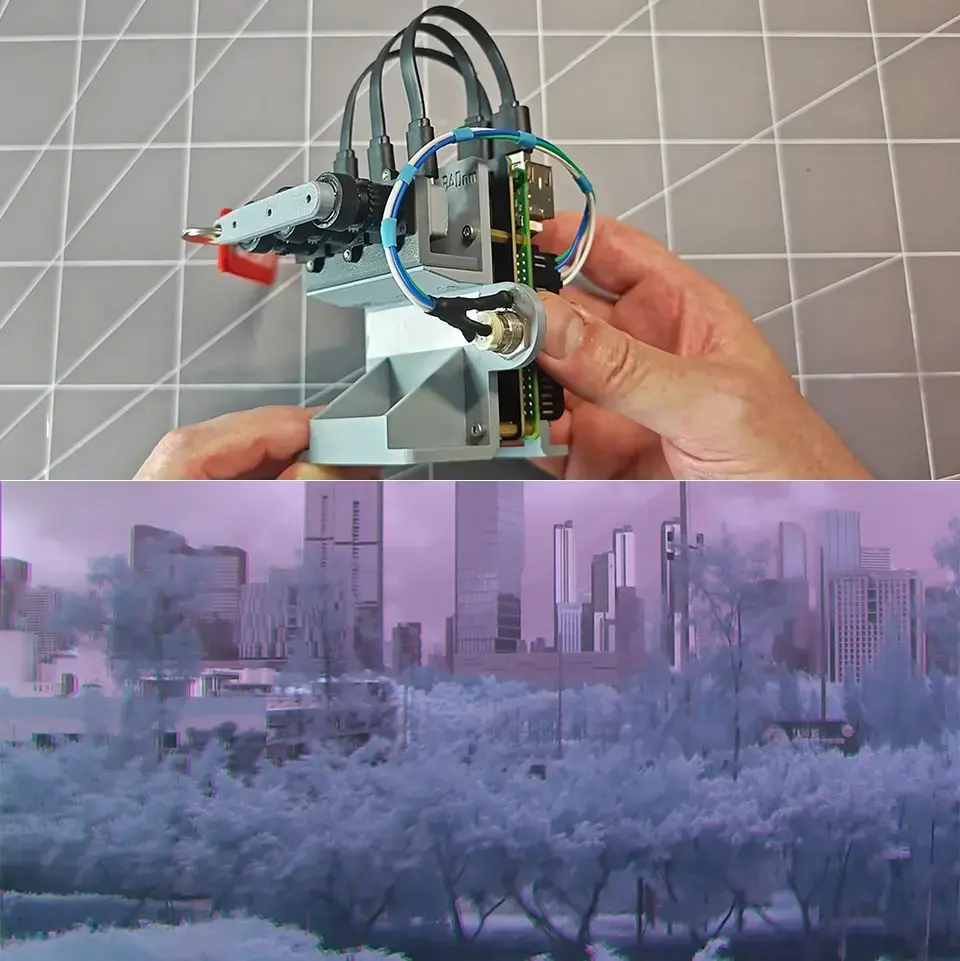
A maker recently created a system using three ordinary USB webcams to capture near-infrared light, typically ignored by most cameras. This project took three months to complete. The resulting images show how plants reflect and materials absorb this invisible light.
Latest news
 California Imposes Penalties for Robotaxis Obstructing Emergency Services
 Meta’s AI Agent Muse Builds Comprehensive Dossiers on Close Contacts
 The State of Cybersecurity in 2026: Key Segments, Insights, and Innovations
 Why the Rumored iPhone Duo Excites Android Foldable Fans
Most cameras are designed to capture the visible spectrum, but they often miss the near-infrared range. This range can provide valuable information about the world around us. The maker modified three cheap webcams to capture this invisible light.
Can This Technology Be Practical?
The webcams were altered to detect near-infrared light, which is reflected by plants and absorbed by certain materials in unique ways. By combining the images from the three cameras, the maker created a color representation of this invisible light. This allows for a deeper understanding of how different objects interact with near-infrared radiation.
The resulting images are not just visually striking; they also provide insight into the properties of various materials. For example, plants appear bright in these images due to their high reflectance of near-infrared light. This information can be useful in fields such as agriculture and materials science.
The use of near-infrared light has many potential applications, from monitoring crop health to analyzing the composition of materials. While the current setup is based on modified webcams, further development could lead to more sophisticated and practical applications.
Frequently Asked Questions
As this technology continues to evolve, it may become more accessible and widely used. The ability to capture and interpret near-infrared light could lead to new discoveries and innovations in various fields.
What is near-infrared light? Near-infrared light is a type of electromagnetic radiation with a wavelength longer than visible light. It is not visible to the human eye. How can near-infrared light be used? It can be used to analyze the properties of materials, monitor crop health, and more. The possibilities are vast and varied. What are the potential applications of this technology? Potential applications include agriculture, materials science, and other fields where understanding the interaction between objects and near-infrared light is valuable.
Comments
Leave a comment