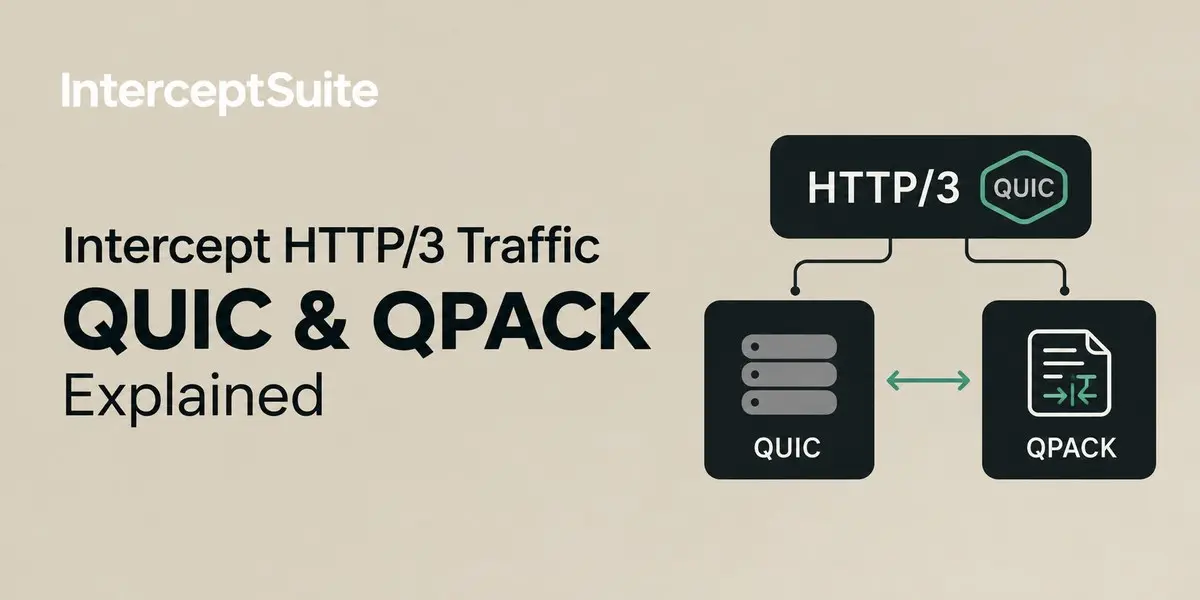
Why Standard Proxies Miss HTTP/3
HTTP/3 operates over UDP via QUIC, bypassing traditional TCP-based proxies. This architectural shift means standard tools like Burp Suite fail to capture the traffic.
Latest news
 Smart TVs frequently lose their Wi-Fi connection, leaving viewers staring at a spinning loading icon
 Why Ignoring Car Software Updates Is Risky
 Apple's foldable iPhone Duo introduces dual-display multitasking capabilities
 FCC Weighs Reciprocal Limits on Foreign Satellite Firms
Network engineers face a new challenge when modern web apps adopt HTTP/3. The protocol runs on UDP, which most HTTP proxies do not relay. As a result, invisible traffic flows through networks without inspection.
Traditional HTTP proxies are built for TCP connections. QUIC encapsulates HTTP/3 inside UDP datagrams, so TCP-only tools never see the data. To intercept it, you need a proxy that can relay UDP and perform man-in-the-middle decryption for QUIC. Once the connection is established, the work shifts to parsing HTTP/3 streams and decompressing Qpack-encoded headers.
Can Existing Tools Be Adapted for QUIC?
Qpack is the header compression scheme for HTTP/3. It uses a dictionary-based approach to reduce bandwidth. Intercepting this requires understanding how headers are encoded and how the dictionary state is maintained across requests.
Some modern security tools now support QUIC interception, but adoption remains limited. Engineers must verify that their proxy can handle UDP relay and QUIC handshake decryption. Without this capability, HTTP/3 traffic remains invisible to most monitoring systems.
The rise of HTTP/3 in production environments means security teams must update their tooling. As more sites enable HTTP/3 by default, the gap between what tools can see and what actually flows through the network will widen.
Frequently Asked Questions
Does HTTP/3 require a different proxy than HTTP/2? Yes. HTTP/3 runs over UDP/QUIC, so you need a proxy that can relay UDP and decrypt QUIC connections. Standard HTTP/2 proxies only handle TCP.
What is Qpack and why does it matter for interception? Qpack is the header compression method for HTTP/3. It uses a shared dictionary to compress headers, which means interceptors must track dictionary state to decode headers correctly.
How does QUIC differ from TCP for web traffic? QUIC is a modern transport protocol that multiplexes streams over UDP. It provides built-in encryption and connection migration, making it harder for traditional TCP-based tools to intercept.
Comments
Leave a comment