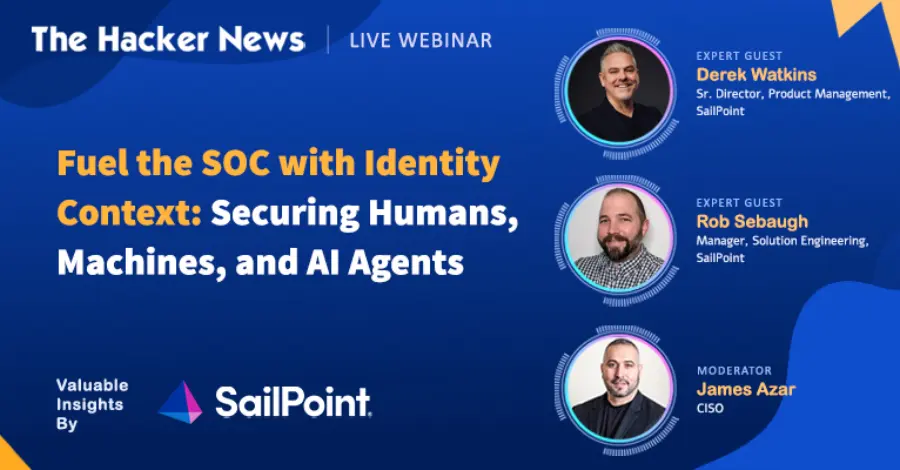
Why Identity Gaps Let Attacks Slip
Security teams today manage a flood of alerts, logs, and monitoring tools. Yet when an attack lands, a single critical question often takes too long to answer: who or what is behind this activity, and what can they access? A suspicious login might belong to an employee. An unusual API call could come from a machine account. Or an AI agent might be accessing resources without clear ownership. These gaps are what security experts call identity blind spots.
Latest news
 Smart TVs frequently lose their Wi-Fi connection, leaving viewers staring at a spinning loading icon
 Why Ignoring Car Software Updates Is Risky
 Apple's foldable iPhone Duo introduces dual-display multitasking capabilities
 FCC Weighs Reciprocal Limits on Foreign Satellite Firms
Modern organizations rely on a mix of human users, service accounts, API keys, and increasingly, AI agents. Each identity type leaves traces in logs, but the connections between them are often unclear. When an attacker compromises a service account, the SOC may not realize that account has access to critical systems. When an AI agent acts on behalf of a user, the audit trail can become ambiguous. This ambiguity delays detection and slows incident response.
How Can Teams Close These Gaps?
Experts recommend mapping every identity to its permissions and usage patterns. Teams should track who created each account, what it can touch, and when it last authenticated. Automated discovery tools can surface orphaned accounts and over-privileged identities. Regular access reviews and just-in-time access policies reduce the attack surface. The goal is simple: before an alert fires, the SOC should already know which identity is responsible and what it can reach.
What is an identity blind spot? An identity blind spot is a gap where a security team cannot quickly determine which user, service account, or AI agent is responsible for a suspicious action. It leaves the team guessing during an incident.
Frequently Asked Questions
Why are AI agents a new source of blind spots? AI agents act autonomously and often run under service accounts or API keys. Their actions may not be clearly attributed to a human owner, making it harder to trace what they accessed.
How often should teams review identity permissions? Best practice is quarterly for privileged accounts and monthly for service accounts. Continuous monitoring tools can flag anomalies in real time, reducing the need for manual reviews.
Comments
Leave a comment