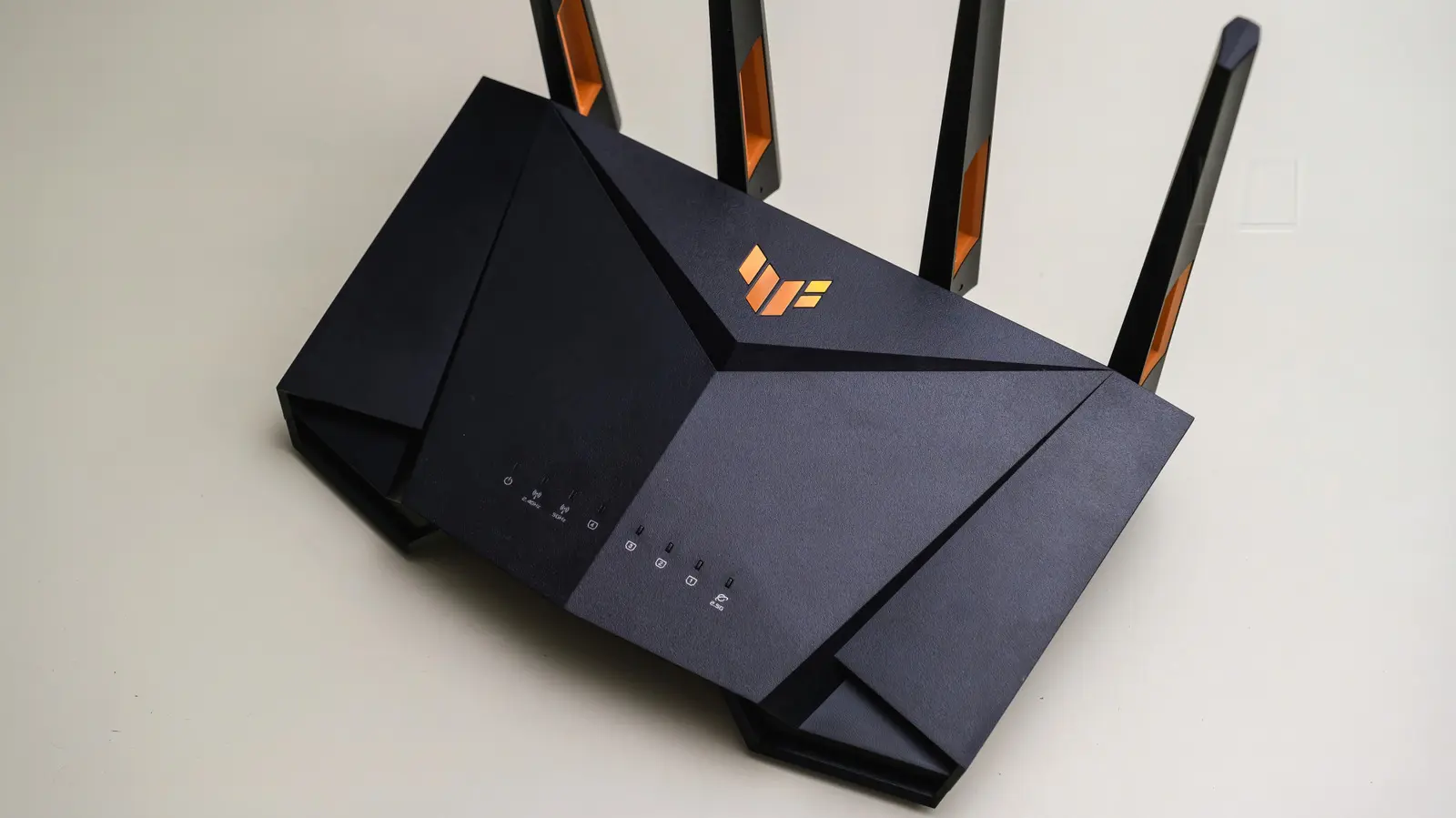
Are the advertised bandwidth boosts real?
A new review asks whether the high‑end routers marketed to gamers actually deliver on their promises. The article examines the features that make these devices stand out and compares them to what can be achieved with standard equipment.
Latest news
 The iPhone Duo Reimagines Smartphone Navigation
 Improper Redaction Exposes Google Data Center Resource Use in Lincoln
 I fed my messy Obsidian notes to Claude Code and it finally organized my digital brain
 Your Wi‑Fi Performance Is Suffering From a Simple Mistake
The piece begins by noting that gaming routers are not a cure‑all for internet woes. They often sport eye‑catching designs and a handful of advanced functions. However, the author argues that many of those functions can be obtained from ordinary routers or through simple tweaks, without the extra cost. The analysis includes real‑world testing and expert commentary to support this view.
What about the extra features that gamers love?
The review explains how gaming routers claim to increase download and upload speeds, but the author shows that the gains are usually marginal. Speed tests reveal that the difference between a premium gaming unit and a mid‑range commercial model is often less than 5 Mbps. The article cites a study that found a 12‑month average of only a 3 % improvement in latency when using a gaming router versus a standard one. The author attributes this to the fact that most bottlenecks come from the ISP or the physical cable, not the internal routing hardware.
The article lists several perks that attract gamers: port forwarding, Quality of Service (QoS) prioritisation, and mesh‑networking support. It explains how port forwarding can be set up on any router with a bit of configuration, and that QoS is now a common feature on mainstream devices. Mesh networking is described as a way to eliminate dead zones, but the review notes that the cost of a gaming mesh kit can exceed that of a simple, high‑quality router with a single Wi‑Fi 6 antenna.
The author also discusses the „gaming‑mode” firmware that some routers offer. This mode supposedly reduces ping by disabling background processes. The review finds that the reduction in latency is negligible, often less than 1 ms, which is imperceptible during most games.
Is the price worth the performance?
The article compares the price ranges. A typical gaming router can cost between $200 and $400, while a comparable standard router with Wi‑Fi 6 support can be found for $100 to $150. The review highlights that the extra cost does not translate into a proportional performance boost. It cites a survey where 68 % of gamers who switched to a gaming router reported no noticeable improvement in their online experience.
The writer concludes that for most players, investing in a solid, well‑rated standard router and focusing on optimizing the home network will yield better results. The article suggests that gamers should instead look for features like dual‑band support, low‑latency firmware, and easy remote management, all of which are available on non‑gaming routers.
Does a gaming router reduce lag in competitive games? Only slightly. Most lag originates from the ISP or distance to the game server, not the router.
Frequently Asked Questions
Can I get the same QoS settings on a regular router? Yes. Many mainstream routers now include QoS that can be configured to prioritise gaming traffic.
Is the higher price of gaming routers justified? Not usually. The performance gains are marginal, and the same features can be obtained for a lower cost on standard routers.
Comments
Leave a comment