The Lampshade to Armor Pivot
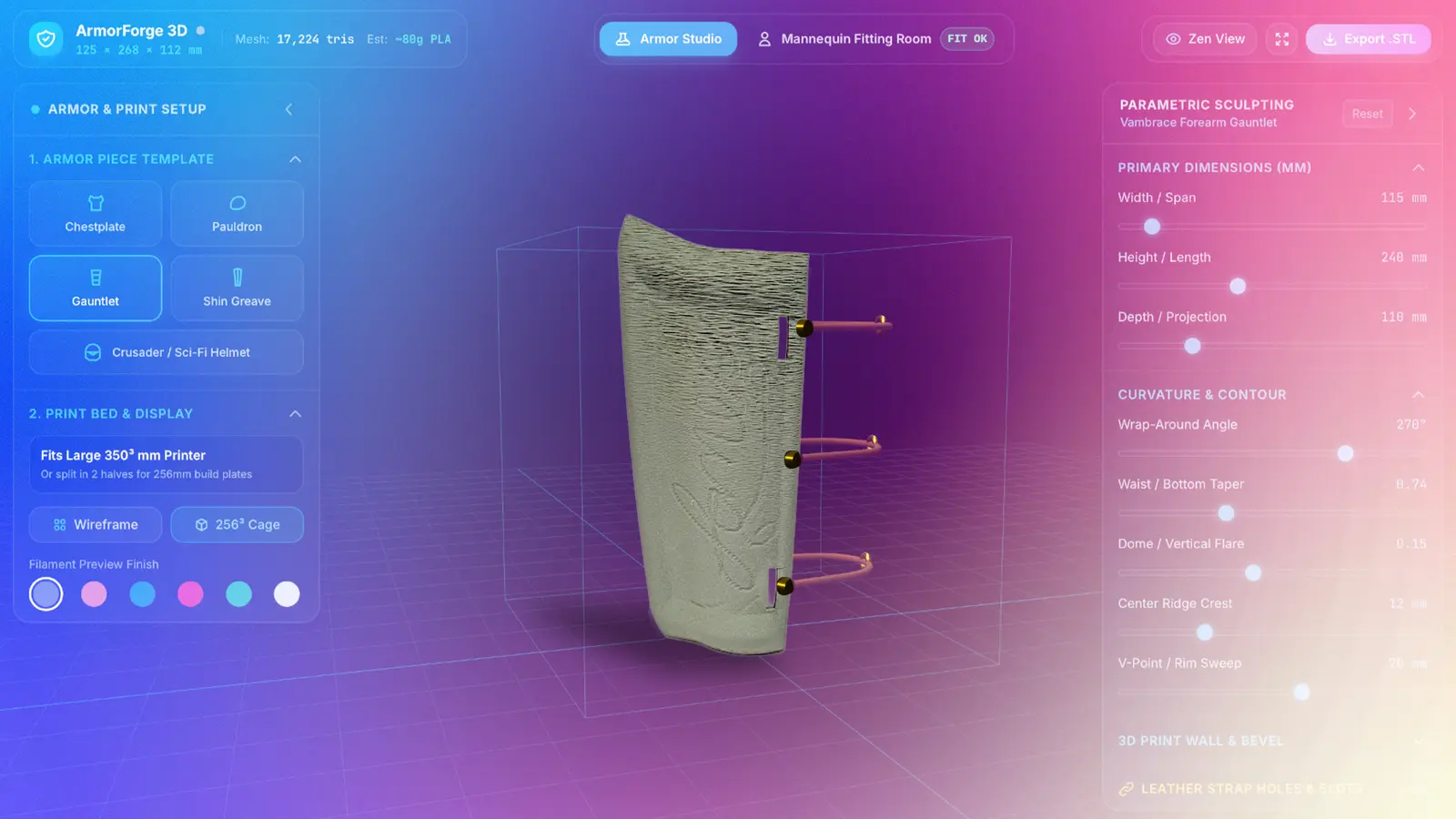
A developer transformed a simple digital dare into a functional application within eighteen hours. The project began on a Tuesday morning when a notification from Google arrived. It offered early access to the new Gemini 4 Argon model. The developer had previously ignored such updates. However, this specific teaser caught their attention. It promised a tool for modeling lampshades. That promise turned into a challenge. The goal was to create a fully fledged app before the day ended. The result was not just code. It was physical armor ready for printing.
Latest news
 Smart TVs frequently lose their Wi-Fi connection, leaving viewers staring at a spinning loading icon
 Why Ignoring Car Software Updates Is Risky
 Apple's foldable iPhone Duo introduces dual-display multitasking capabilities
 FCC Weighs Reciprocal Limits on Foreign Satellite Firms
The initial interaction with the AI model set the stage for rapid development. The user engaged with the system using natural language prompts. Instead of writing complex scripts manually, they guided the AI through the logic. The model interpreted the request for lampshade modeling. The developer pushed the boundaries further. They asked the system to adapt the geometry for armor pieces. This shift from lighting fixtures to protective gear required precise calculations. The AI handled the structural integrity checks automatically. The process highlighted how modern tools bridge the gap between concept and execution. Speed became the primary metric. Every minute saved in coding added value to the final product.
The core innovation lay in repurposing existing design parameters. Lampshades rely on curved surfaces and light diffusion. Armor requires rigid structures and impact resistance. The Gemini 4 Argon model adjusted its output accordingly. It generated mesh files suitable for 3D printing. The developer reviewed the generated topology. No major manual adjustments were necessary. The software handled the conversion from smooth curves to faceted plates. This capability demonstrated the flexibility of current large language models. They are no longer limited to text generation. They now drive complex geometric workflows. The user tested the files in slicing software. The print settings aligned perfectly with the material constraints. The transition from digital file to physical object happened without friction.
Can Speed Replace Traditional Coding?
The timeline compressed traditional development cycles significantly. Standard app creation might take weeks. Here, the entire lifecycle fit into a single workday. The developer noted the ease of iteration. Errors surfaced quickly during the prompt phase. Corrections were immediate. This feedback loop accelerated the project. By evening, the application was stable. It allowed users to input dimensions and export standard formats. The codebase remained clean despite the rapid pace. The integration of AI assistance reduced boilerplate writing. Focus shifted to user experience and visual design. The final build reflected professional standards. It proved that speed does not always sacrifice quality.
The success of this experiment raises questions about future workflows. Developers may rely heavily on AI partners for scaffolding. The ability to pivot features instantly changes project management. Teams can test bold ideas without long lead times. If a concept fails, the cost is minimal. This lower barrier to entry encourages experimentation. The armor project serves as a proof of concept. It shows that complex 3D modeling tasks are accessible to non-experts. The technology handles the mathematical heavy lifting. Users provide the creative direction. This division of labor optimizes productivity. It suggests a future where prototyping happens in hours, not months.
The outcome extends beyond a single hobbyist project. It signals a broader shift in software engineering. Tools like Gemini 4 Argon empower individuals to build sophisticated applications. The eighteen-hour turnaround sets a new benchmark. It challenges the notion that complex apps require large teams. Solo developers now have leverage. They can compete with established studios in speed of delivery. As these models improve, the gap will widen further. The next step involves integrating real-time physics simulations. This would allow users to test armor strength virtually. The potential for growth remains vast. The journey from prompt to printed object is just beginning.
Frequently Asked Questions
How long did the entire process take? The developer completed the project in eighteen hours. This timeframe included coding, testing, and preparing files for 3D printing. The work started on a Tuesday morning and finished before the day ended.
What specific AI model was used? The project utilized the Gemini 4 Argon model. This version offered early access features that allowed for advanced app creation. It specifically supported the geometric modeling required for the armor design.
Did the AI handle all coding tasks? The AI generated the core logic and structure based on prompts. The developer provided guidance and reviewed the output. Human oversight ensured the final application met functional requirements for 3D printing.
Comments
Leave a comment