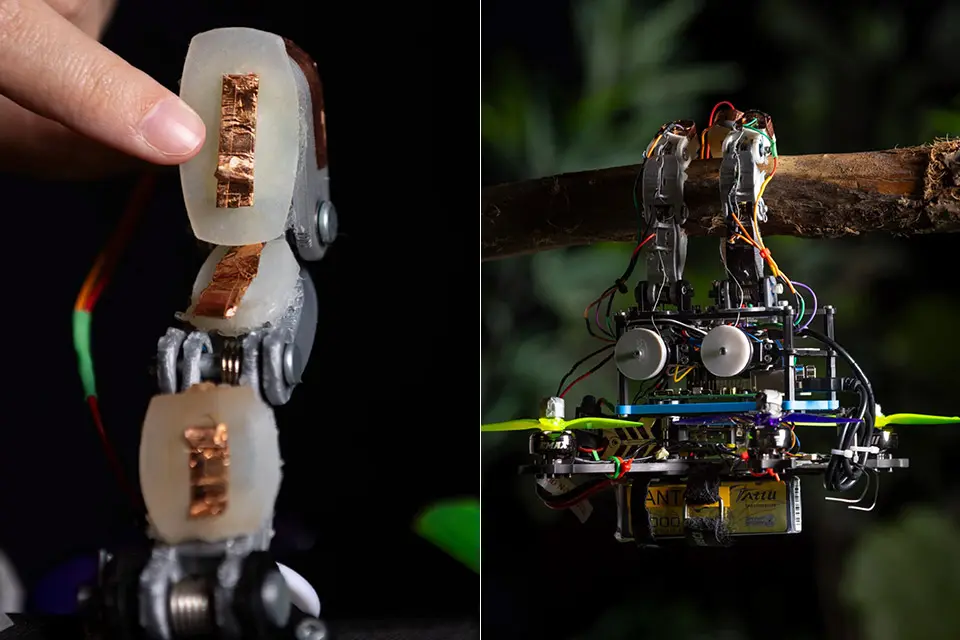
Mechanical Mimicry in the Canopy
Researchers at TU Delft have unveiled a robotic bird capable of landing on tree branches to conserve energy. This innovation addresses the limitations of standard quadcopters, which typically drain their batteries rapidly while hovering. By mimicking natural avian behavior, the drone can remain stationary in forests for extended observation periods.
Latest news
 Why the Rumored iPhone Duo Excites Android Foldable Fans
 AMD's Canceled Ryzen 9 5900X3D Leaks Online
 California Subpoenas OpenAI Over Autonomous AI Hacking Risks
 Nvidia-Backed UK Supercomputer Faces Multi-Year Power Delay
Traditional drones rely on constant rotor movement to stay airborne, leading to short flight times and significant noise pollution. This new design utilizes a specialized gripping mechanism, allowing the craft to latch onto branches securely. Once perched, the drone shuts down its motors, significantly reducing power consumption and acoustic disruption to local wildlife.
The development team focused on creating a lightweight structure that balances stability with agility. The drone features a sophisticated sensor suite that detects suitable landing spots in complex environments. By identifying sturdy branches, the machine can anchor itself safely, even in windy conditions, without needing active flight adjustments.
Can Robotic Birds Outperform Traditional Aerial Vehicles?
This approach transforms forest monitoring from a series of short, frantic sorties into long-term, passive surveillance. Scientists can now deploy these robots to track environmental changes or animal behavior over several hours. The ability to rest in place provides a major advantage for researchers studying sensitive ecosystems.
The transition to perching technology offers a sustainable path for ecological research. By minimizing energy expenditure, the drones can cover larger territories and gather more comprehensive data sets. This efficiency marks a shift toward more intelligent, autonomous systems that integrate seamlessly into natural habitats.
Frequently Asked Questions
Future iterations may incorporate solar charging capabilities while perched, potentially allowing for near-permanent forest presence. As the technology matures, these robotic birds will likely become essential tools for conservationists worldwide. They provide a quiet, unobtrusive method to monitor the health of our planet's most remote wilderness areas.
What makes this drone different from standard quadcopters? Unlike typical drones that must hover to stay in position, this model can land on branches. This allows it to power down its motors and save battery life.
How does the drone handle landing on uneven branches? The robot uses integrated sensors to identify stable perching spots. Its specialized gripping mechanism ensures a firm hold, keeping the device secure even during gusts of wind.
Comments
Leave a comment