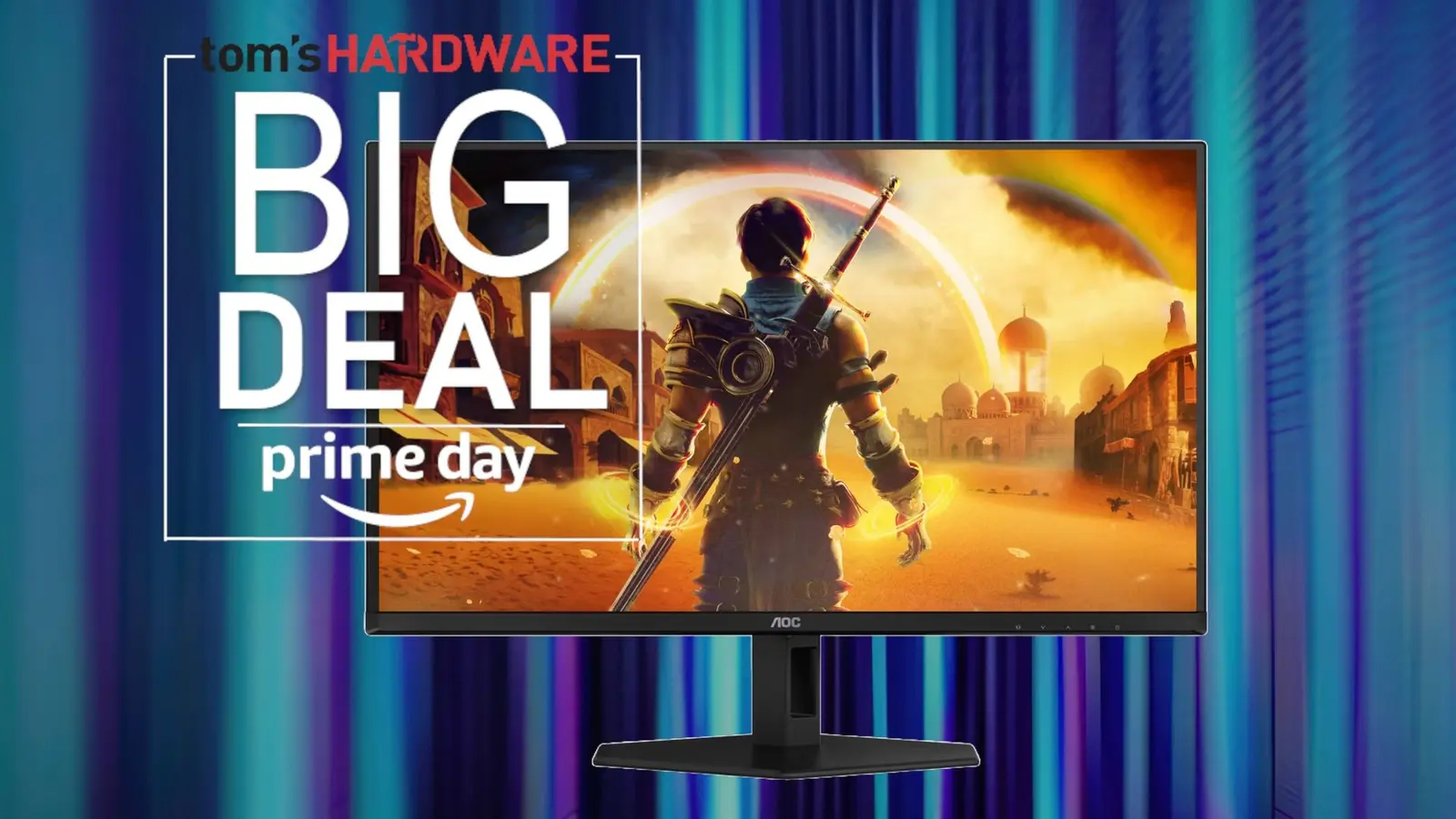
How AOC’s Pricing Strategy Could Shift the OLED Monitor Landscape
AOC has introduced a new 27‑inch QD‑OLED display priced at $280, positioning it as one of the most affordable high‑resolution OLED monitors on the market. The model offers a 1440p panel, a 144 Hz refresh rate, and a claimed 0.03 ms response time, targeting gamers and content creators seeking premium visuals without a premium price tag. The product became available on major online retailers in early October 2026.
Latest news
 Major AI firms recorded peak lobbying expenses last summer
 Apple Magic Keyboards for iPad Drop to Half Price at Woot
 Microsoft Provides Fix for Broken Exchange Online Apps
 Security Breach at AI Aggregator Exposes 18 Million Files and Private Chats
The monitor arrives as QD‑OLED technology, which blends quantum‑dot color enhancement with organic light‑emitting diodes, continues to shrink in cost. AOC’s entry‑level offering trims the usual price premium by simplifying the panel’s backlight architecture and using a streamlined stand. Early reviewers note the display delivers deep blacks, vibrant colors, and smooth motion, matching the performance of higher‑priced OLED rivals. The 144 Hz refresh rate and ultra‑low response time aim to eliminate motion blur in fast‑paced games, while the 1440p resolution provides a crisp workspace for designers. AOC cites a 99% DCI‑P3 color gamut and HDR support as additional selling points, though the monitor lacks a fully local dimming zone typical of flagship OLEDs.
By slashing the price to $280, AOC challenges the perception that OLED monitors are reserved for high‑end enthusiasts. The company leverages economies of scale from its larger LCD production lines and partners with a Chinese panel supplier that recently ramped up QD‑OLED output. This cost reduction may force competitors like Samsung and LG to reconsider their pricing tiers, potentially sparking a wave of budget‑friendly OLED options. Analysts predict that wider adoption could accelerate improvements in panel durability, as manufacturers seek to address the burn‑in concerns that have historically limited OLED’s appeal in desktop environments.
Will Gamers Embrace a $280 QD‑OLED Display?
Early feedback from the gaming community is cautiously optimistic. Streamers who have tested the monitor praise its fluidity in titles such as „Valorant” and „Cyberpunk 2077,” noting that the 144 Hz refresh eliminates screen tearing when paired with adaptive sync. However, some users remain wary of long‑term pixel retention, a known risk with OLED panels under static UI elements like HUDs. AOC counters with a built‑in pixel‑shift feature that subtly moves the image to mitigate burn‑in, though real‑world effectiveness remains to be proven. If the technology holds up, the monitor could become a go‑to choice for budget‑conscious esports players.
The $280 price point could democratize OLED technology, making high‑fidelity visuals accessible to a broader audience. As more manufacturers enter the low‑cost segment, consumers may benefit from increased competition, faster innovation, and better warranty terms. For now, AOC’s new monitor stands as a bold statement that premium display performance no longer requires a premium budget.
Frequently Asked Questions
What is the native resolution and refresh rate of the AOC QD‑OLED monitor? The screen delivers a 2560 × 1440 (1440p) resolution and supports a 144 Hz refresh rate, providing smooth motion for gaming and detailed image work.
Does the monitor include any features to prevent OLED burn‑in? Yes, it incorporates a pixel‑shift algorithm that periodically moves static images by a few pixels, reducing the risk of permanent image retention.
Is the monitor compatible with major graphics card brands for adaptive sync? The display supports both NVIDIA G‑SYNC Compatible and AMD FreeSync Premium, allowing it to synchronize with most modern GPUs for tear‑free gaming.
Comments
Leave a comment