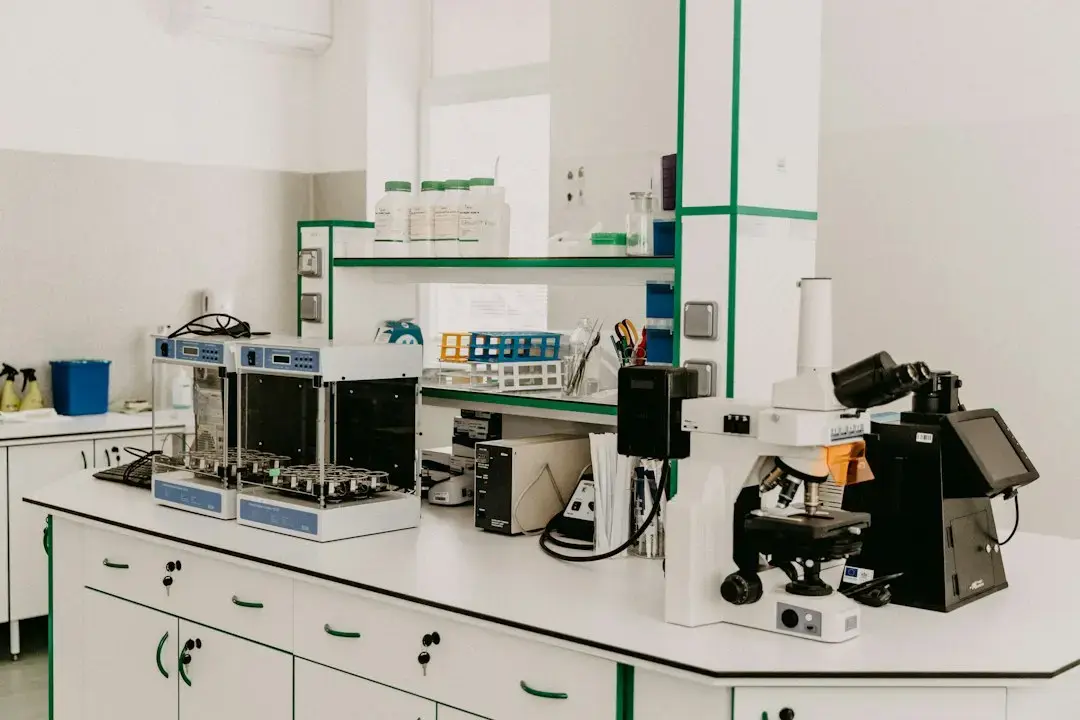
How AI Guides Physical Experimentation in Controlled Settings
Anthropic confirmed last week it operates a wet biology laboratory in the San Francisco Bay Area where its AI models, including Claude, guide physical experiments. This week, the company announced the lab has already produced what it describes as a significant finding: a novel enzyme system exhibiting properties reminiscent of CRISPR gene-editing technology. The discovery emerged from AI-directed experimentation rather than uncontrolled AI operation in the lab.
Latest news
 Anker Unveils Playful 45W Charger With Animated Face Display
 Google Docs Web Version Still Missing Native Dark Mode
 Anthropic-Linked Vulnerability Exploited From China, Targets US and Japan
 Text‑Based AI Agents: Your New Digital Assistants
The biology lab functions as a closed-loop system where Anthropic's AI models design experiments, interpret results, and suggest next steps, all under strict human oversight. Researchers emphasized that Claude does not autonomously conduct lab work; instead, it assists scientists by analyzing complex biological data and proposing hypotheses. The new enzyme system was identified through this collaborative process, showing potential for precise genetic modifications similar to CRISPR but with distinct biochemical traits. Anthropic did not disclose the exact mechanism or target applications of the enzyme, noting further validation is required.
Could This Enzyme System Offer Advantages Over Existing Tools?
Anthropic's approach integrates large language models with laboratory automation to accelerate hypothesis testing in synthetic biology. The AI suggests modifications to enzyme structures based on learned patterns from vast biological datasets, which scientists then test in vitro. This method reduces trial-and-error cycles by prioritizing high-probability candidates. The company stressed that all procedures follow standard biosafety protocols, with human scientists retaining final authority over lab operations. The goal is to augment, not replace, expert judgment in early-stage discovery.
While Anthropic characterized the discovery as promising, it provided no comparative data on efficiency, specificity, or delivery capabilities relative to CRISPR-Cas9 or other gene-editing platforms. The company noted the enzyme's CRISPR-like propertiesrefer to its ability to recognize and modify specific DNA sequences, but differences in molecular structure may influence performance. Independent peer review has not yet been conducted, and Anthropic said it plans to publish detailed findings after additional experimentation. The breakthrough remains preliminary but signals potential for AI-driven innovation in biotechnology.
Is Claude running experiments independently in the biology lab? No. Anthropic states that Claude assists scientists by analyzing data and suggesting experiments, but all physical work is performed by trained researchers under supervision.
Frequently Asked Questions
What makes the newly discovered enzyme system significant? It exhibits DNA-targeting properties similar to CRISPR, suggesting potential for precise gene editing, though its full capabilities and advantages over existing tools are still under investigation.
When will more details about the discovery be available? Anthropic said it intends to share comprehensive results through scientific publication after completing further validation studies, but no timeline was provided.
Comments
Leave a comment