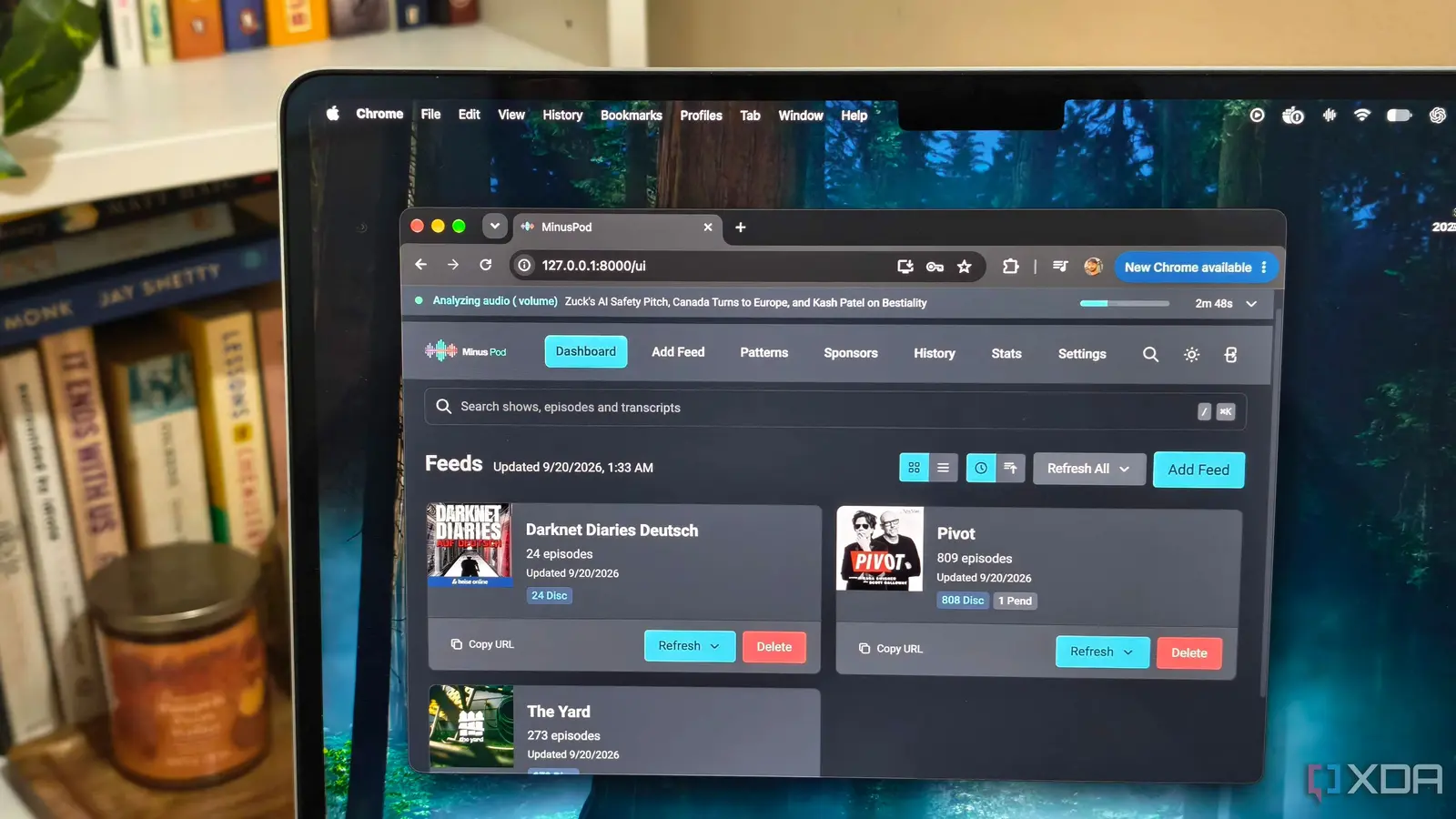
How the Ad-Removal Pipeline Works
The idea emerged from frustration with repetitive and intrusive ads in popular podcasts, particularly those inserted dynamically based on listener location or device. Instead of relying on app-level blockers that often fail with server-side ad insertion, this approach operates at the network level, intercepting feeds before they are downloaded. The container uses open-source tools like FFmpeg and custom scripts to analyze audio patterns, detect promotional segments, and splice out ad breaks while preserving the integrity of the host’s content. Users report significant time savings, with some estimating they reclaim over an hour per week previously lost to ads.
Latest news
 Anker Unveils Playful 45W Charger With Animated Face Display
 Google Docs Web Version Still Missing Native Dark Mode
 Anthropic-Linked Vulnerability Exploited From China, Targets US and Japan
 Text‑Based AI Agents: Your New Digital Assistants
The system begins by subscribing to podcast RSS feeds through a local aggregator running inside the Docker container. As new episodes are detected, the container downloads the audio file and runs it through a two-stage analysis: first, identifying potential ad boundaries using volume spikes and speech pattern changes; second, confirming these segments via comparison against known ad fingerprints or silence thresholds. Once confirmed, the ad portions are cut out, and the remaining content is reassembled into a clean MP3 or M4A file. This processed file is then served via a local media server (such as Jellyfin or Plex) or directly synced to podcast apps using a custom URL. The entire process runs autonomously, requiring minimal maintenance after initial setup.
Can This Be Used Legally and Ethically?
While the tool operates on personally acquired podcast streams and does not redistribute modified content, its use raises questions about compliance with podcast creators’ terms of service and ad-supported revenue models. Many podcasters depend on dynamic ad insertion for income, especially independent creators who lack alternative monetization. The developer emphasizes that the solution is intended for personal, non-commercial use only and encourages users to support creators through donations, subscriptions, or purchasing premium tiers when available. Legal experts note that time-shifting and ad-skipping for private consumption may fall under fair use in some jurisdictions, but the boundaries remain unclear as podcast advertising evolves.
How does the container detect where ads begin and end? It uses audio analysis to identify sudden changes in volume, speech patterns, or background music that typically signal ad transitions, then verifies these segments using heuristics or user-defined silence thresholds.
Frequently Asked Questions
Is technical expertise required to set this up? Basic familiarity with Docker and command-line interfaces is helpful, but pre-configured images and step-by-step guides are available online to simplify deployment for intermediate users.
Will this work with all podcast platforms? It functions with any podcast that provides a standard RSS feed, meaning it works independently of platforms like Spotify or Apple Podcasts as long as the feed is accessible.
Comments
Leave a comment