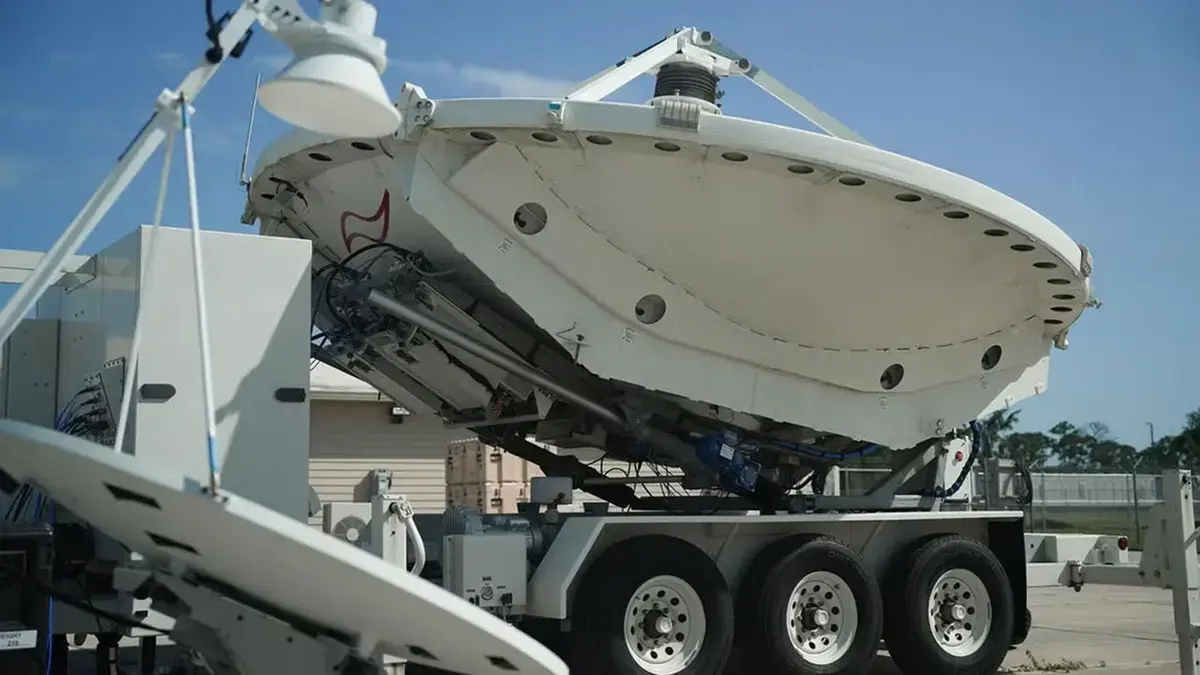
Meadowlands Architecture and Capabilities
The United States Space Force announced on July 8, 2026 that its inaugural mobile electromagnetic system, called Meadowlands, is now active. The unit was first field‑tested at a secure Colorado installation and is slated for rapid deployment to protect American space assets.
Latest news
 Anker Unveils Playful 45W Charger With Animated Face Display
 Google Docs Web Version Still Missing Native Dark Mode
 Anthropic-Linked Vulnerability Exploited From China, Targets US and Japan
 Text‑Based AI Agents: Your New Digital Assistants
Meadowlands uses tightly focused directional antennas paired with high‑power radio‑frequency amplifiers to emit a narrow electromagnetic beam. The beam can jam, degrade or temporarily blind hostile satellites without creating debris. The system complements existing kinetic anti‑satellite options and reflects growing concerns over adversary constellations that can threaten U. S. communications and navigation.
The weapon is mounted on a ruggedized trailer, allowing relocation within days. Its antenna array can swivel 360 degrees and lock onto targets across geosynchronous orbit. Power generators supply up to 1 megawatt, creating a beam strong enough to overload satellite transponders. Operators can switch between detection mode—scanning for unknown emitters—and denial mode—sending disruptive pulses. „We can neutralize a satellite without a single missile,” said Lt. Gen. Maria Delgado, the Space Force’s deputy chief of operations. The first unit is expected to join a fleet of 32 similar systems, forming a layered defense network around critical orbital corridors.
Can Electromagnetic Beam Weapons Replace Traditional Anti‑Satellite Missiles?
Experts argue that electromagnetic tools offer a non‑kinetic alternative that avoids space debris. They can be activated quickly, are less likely to trigger a kinetic escalation, and can be turned off once the threat subsides. However, critics warn that reliance on high‑frequency bursts may be vulnerable to counter‑measures such as hardened satellite shielding. The planned rollout of 32 Meadowlands units suggests the Space Force sees the technology as a complement, not a complete substitute, for missile‑based options. Policy analysts note that the new capability could pressure adversaries to develop similar systems, potentially sparking a new space‑arms race.
The introduction of Meadowlands marks a turning point in how nations defend their orbital assets. By targeting satellites with directed energy, the United States gains a flexible tool that can impair hostile platforms while preserving the orbital environment. As more units become operational, the strategic calculus for both allies and rivals will shift, prompting new doctrines and diplomatic discussions about the rules of engagement in space.
Frequently Asked Questions
What range can Meadowlands affect? The system can engage satellites from low Earth orbit up to geosynchronous altitude, roughly 36,000 kilometers, using its high‑gain antenna array.
How does the beam avoid damaging friendly satellites? Operators program precise targeting parameters and use real‑time tracking data to ensure the beam only illuminates designated hostile assets.
Will other nations develop similar weapons? Analysts expect rival powers to explore comparable directed‑energy technologies, especially as the tactical benefits of non‑kinetic attacks become clearer.
Comments
Leave a comment