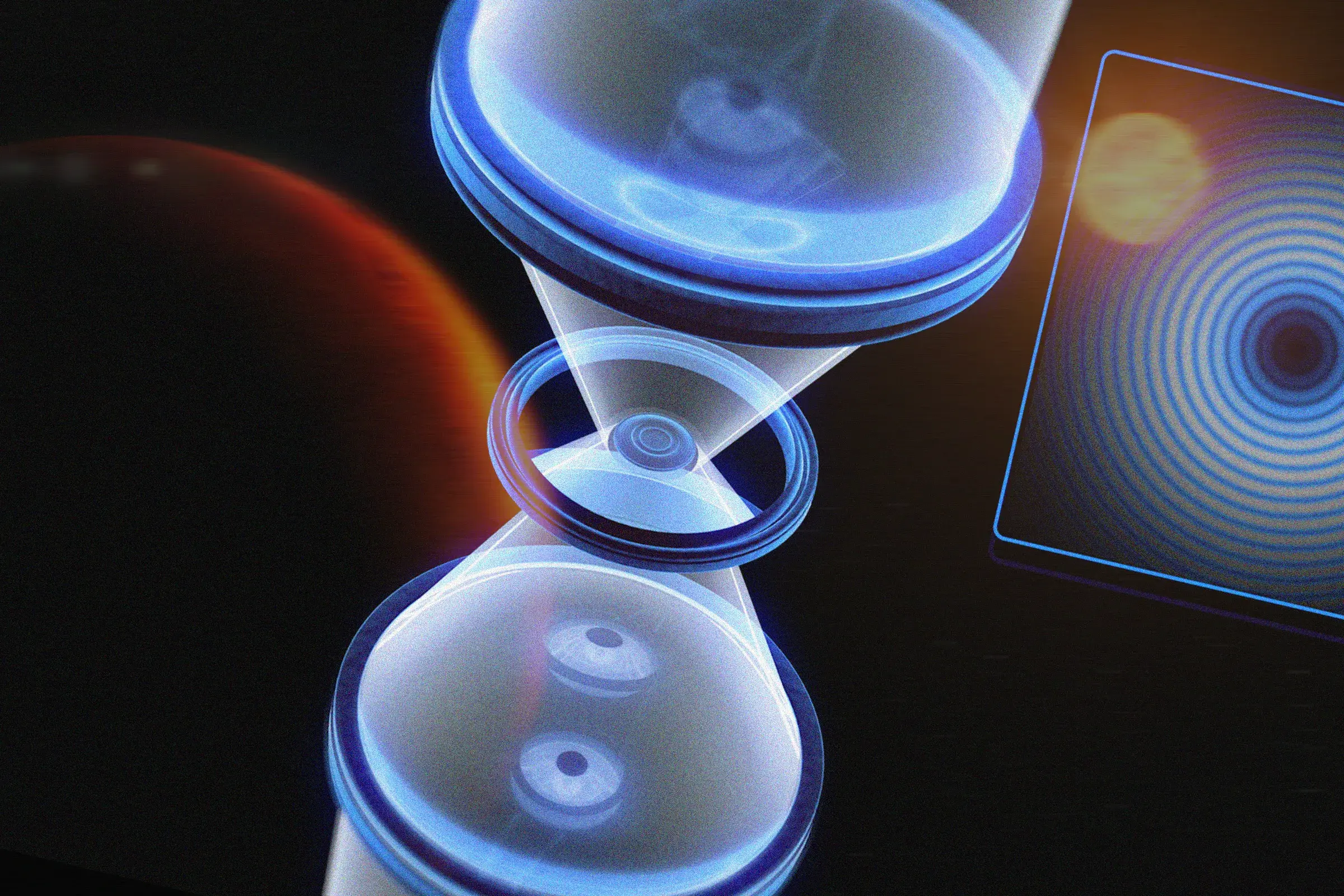
Mastering the Art of Starlight Suppression
NASA is gearing up to launch the Nancy Grace Roman Space Telescope, a mission featuring a groundbreaking technological experiment. Scheduled for its upcoming deployment, the telescope will test a sophisticated coronagraph designed to suppress starlight. This crucial advancement aims to pave the way for future space observatories to detect and study Earth-like planets orbiting distant stars.
Latest news
 Why the Rumored iPhone Duo Excites Android Foldable Fans
 AMD's Canceled Ryzen 9 5900X3D Leaks Online
 California Subpoenas OpenAI Over Autonomous AI Hacking Risks
 Nvidia-Backed UK Supercomputer Faces Multi-Year Power Delay
The Roman Space Telescope carries this specialized instrument to demonstrate high-contrast imaging capabilities in deep space. By blocking the intense glare of a host star, the coronagraph allows astronomers to isolate the faint light reflected by orbiting planets. This process is essential for capturing direct images of worlds that would otherwise be hidden by their sun's brilliance.
The primary challenge in exoplanet research is the extreme brightness difference between a star and its planets. Scientists compare this to trying to spot a firefly hovering next to a powerful searchlight from miles away. The Roman mission utilizes advanced mirrors and masks to physically cancel out light waves from the star.
Can This Technology Reveal Another Earth?
Engineers have refined this technology to achieve unprecedented levels of precision. By minimizing light leakage, the coronagraph provides a clearer view of the immediate environment surrounding a star. This capability is expected to provide researchers with the data necessary to refine planetary search methods for decades to come.
The ultimate goal of this testing phase is to prove that we can identify potentially habitable environments beyond our solar system. If the coronagraph performs as expected, it will serve as the blueprint for future flagship missions. These successors will be tasked with searching for atmospheric signatures that could indicate the presence of life.
Frequently Asked Questions
The success of this experiment represents a significant leap in our observational reach. By validating these tools now, NASA ensures that future generations of space telescopes can focus on characterizing smaller, rocky planets. This mission marks a pivotal step in our ongoing quest to understand our place in the universe.
What makes the Roman Space Telescope's coronagraph unique? It uses advanced optics to suppress starlight with extreme precision, allowing for the direct observation of faint orbiting planets. This technology is a critical testbed for future missions seeking to image Earth-like worlds.
Why is blocking starlight so difficult? Stars are millions of times brighter than the planets orbiting them, causing the star's light to overwhelm any nearby objects. The coronagraph acts as a specialized shield to isolate the planet's dim light from the star's glare.
Comments
Leave a comment