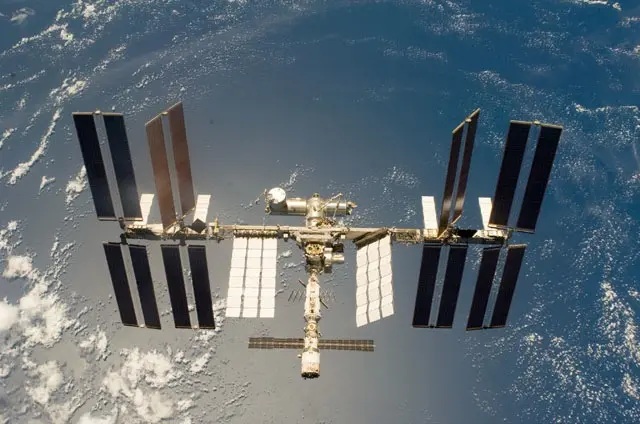
Commercial Partnerships to Shape the Future of Low‑Earth Orbit
NASA has issued a formal invitation to commercial partners to develop and operate private space stations in low Earth orbit, signaling a strategic shift as the International Space Station (ISS) nears the end of its operational life. The announcement came during a press briefing in Washington, D. C., on October 9, 2026, and outlines the agency’s commitment to maintaining a continuous human presence beyond Earth while encouraging industry innovation.
Latest news
 Smart TVs frequently lose their Wi-Fi connection, leaving viewers staring at a spinning loading icon
 Why Ignoring Car Software Updates Is Risky
 Apple's foldable iPhone Duo introduces dual-display multitasking capabilities
 FCC Weighs Reciprocal Limits on Foreign Satellite Firms
The agency emphasized that the ISS will be decommissioned by 2030, after more than three decades of service. In response, NASA plans to collaborate with private companies to build modular habitats that can support long‑duration missions, scientific research, and commercial activities. The move aims to reduce costs, accelerate development, and foster a sustainable space economy.
NASA’s new strategy centers on a partnership model, where private firms will design, construct, and operate orbital platforms under NASA’s oversight. The agency will provide regulatory guidance, launch services, and access to scientific payloads, while commercial operators will bring engineering expertise and financial investment. This collaborative framework is expected to create a diverse ecosystem of space habitats, ranging from small research modules to larger stations capable of supporting crews for months.
Will Private Stations Replace the ISS?
Experts note that the approach mirrors the successful public‑private partnership that brought the ISS to fruition. By leveraging commercial capabilities, NASA hopes to accelerate deployment timelines and reduce the burden on government budgets. The agency also plans to establish clear standards for safety, interoperability, and data sharing to ensure seamless integration among different platforms.
The question of whether privately built stations will fully replace the ISS’s role is central to the debate. NASA officials argue that a fleet of commercial habitats can provide greater flexibility and resilience than a single, government‑owned station. However, critics point out that the ISS has unique capabilities, such as large research facilities and international collaboration infrastructure, that may be difficult to replicate quickly.
In the short term, NASA intends to maintain the ISS while new stations come online. The agency will gradually transition research payloads and crew rotations to commercial platforms, ensuring continuity of scientific output. Long‑term plans include establishing a network of interconnected habitats that can support larger crews and more ambitious missions, such as lunar orbital platforms and Mars transfer vehicles.
The announcement marks a pivotal moment for the space industry, opening doors for private companies to invest in orbital infrastructure. It also signals NASA’s ongoing commitment to sustaining human activity in low Earth orbit, even as the ISS’s era ends.
Frequently Asked Questions
What is the timeline for the first private space station? NASA expects the first commercial station to launch by 2028, with full operational capacity by 2030, aligning with the ISS decommissioning schedule.
How will NASA ensure safety and compatibility among different stations? The agency will set strict design standards, conduct rigorous testing, and coordinate orbital operations to maintain safety and interoperability.
Will international partners be involved in the new stations? Yes, NASA plans to continue its tradition of international collaboration, inviting partners from ESA, Roscosmos, JAXA, and other agencies to contribute to and use the new habitats.
Comments
Leave a comment