Why Venus Is the Next Frontier
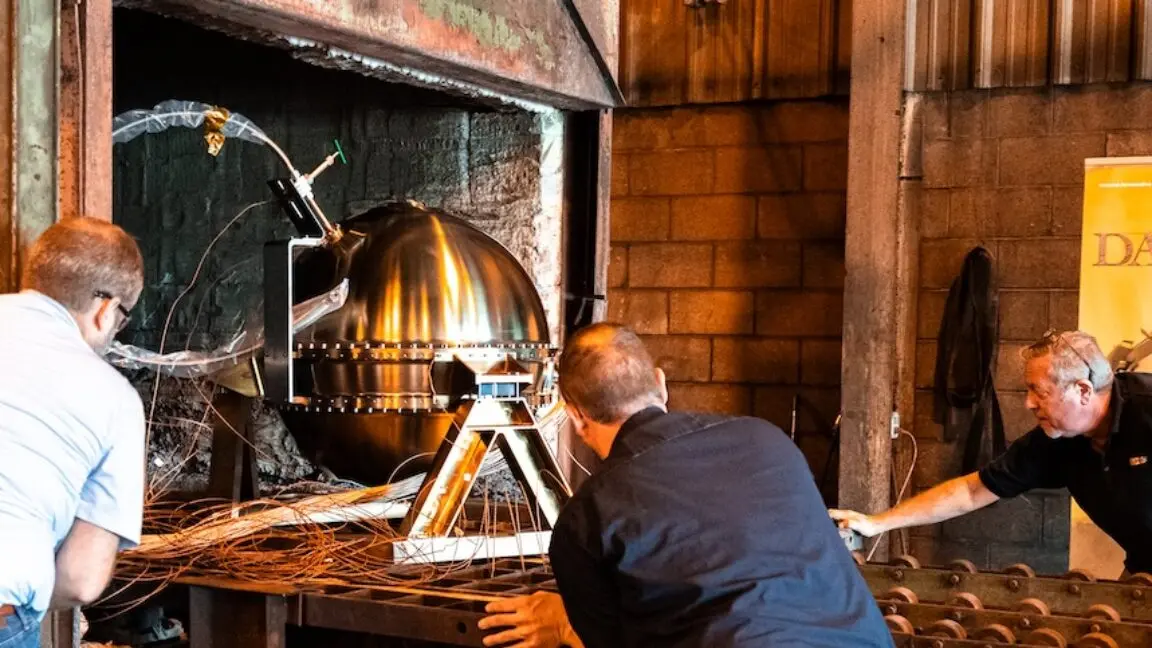
NASA is speeding up its inaugural Venus expedition of the modern era, announcing expanded staffing and an accelerated schedule after successful thermal testing of the DAVINCI entry probe. The probe’s test unit was recently placed in a furnace at Rex Heat Treat in Bedford, Pennsylvania, to simulate the extreme heat of entry into Venus’s atmosphere.
Latest news
 Major AI firms recorded peak lobbying expenses last summer
 Apple Magic Keyboards for iPad Drop to Half Price at Woot
 Microsoft Provides Fix for Broken Exchange Online Apps
 Security Breach at AI Aggregator Exposes 18 Million Files and Private Chats
The test, conducted in October 2026, confirms that the probe’s heat shield can withstand temperatures exceeding 1,200 °C. Engineers say the results are a key milestone that clears the way for final design revisions and launch preparations. The mission, slated for launch in 2029, will carry a suite of instruments to study Venus’s atmosphere, surface composition, and potential for past habitability.
NASA’s Venus Exploration Program Director, Dr. Elena Ramirez, told reporters that the successful thermal test „validates our engineering approach and gives us confidence to move forward.” She added that the agency is recruiting additional scientists and engineers to meet the new timeline. „We’re staffing up,” Ramirez said. „We’re accelerating.”
How the Thermal Test Shapes the Mission
Venus has long intrigued scientists because of its dense atmosphere and extreme surface conditions. Recent discoveries of cloud‑layer lightning and possible subsurface water ice have renewed interest in the planet. NASA’s DAVINCI (Deep Atmosphere Venus Investigation of Noble gases, Chemistry, and Imaging) mission aims to resolve these mysteries by sampling the atmosphere up to 60 km above the surface and transmitting data back to Earth.
The probe will use a parachute and a heat‑shield to survive the 100 km/s entry speed. Its instruments will measure noble gases, isotopic ratios, and trace chemicals, providing clues about Venus’s formation and volcanic activity. The data will also help refine climate models for other terrestrial planets.
The furnace test at Rex Heat Treat involved heating the probe’s heat shield to 1,200 °C for several hours, replicating the thermal load during atmospheric entry. Engineers monitored the shield’s structural integrity and heat‑flux distribution. The results matched predictions from computational models, indicating that the shield’s composite material will survive the real mission.
What Happens After Launch?
„This is a critical validation step,” said lead engineer Mark Chen. „It reduces the risk of failure during entry, which is the most dangerous phase of the flight.” The test also revealed minor adjustments needed in the shield’s edge geometry to improve cooling efficiency.
The successful test allows NASA to finalize the probe’s design, secure launch vehicle contracts, and begin mass production of flight‑ready components. With the accelerated schedule, the agency plans to complete the probe’s assembly by mid‑2028, giving a full year for system integration and testing before launch.
Once launched, the probe will travel approximately 1.5 million kilometers to Venus, entering the planet’s atmosphere at a steep angle. It will descend through the cloud layers, collecting data on atmospheric composition and dynamics. The probe will transmit information back to Earth for up to 12 hours before it is destroyed by the planet’s heat and pressure.
Frequently Asked Questions
The data gathered will answer fundamental questions about Venus’s climate evolution and its divergence from Earth. It will also inform future missions, including potential landers and orbiters that could further explore the planet’s surface and atmosphere.
NASA’s commitment to this mission marks a significant step toward understanding our nearest planetary neighbor. The accelerated timeline and expanded workforce signal confidence in the probe’s design and the scientific community’s readiness to interpret the findings.
Q: When is the DAVINCI probe scheduled to launch? A: The launch is planned for 2029, pending final design reviews and launch vehicle selection.
Comments
Leave a comment