Yuki Tanaka, JAXA’s chief planetary scientist
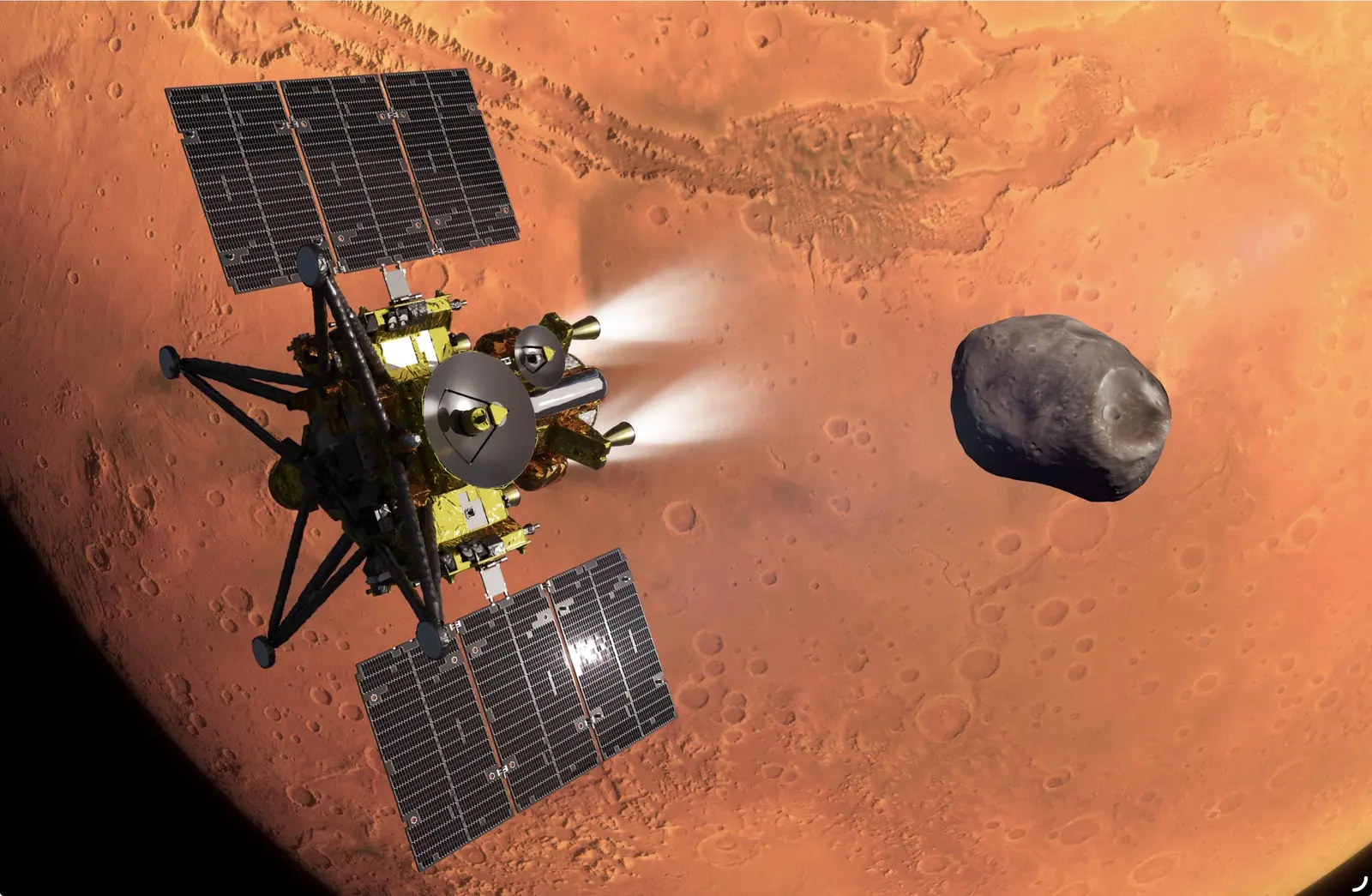
A new spacecraft, the Martian Moons e Xploration (MMX) probe, is set to launch from Tanegashima Space Center on Monday afternoon. The mission, organized by the Japan Aerospace Exploration Agency (JAXA) with technical support from NASA, aims to visit the moons Phobos and Deimos, collect surface material, and return it to Earth. This could mark the first successful sample‑return mission from the Martian system. The MMX probe will travel approximately 225 million kilometers to reach Mars, a journey that will take about 10 months. Once there, it will orbit the planet for several weeks before descending to Phobos, where it will land, scoop a 5‑kilogram sample, and lift off again. The craft will then return to Earth, landing in a pre‑selected area in the Australian outback.
Latest news
 Smart TVs frequently lose their Wi-Fi connection, leaving viewers staring at a spinning loading icon
 Why Ignoring Car Software Updates Is Risky
 Apple's foldable iPhone Duo introduces dual-display multitasking capabilities
 FCC Weighs Reciprocal Limits on Foreign Satellite Firms
The collaboration with NASA provides critical propulsion and navigation expertise, ensuring the probe can perform the complex maneuvers required for a safe return. Phobos: A Window into the Early Solar System Phobos, the larger of Mars’s two moons, is believed to be a captured asteroid or a fragment from a past collision. By retrieving its material, scientists hope to unlock clues about the composition of early planetary bodies and the processes that shaped our solar system. The MMX probe will use a robotic arm to collect samples from the moon’s surface, targeting regions that show signs of mineral alteration. „Phobos offers a unique laboratory,” says Dr.
Yuki Tanaka, JAXA’s chief planetary scientist. „Its surface preserves records that are billions of years old, and bringing those samples back could revolutionize our understanding of planetary formation.” The mission also plans to study the moon’s geology, magnetic field, and potential water ice, providing data that may inform future human exploration of Mars. How Will the Return Mission Work? The spacecraft will carry a return module equipped with a heat shield and a re‑entry capsule. After collecting the sample on Phobos, the probe will perform a carefully timed ascent, using a small propulsion system to escape the moon’s weak gravity. It will then travel back to Mars, rendezvous with the main spacecraft, and prepare for the Earth‑return trajectory.
NASA’s involvement includes the development of the propulsion system and the guidance algorithms that will allow the probe to navigate the complex gravitational environment of Mars and its moons. „The partnership has accelerated our timeline and increased the mission’s reliability,” notes JAXA’s project manager, Koichi Sato. What Are the Risks and Rewards? The mission faces significant technical challenges. Landing on Phobos requires precision navigation to avoid the moon’s uneven terrain and dust. The sample collection mechanism must operate in a low‑gravity environment, a first for robotic missions. Moreover, the return trajectory demands accurate timing to avoid orbital debris and to ensure a safe re‑entry over a remote, unpopulated area. Despite these hurdles, the rewards are substantial. Returning Martian moon samples to Earth would allow scientists to conduct detailed laboratory analyses that are impossible in space.
The data could shed light on the origins of Mars’s moons, the presence of water ice, and the potential for life in the early solar system. Future Implications for Mars Exploration If successful, MMX will pave the way for more ambitious missions, including human landings on Mars and its moons. The technology developed for sample collection and return could be adapted for future probes targeting Mars’s surface or even its subsurface ice. Additionally, the data gathered will help refine models of planetary accretion and the migration of small bodies in the early solar system. The mission’s success would also strengthen international collaboration in space exploration, demonstrating how agencies can combine resources and expertise to tackle complex scientific goals. Frequently Asked Questions Q: How long will the MMX mission last?
A: From launch to Earth return, the mission will span roughly 18 months, including a 10‑month cruise to Mars, a few weeks of Phobos operations, and the return journey.
Comments
Leave a comment