From Orbit to Earth: A Poetic Milestone
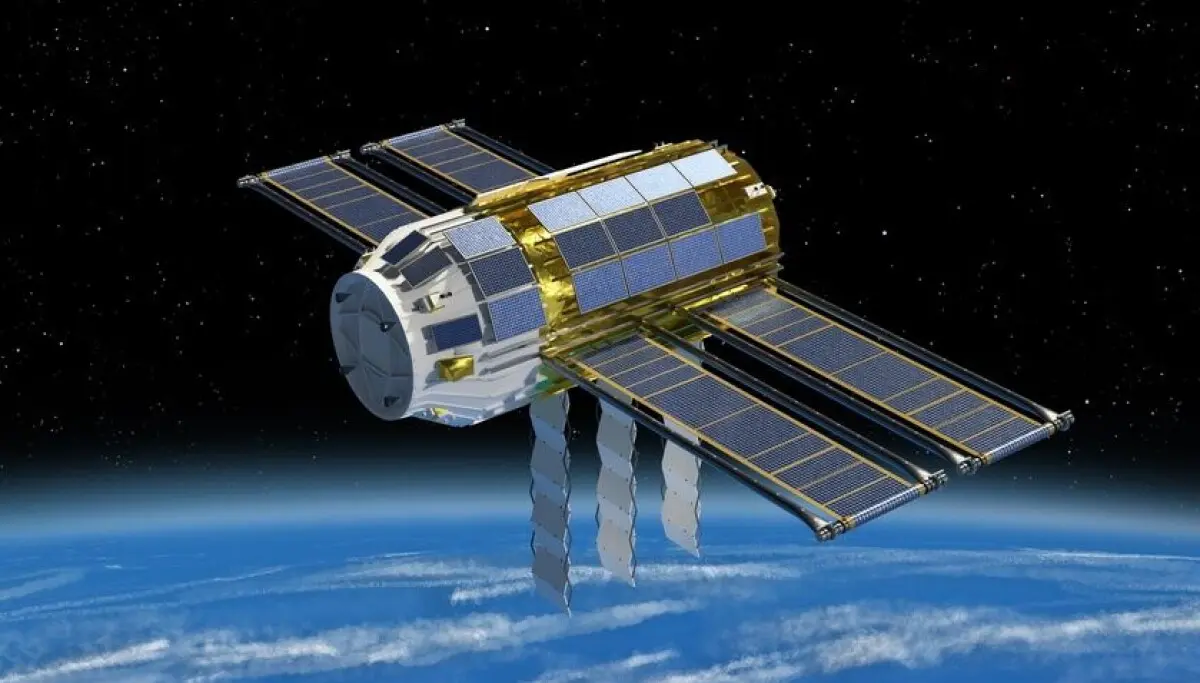
Google announced on Friday that its experimental Suncatcher satellite has successfully transmitted a haiku to Earth. The spacecraft, launched earlier this month, now orbits in low Earth orbit. Engineers confirmed the TPU on board processed the poetic request. The system demonstrated that artificial intelligence can operate independently in space.
Latest news
 Smart TVs frequently lose their Wi-Fi connection, leaving viewers staring at a spinning loading icon
 Why Ignoring Car Software Updates Is Risky
 Apple's foldable iPhone Duo introduces dual-display multitasking capabilities
 FCC Weighs Reciprocal Limits on Foreign Satellite Firms
The satellite functions as a compact orbital datacenter. It processes data locally without relying on ground stations. This architecture reduces latency for space-based computation. The haiku served as a proof of concept. It proved the TPU could run language models in orbit.
The poem itself is a simple three-line structure. It reflects the satellite's perspective from space. Google shared the text with the public as a symbolic gesture. The move highlights the human element of space technology. It shows AI can create art, not just crunch numbers.
Why Does a Satellite Need a Poet?
The haiku generation tests the TPU's capability for generative tasks. It moves beyond basic data processing. The experiment validates the hardware for complex AI workloads. Space agencies are watching closely. They see potential for autonomous decision-making on satellites.
The success opens new possibilities for orbital computing. Future missions may use such systems for real-time analysis. Google plans to expand the Suncatcher program. The technology could support scientific data processing in space. It marks a shift toward self-sufficient space infrastructure.
Frequently Asked Questions
What is the Suncatcher satellite? It is an experimental orbital datacenter prototype. It carries a TPU for on-board AI processing. The satellite orbits in low Earth orbit.
Why did Google choose a haiku as the first output? The haiku demonstrates generative AI capability in space. It serves as a low-risk test of the TPU. The poem also humanizes the technical achievement.
Can this technology support other space missions? Yes, the architecture supports real-time data analysis. It reduces dependence on ground stations. Future satellites may use similar systems for scientific observation.
Comments
Leave a comment