The Risky Business of Bare-Chip Cooling
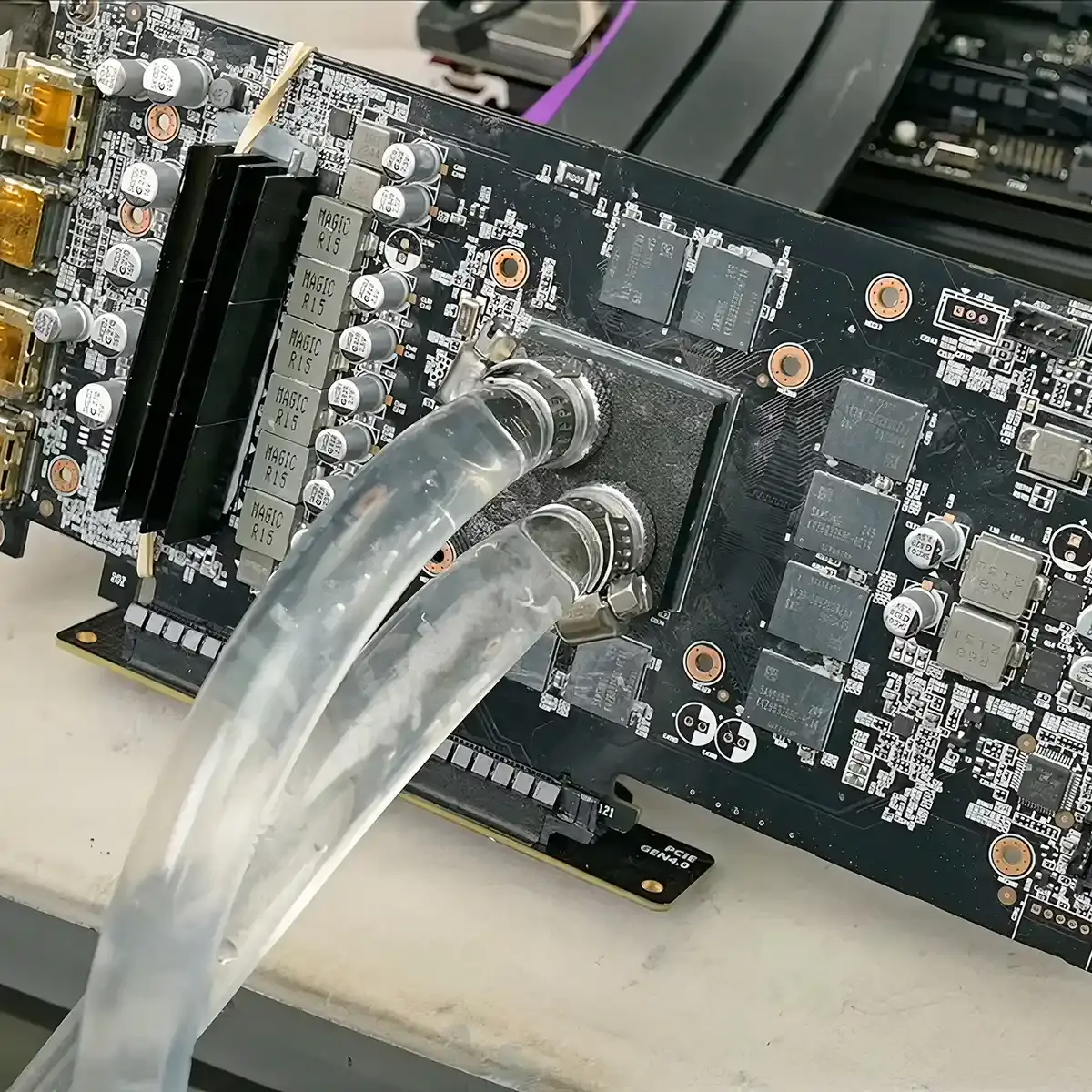
A popular YouTube channel recently conducted a daring experiment with computer cooling. They bypassed traditional water blocks, instead directing water straight onto the bare silicon chips of a graphics card. This unconventional method aimed to test the limits of direct liquid cooling for high-performance components.
Latest news
 California Imposes Penalties for Robotaxis Obstructing Emergency Services
 Meta’s AI Agent Muse Builds Comprehensive Dossiers on Close Contacts
 The State of Cybersecurity in 2026: Key Segments, Insights, and Innovations
 Why the Rumored iPhone Duo Excites Android Foldable Fans
The experiment involved removing the integrated heat spreader and standard cooling mechanisms. Water was then circulated directly over the exposed dies of the GPU. This approach is highly unusual and carries significant risks for the hardware involved.
Normally, a metal lid, called an integrated heat spreader (IHS), protects the delicate silicon chip. This IHS transfers heat to a cooler, often a water block or heatsink. By removing this protection, the YouTuber exposed the chip directly to the cooling fluid. This drastically increases the chance of electrical shorts or physical damage to the chip itself.
What are the Dangers of Such an Experiment?
The goal was to see if such a direct application of coolant could achieve superior thermal performance. Traditional water blocks have a small thermal resistance due to the interface between the chip and the block. Eliminating this interface could theoretically improve heat transfer efficiency.
The primary danger is short-circuiting the electronics. Water conducts electricity, and any stray droplets or leaks could permanently damage the graphics card. Another risk is physical damage to the delicate silicon die, which is very fragile without its protective IHS. Furthermore, the water used must be non-conductive if it comes into direct contact with electrical components, which is a specialized requirement.
This type of extreme modification is not recommended for typical users. It voids warranties and carries a high probability of destroying expensive hardware. The experiment serves more as a demonstration of theoretical cooling potential and the risks involved in pushing hardware boundaries.
Frequently Asked Questions
What is an integrated heat spreader (IHS)? An IHS is a metal lid that covers and protects the delicate silicon chip on a processor or graphics card. It helps distribute heat evenly to the cooling solution placed on top of it.
Why would someone try to remove the IHS? Removing the IHS, a process called „delidding,”is sometimes done by enthusiasts to achieve better cooling. It allows for direct contact between the cooler and the silicon die, potentially lowering temperatures.
Is direct water cooling safe for computer components? No, direct water cooling on bare silicon chips is generally not safe for standard computer components. Water conducts electricity, and direct contact can cause short circuits and permanent damage to the hardware.
Comments
Leave a comment