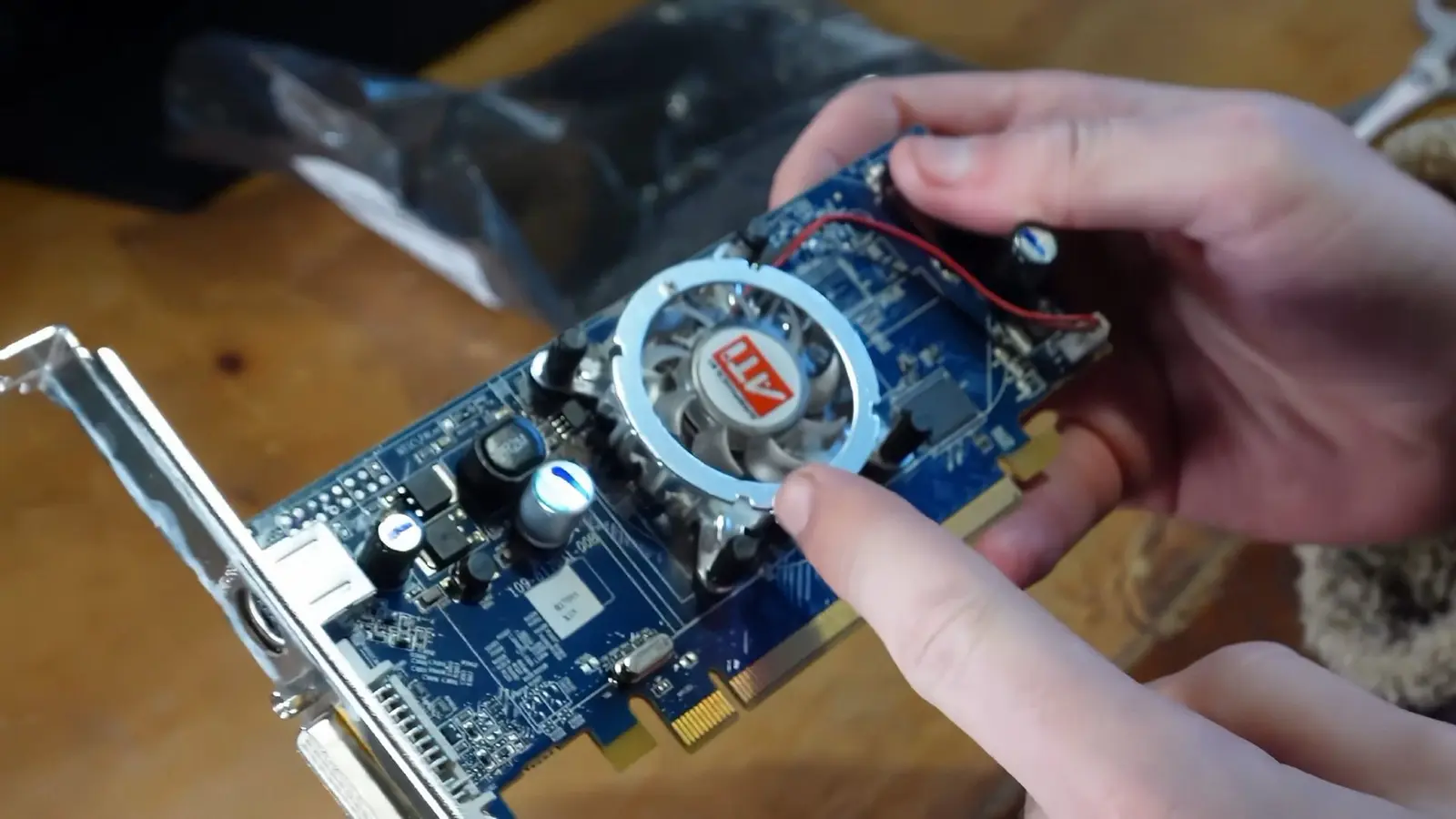
Turning a 2007 GPU into a GTA V Machine
For most people, trying to run a modern title on ancient hardware feels impossible. Yet the Budget‑Builds Official YouTube channel managed to launch GTA V on a Radeon card released in 2007, equipped with only 64 MB of VRAM. The result is surprisingly playable, though it requires major visual compromises. By editing configuration files, moving to Windows 8 and overclocking the GPU, the frame rate rose from a single frame per second to a range of 13‑20 FPS, even though many vehicles simply disappear from the scene.
Latest news
 Smart TVs frequently lose their Wi-Fi connection, leaving viewers staring at a spinning loading icon
 Why Ignoring Car Software Updates Is Risky
 Apple's foldable iPhone Duo introduces dual-display multitasking capabilities
 FCC Weighs Reciprocal Limits on Foreign Satellite Firms
How the Experiment Stacks Up Against Official Requirements
The classic GTA V specifications list a minimum of an Nvidia 9800 GT or an AMD HD 4870, both supporting DirectX 10 and 1 GB of VRAM. The enhanced 2025 version bumps the minimum to 4 GB, recommending a GTX 1630 or an RX 6400. The test card, an ATI Radeon HD 2350, is likely the weakest GPU ever to boot the game, according to the tester, despite its DDR2 memory being far from desirable today.
No Shared Memory Tricks, Pure Dedicated VRAM
It is important to note that this approach does not rely on shared or unified memory from an AMD APU; it uses only the card’s dedicated VRAM. This is not the channel’s first low‑memory stunt—they previously ran titles such as Half‑Life 2 and Minecraft with just 8 MB of VRAM.
Getting the Game
The first launch under Windows 10 with Catalyst 13.1 stalled at the splash screen for about ten minutes, as the game expected a pre‑HD 6900 series card. Deleting the settings file and restarting revived the launch. One video chapter titled „We’re in the GAME… at 1 FPS” captures that early frustration.
The creator started with the lowest in‑game settings and a previous 256 MB config file, disabling shadows, reflections and setting resolution around 240p. This yielded 3 FPS. Dropping detail levels to the absolute minimum pushed the rate to 10 FPS, still insufficient.
Configuration Tweaks and Overclocking
Switching to Windows 8 and Catalyst 12.6—original display drivers for that OS—opened new overclocking options unavailable in Windows 10. A second fan was added to the card, and MSI Afterburner raised the GPU core from 400 MHz to 520 MHz. Memory was pushed from 400 MHz to 475 MHz, which caused a black screen, but the card survived.
Final Performance Figures
With Windows 8 the setup reached 14 FPS. Further edits to visualsettings.dat and detail options via OpenIV lifted the range to 13‑20 FPS. The tester notes that on‑screen flickering points stem from the lack of memory, a conclusion supported by a clean Unigine Valley run. Visual glitches are abundant: gaps in world geometry, severely reduced textures on NPCs, and many cars failing to load, causing police vehicles to „float” and appear from invisible cars. The prologue train never loads, though first‑person driving works.
What the FPS Means in Practice
Even at 13‑20 FPS, crowded downtown streets can dip to 11‑12 FPS. The creator plans to release a full‑run video on a second channel in „lossless quality.” The timing serves as a tribute just before GTA VI’s scheduled November 19 launch, which is still PC‑exclusive and expected next year.
Comments
Leave a comment