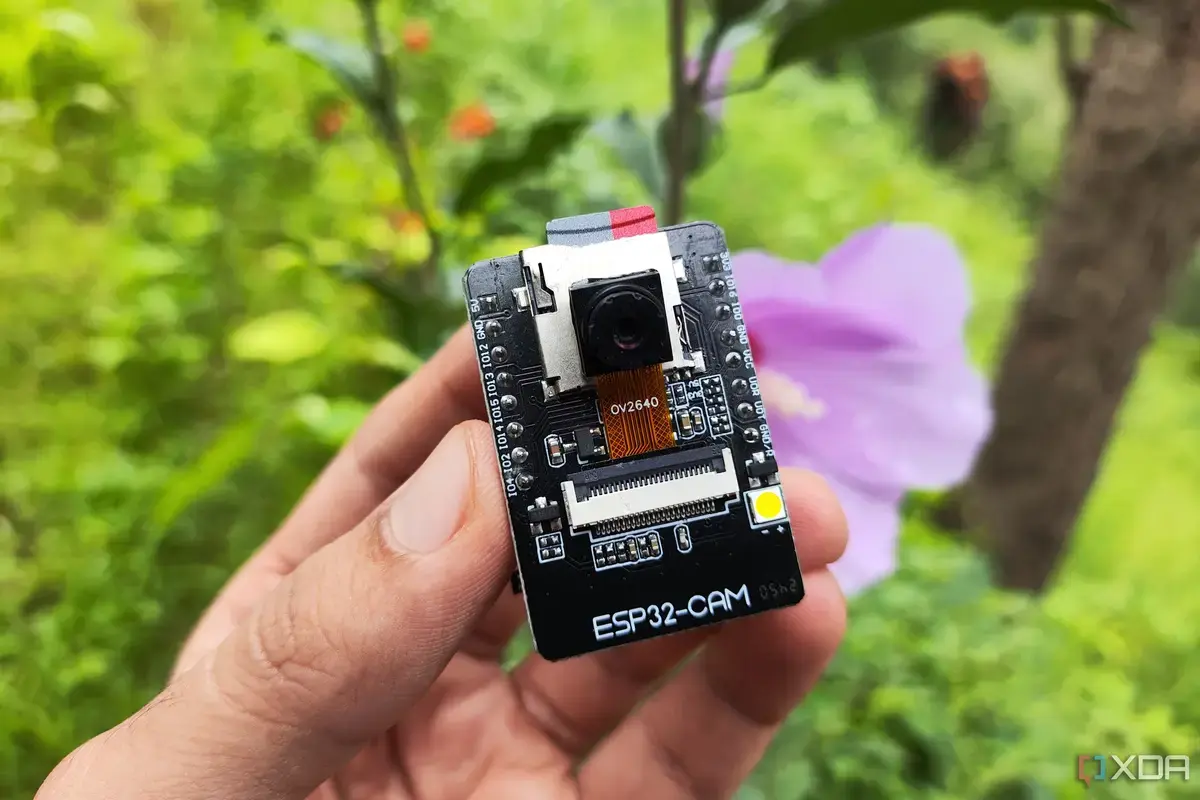
He emphasizes that the system gives him full access to raw footage
A DIY enthusiast built an attic‑mounted security camera using an ESP32 microcontroller, claiming it beats commercial Ring units in price, privacy, and user control. The project was completed in July 2026 and detailed by PC hardware writer Ayush Pande, who published his experience on July 30, 2026 at 2:00 PM EDT. Though the homemade unit does not match Ring’s highest video resolution, it offers local storage and no recurring fees. The ESP32 board captures video, streams it to a personal NAS, and encrypts footage before storage, eliminating reliance on cloud services. Components totaled under $30, a fraction of a Ring camera’s retail price, and the firmware can be modified to add motion zones or custom alerts. Pande notes that the setup took a weekend, with most time spent wiring the attic and configuring the ESP32’s Wi‑Fi stack.
Latest news
 Minisforum Unveils High‑End Ryzen AI Max+ PRO 495 Workstation
 NASA Eyes Revival of SR‑71 Blackbird
 My Home Wi‑Fi Was Crowded by 14 Neighbors—A Free App Helped Me Find a Clear Channel
 YouTube is tightening rules for low-effort Shorts
He emphasizes that the system gives him full access to raw footage, something he says commercial devices restrict through proprietary apps. How Does the ESP32 Solution Handle Video Quality? While the ESP32 camera streams at 720p, Ring’s premium models reach 1080p or higher. Pande acknowledges the lower resolution but argues that the attic’s limited field of view makes fine detail less critical. He adds that the image remains clear enough to identify people and pets, and the lower bandwidth reduces strain on his home network. The trade‑off, he says, is worthwhile for the gain in privacy and control. What Are the Long‑Term Implications for DIY Security? By demonstrating a functional, low‑cost alternative, the project may encourage more users to explore self‑hosted surveillance, potentially reducing dependence on subscription‑based services.
Pande predicts that as ESP32 and similar chips become more powerful, hobbyist cameras could close the resolution gap without sacrificing the privacy benefits. He also warns that users must still secure their local networks, as any lapse could expose the feed to unauthorized access. Frequently Asked Questions How much did the ESP32 attic camera cost to build? The total parts expense was under thirty dollars, covering the ESP32 board, a camera module, housing, and basic wiring. Does the homemade camera require a subscription for cloud storage? No, the system stores video locally on a personal network‑attached storage device, eliminating any ongoing service fees. Can the ESP32 camera be integrated with existing smart home platforms? Yes, the firmware can be modified to publish MQTT messages or trigger webhooks, allowing compatibility with many home automation hubs.
Comments
Leave a comment