Early benchmarks suggest the RTX Spark may lead in raw GPU throughput for
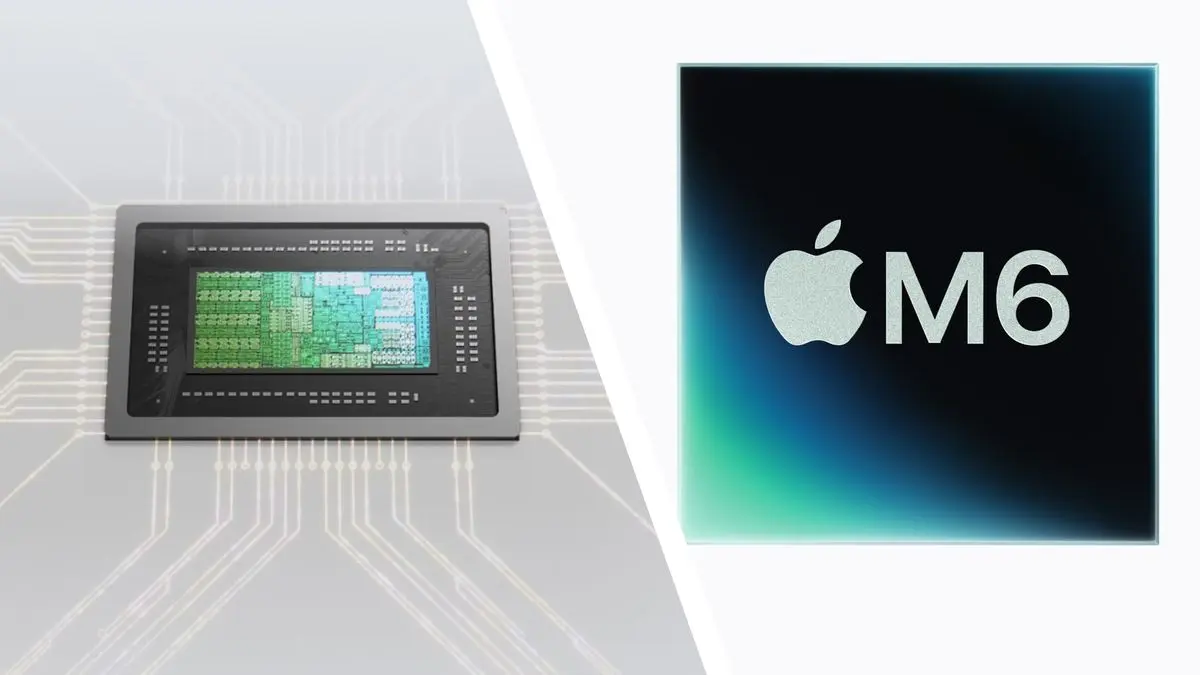
Nvidia and Apple are preparing to launch competing high-performance chips aimed at creative professionals, gamers, and AI developers, with the RTX Spark and M6 expected to debut in late 2026. Both chips promise significant leaps in processing power, targeting workloads that demand intense graphical rendering, machine learning acceleration, and seamless multitasking across demanding applications. The showdown highlights a growing rivalry in the premium computing space, where architecture choices and ecosystem integration could determine real-world performance beyond raw specs. The RTX Spark builds on Nvidia’s Ada Lovelace architecture, featuring enhanced ray tracing cores and dedicated AI tensor units designed to accelerate generative models and real-time rendering in software like Blender and Unreal Engine. Apple’s M6, rumored to be based on an evolved ARM design with a unified memory architecture, aims to optimize performance per watt for video editing in Final Cut Pro and AI tasks using Core ML.
Latest news
 Anker Unveils Playful 45W Charger With Animated Face Display
 Google Docs Web Version Still Missing Native Dark Mode
 Anthropic-Linked Vulnerability Exploited From China, Targets US and Japan
 Text‑Based AI Agents: Your New Digital Assistants
Early benchmarks suggest the RTX Spark may lead in raw GPU throughput for gaming and 3D workloads, while the M6 could excel in sustained performance and battery efficiency for mobile workstations. How do thermal and power constraints affect real-world usage? Thermal design will play a crucial role in determining which chip delivers consistent performance under load, especially in thin laptops where cooling is limited. Nvidia’s RTX Spark is expected to draw higher power under peak loads, potentially requiring robust cooling solutions that may impact device thickness and fan noise. Apple’s M6, leveraging its tight hardware-software integration, is likely to maintain higher sustained clock speeds without throttling, particularly in MacBook Pro configurations.
This difference could influence user experience during long rendering sessions
This difference could influence user experience during long rendering sessions or extended AI training tasks, where stability matters as much as peak speed. Can software optimization close the performance gap? Software ecosystems will heavily influence which chip feels faster in practice, as raw hardware performance does not always translate to real-world advantages. Nvidia’s CUDA platform and broad industry adoption in AI frameworks like TensorFlow and PyTorch give the RTX Spark an edge in developer flexibility and access to optimized libraries. Apple’s Metal framework and Core ML offer deep integration within its ecosystem, but may require more effort for cross-platform developers to fully utilize.
Ultimately, the choice between the two may depend less on silicon and more on which software tools a creator relies on daily, as both companies push to lock in users through performance, efficiency, and exclusive features. Frequently Asked Questions Will the RTX Spark be available in laptops or only desktops? The RTX Spark is expected to launch first in high-end desktop graphics cards, with mobile versions for workstation laptops following several months later, targeting creators who need portability without sacrificing GPU power. How does the M6’s unified memory help AI workloads? By allowing the CPU, GPU, and neural engine to access the same pool of high-bandwidth memory without data copying, the M6 reduces latency in AI tasks like image generation and language model inference, improving efficiency in memory-intensive workflows. Is ray tracing significantly better on the RTX Spark compared to the M6?
Yes, the RTX Spark includes dedicated third-generation ray tracing cores that accelerate lighting and reflections in real time, a feature Apple has not emphasized in its M-series chips, which rely more on software-based or hybrid approaches for similar effects.
Comments
Leave a comment