Computational performance is also solid. Both devices
Over time, Honor has demonstrated a remarkable ability to innovate in the mobile device market, adopting advanced technologies such as silicon-carbon anode batteries, high standards of impact resistance, and even experimenting with futuristic concepts such as the robotic phone. Recently, I had the opportunity to test two of the company's newest models: the Honor Magic 8 Pro flagship and the mid-range Honor 600 Pro. Just a glance at the technical specifications was enough to draw my attention: both phones incorporate massive batteries made of silicon-carbon composite material, capable of fast charging, are equipped with ambitious photo systems, and have IP68 and IP69K sealing ratings.
Latest news
 California Imposes Penalties for Robotaxis Obstructing Emergency Services
 Meta’s AI Agent Muse Builds Comprehensive Dossiers on Close Contacts
 The State of Cybersecurity in 2026: Key Segments, Insights, and Innovations
 Why the Rumored iPhone Duo Excites Android Foldable Fans
The most important aspect is that these promises in the technical documentation translate concretely into the experience of use. The Magic 8 Pro's 7,100 mAh batteries and the 600 Pro's 7,000 mAh batteries have withstood over two days of normal use, an autonomy that surpasses any other device we've tested so far. The photographic modules also proved impressive, with a special focus on the 200 megapixel telephoto lens with 3.7x optical zoom available on Magic 8 Pro. Although the rear of both carcasses is made of plastic, the overall structure conveys a premium feel and both units have withstood an informal test with tap water well, although they acknowledge that it was not a rigorously controlled experiment.
Computational performance is also solid. Both devices are powered by Qualcomm Snapdragon 8 Elite chipsets, the Gen 5 variant for the Magic 8 Pro and the previous generation, Gen 4, for the 600 Pro. The multitasking and running of high-demand games were handled without any visible problems by these processors. Another significant advantage is competitive pricing: the 512 GB storage base variant of the Magic 8 Pro sells for £1,099.99 or A$1,999, while the 600 Pro starts at £899.99 or A$1,499 for the same storage capacity. It should be noted that none of these phones are officially available on the US market.
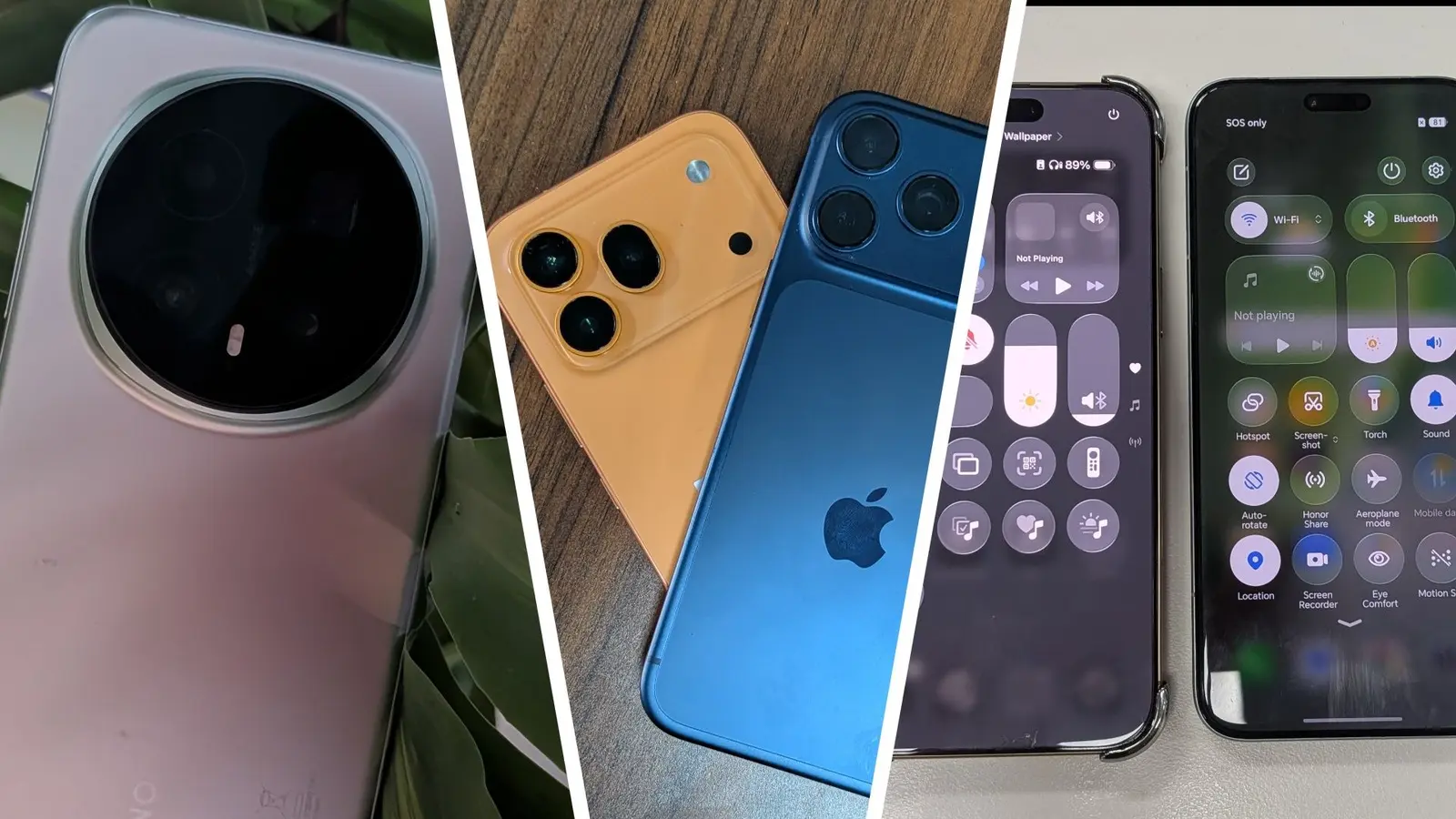
On paper, both models should have convinced me completely. In practice, however, their strengths are overshadowed by how Honor imitates Apple's style, especially through the MagicOS interface and the camera design of the Honor 600 Pro. Is this a tribute or a replica? At first glance, it's obvious that MagicOS is trying to replicate the iOS experience on Android. The Quick Settings panel has a very similar layout and graphical style to the iOS Control Center. The system transitions, the animations of opening apps, and even the way the lists run, all gave me the feeling that I was using an i Phone.
Both Honor phones are equipped
MagicOS also implicitly disables the Android application cabinet, displaying all programs on multiple home screen pages, an arrangement similar to that of iOS before the introduction of the Application Library in version 14. Although the underlying theme is not an exact copy of the Apple interface, details like the design of the digital watch and the backgrounds will seem familiar to anyone who has used an i Phone. Even the initial setup process includes an animation with the word „Hello written in cursive letters, strongly evoking Apple style, with the text ”MagicOS placed above.
Both Honor phones are equipped with an AI button located in the bottom-right corner, which visually and functionally resembles the Camera Control button on the i Phone. It launches the AI functions, but a double-press opens the camera; inside the photo application, the button acts as a trigger and adjusts the zoom if it is slid. Although the button is useful, its distinctive behavior remains borrowed from Apple's ecosystem.
Honor should be credited because the Magic Capsule feature precedes Apple's Dynamic Island, being released in 2019, three years before this feature debuted on the i Phone 14 Pro. My argument is not that every similar function was invented by Apple, but that the design language of Honor repeatedly points in the same direction. The camera module on the Honor 600 Pro also resembles the i Phone 17 Pro, having a wide rectangular module and a similar arrangement of the three cameras. Even the orange finish of the 600 Pro looks like a close variation of Apple's Cosmic Orange. The differences exist, but they're not enough to create a distinct visual identity.
Since I've been using Android phones for years and recently switched to an i Phone, I've seen these similarities less as a tribute and more as a lack of trust. Honor has made enough modifications to differentiate the technical functions, but not enough to give them a clear identity of their own. The editor
Comments
Leave a comment