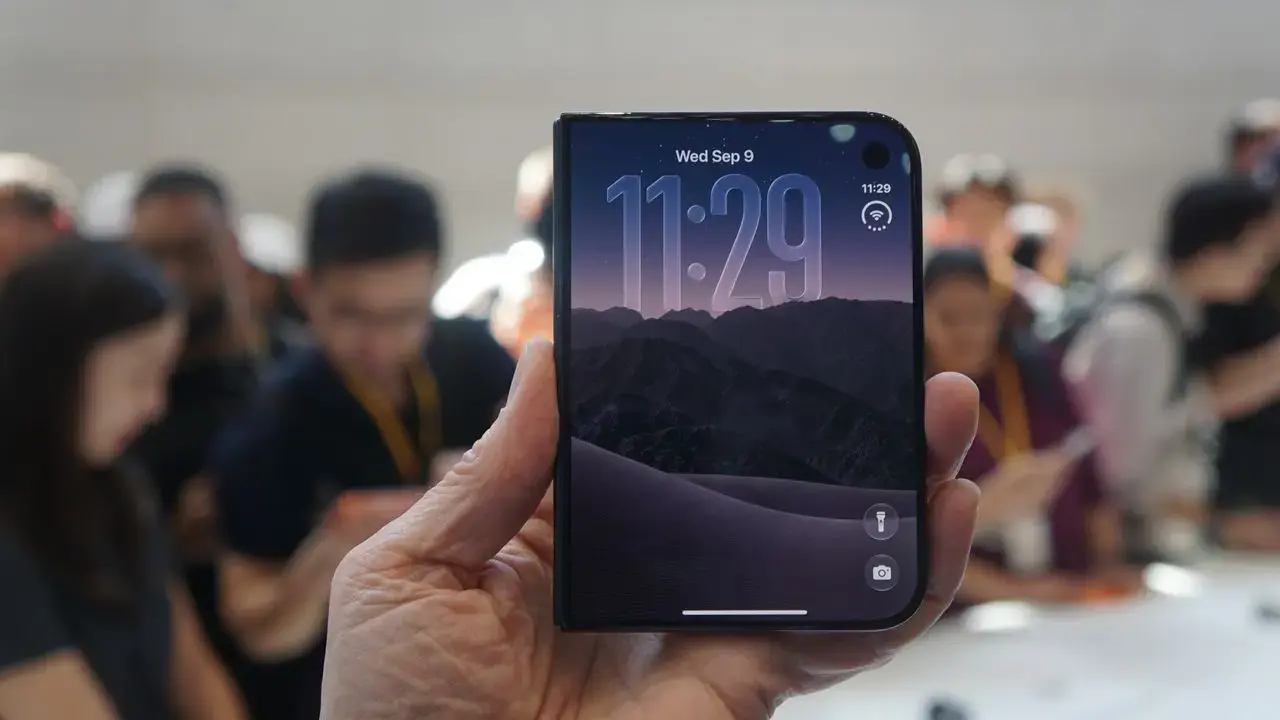
How Apple Addressed the Foldable Crease Challenge
Apple has officially launched its first folding phone, the i Phone Duo, marking a significant entry into the flexible display market. The device features a compact 5.4-inch external screen and expands to a spacious 7.6-inch internal display when unfolded. Designed with portability in mind, the phone resembles a passport in size and feels premium in hand. Apple’s design team focused on creating a seamless user experience between both screens, ensuring apps transition smoothly. Early hands-on impressions suggest the device feels refined and intentional, not experimental. The launch comes after years of speculation about Apple’s folding ambitions. Analysts note the timing aligns with growing consumer interest in larger screens that remain pocket-friendly. The i Phone Duo aims to bridge the gap between smartphone usability and tablet-like immersion.
Latest news
 Anker Unveils Playful 45W Charger With Animated Face Display
 Google Docs Web Version Still Missing Native Dark Mode
 Anthropic-Linked Vulnerability Exploited From China, Targets US and Japan
 Text‑Based AI Agents: Your New Digital Assistants
One of the most talked-about aspects of the i Phone Duo is how Apple minimized the visible crease on the inner display. Rather than relying on complex mechanical fixes, the company used a refined hinge design combined with a flexible OLED layer that distributes pressure evenly. This approach reduces the prominence of the fold line without adding bulk or complexity. Engineers optimized the layer stacking beneath the screen to prevent permanent indentation over time. Early testers report the crease is nearly invisible under normal lighting and touch interaction. Apple’s solution prioritizes simplicity and durability over flashy innovations. The method reflects Apple’s tendency to solve problems through elegant, integrated design rather than over-engineering. This could set a new benchmark for foldable screen longevity in the industry.
What Does This Mean for Apple’s Future Product Line?
The introduction of the i Phone Duo raises questions about how folding devices will fit into Apple’s broader ecosystem. Will future i Pads or MacBooks adopt similar folding technology? Could this lead to a unified device strategy where one product adapts to multiple roles? Apple has not confirmed plans for additional folding models, but the Duo’s success may influence long-term roadmap decisions. Developers are already exploring how to optimize apps for the dual-screen layout, particularly for productivity and media consumption. The device may appeal to users who want a larger canvas without carrying a separate tablet. If adoption is strong, Apple could expand the folding line with larger variants or ruggedized editions. For now, the Duo stands as a bold step toward redefining what a smartphone can be.
Is the i Phone Duo compatible with existing i Phone accessories? Most current accessories, including MagSafe chargers and cases, are not compatible due to the unique folding form factor. Apple plans to release a new line of Duo-specific accessories, such as flexible cases and dual-layer screen protectors, launching alongside the device.
Frequently Asked Questions
How durable is the hinge mechanism after repeated use? Apple states the hinge is tested for over 200,000 folds, equivalent to roughly 100 uses per day for five years. The design uses aerospace-grade materials and a self-cleaning mechanism to resist dust and debris buildup.
Can both screens operate independently with different apps? Yes, the i Phone Duo supports independent app usage on each screen. Users can run two apps simultaneously or stretch one app across both displays for a tablet-like experience, managed through a new multitasking interface in iOS 18.
Comments
Leave a comment