Active Exploitation of Fail2 Install
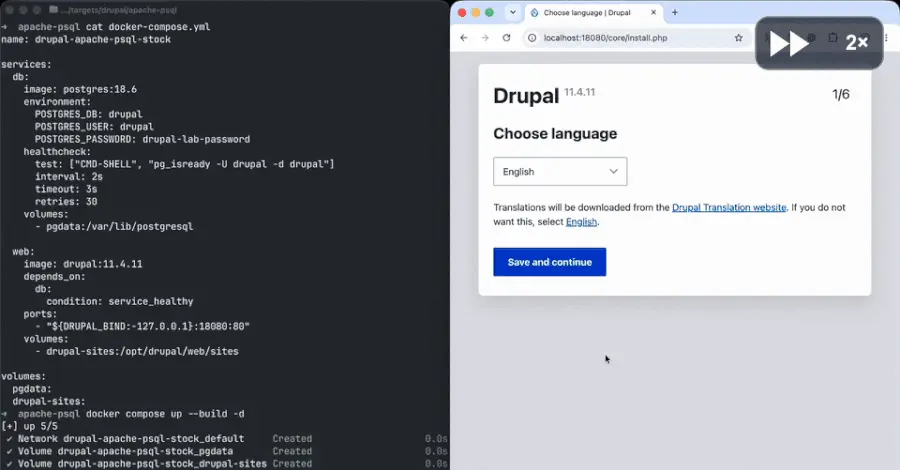
US authorities have classified a critical Drupal core flaw as an active threat. CISA recently added this severe deficiency to its KEV catalog. The issue, known as Fail2 Install, allows unauthenticated attackers to take control of sites. Attackers can execute arbitrary code via the Drupal installer. Under specific conditions, they can force a reinstall using install.php. This leads to full site takeover.
Latest news
 Turnitin Confirms Cyberattack on Customer-Facing Systems
 AI coding agents are moving beyond code generation
 Microsoft Resolves Critical Bug Blocking Office App Access
 McDonald's Japan Data Breach Exposes Customer App Data
Searchlight Cyber Reveals Attack Mechanism
Searchlight Cyber’s independent analysis revealed the precise attack mechanism. Server resource limits are exploited to trick Drupal into thinking the site is not installed. This triggers the installation process via install.php. The attacker creates an admin account and executes arbitrary PHP code. Drupal’s installation state checks can be bypassed through resource exhaustion. A failed database connection is misinterpreted as proof the site is uninstalled. A race condition allows passing a second database connectivity test, permitting installation.
Resource Exhaustion Techniques
Three resource exhaustion techniques were used to achieve this result. These include EMFILE limits, database connection exhaustion, and TCP source port exhaustion. Researchers started with EMFILE, then explored database and TCP limits. This methodology revealed a pre-authentication RCE affecting Drupal 8.9, 9, 10, and 11. The flaw impacts four common implementation combinations: Apache with PostgreSQL, Apache with MySQL, PHP-FPM with PostgreSQL, and PHP-FPM with MySQL.
SQLite Database as Attack Vector
The behavior can be turned into a code execution path. The Drupal installer supports SQLite database files and allows selecting the database path. The installer does not restrict the file name extension. Selecting a path ending in .php under the document root creates a SQLite database with a PHP extension. Once installation reaches the site configuration form, Drupal stores the submitted site name in the SQLite database. Using PHP code as the site name writes payload bytes into the .php database file.
Apache Rewrite Rule Weakness
Direct access to the generated PHP file is blocked by the standard .htaccess file in standard Apache implementations. However, a weakness in Apache’s Rewrite rule path handling can be exploited for arbitrary PHP code execution. Researchers Kevin Gervot and Adam Kues from Searchlight Cyber explained how availability errors become security primitives. In Drupal, temporary database failures can generate a FAIL, FAIL, then SUCCESS sequence. This reopens the installer on an existing site, leading to pre-authentication RCE via a SQLite database containing PHP code.
Patches and Historical Context
The problem was fixed in specific versions. For Drupal 11.4.x, update to 11.4.13. For Drupal 11.3.x, update to 11.3.22. For Drupal 10.6.x, update to 10.6.22. The KEV inclusion follows a report indicating the vulnerability was exploited on live sites since November 19, 2026, at 19:00 UTC. Notably, this is the third actively exploited Drupal flaw this year, following CVE-2026-9082 and CVE-2026-118539, both with CVSS scores of 6.5.
Comments
Leave a comment