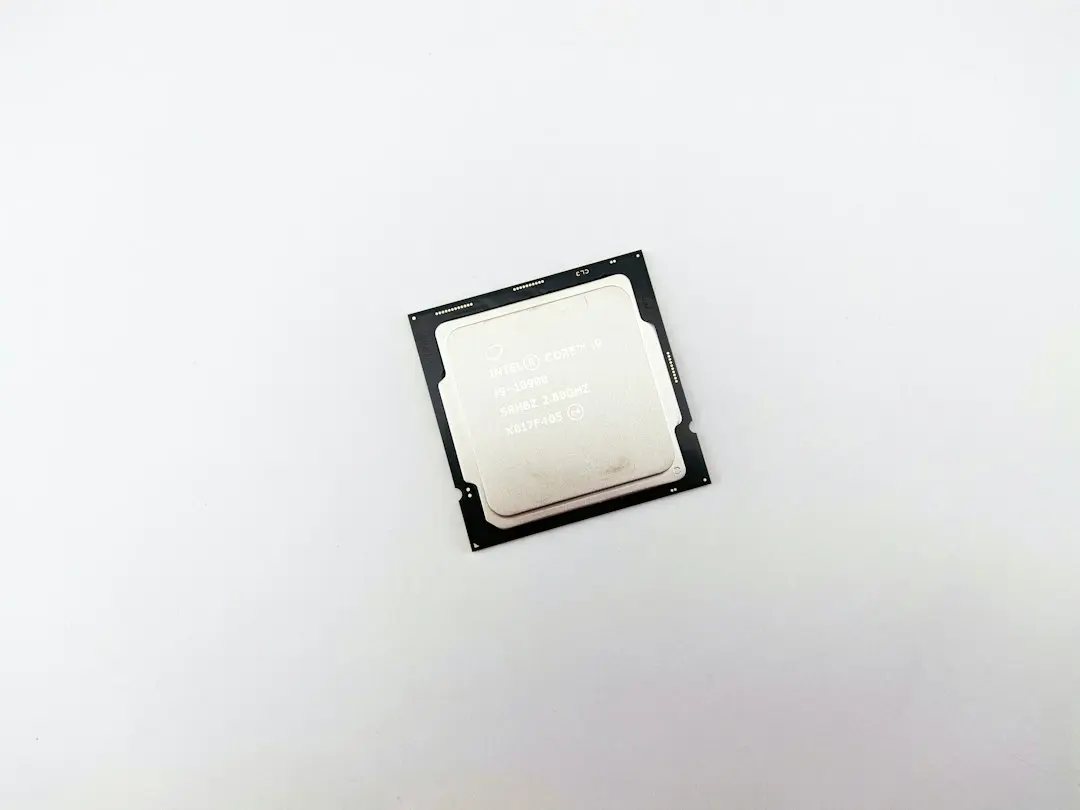
Why the N100 Still Outperforms Expectations
A modest Intel N100 processor, released three years ago, remains a solid choice for DIY home servers, especially when running Docker containers. Despite newer models like the N150 and N350, the N100’s performance is more than adequate for most residential workloads.
Latest news
 Smart TVs frequently lose their Wi-Fi connection, leaving viewers staring at a spinning loading icon
 Why Ignoring Car Software Updates Is Risky
 Apple's foldable iPhone Duo introduces dual-display multitasking capabilities
 FCC Weighs Reciprocal Limits on Foreign Satellite Firms
The N100 is a low‑power, single‑socket CPU designed for embedded systems and small form‑factor PCs. It offers four cores, a base clock of 1.3 GHz, and a boost of 2.6 GHz. Its 4 MB L3 cache and 10 W TDP make it ideal for quiet, energy‑efficient setups. Home users looking for a budget NAS or a compact Docker host will often find the N100 in mini‑PCs, single‑board computers, or low‑cost servers.
Although the N100 is older than newer Intel chips, its architecture delivers solid single‑thread performance for container workloads. Benchmarks show that Docker images run smoothly, with average CPU usage below 30 % on typical media‑streaming or web‑server tasks. The processor’s integrated graphics are sufficient for light GPU‑accelerated workloads, and its 64‑bit support ensures compatibility with modern operating systems.
Is the N100 Still a Viable Choice for 2026?
Manufacturers continue to ship N100‑based boards because they hit a sweet spot between cost and capability. The price drop of the N100 platform has made it attractive for hobbyists who need a reliable, low‑power server without breaking the bank. Even with the newer N150 offering slightly higher clock speeds, the N100’s performance remains competitive for most home‑server use cases.
Yes, for many scenarios. The N100’s low thermal output allows it to run in small enclosures without fans, reducing noise and power consumption. For users who plan to run a handful of Docker containers—such as a personal media server, a home automation hub, or a lightweight web service—the N100 provides enough headroom. However, if you anticipate heavy multi‑threaded workloads or plan to scale beyond a few containers, newer CPUs like the N350 may offer better performance per watt.
The future of home servers will likely lean toward more efficient, higher‑core processors, but the N100 remains a cost‑effective baseline. Its proven reliability and widespread availability in the market make it a dependable option for those who prioritize budget over cutting‑edge specs.
Frequently Asked Questions
What is the typical power consumption of an N100‑based server? The N100 has a 10 W TDP, so a complete system usually draws around 15–20 W under load, making it ideal for always‑on setups.
Can the N100 handle multiple Docker containers simultaneously? Yes, it can comfortably run 5–10 lightweight containers without significant CPU bottlenecks, especially for services like Plex, Home Assistant, or Nextcloud.
Will the N100 support future Docker releases? The processor’s 64‑bit architecture and ongoing software support ensure compatibility with current Docker versions, and it will remain functional for the foreseeable future.
Comments
Leave a comment