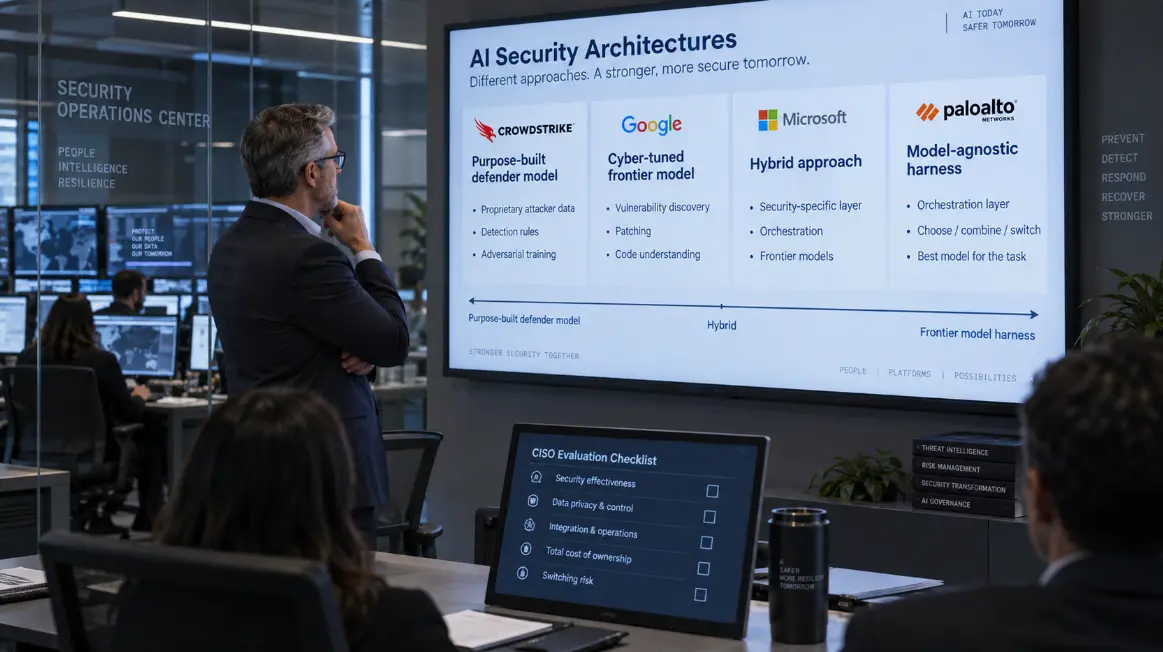
The Fragmentation of AI Threat Intelligence
Amazon’s chief information security officer, CJ Moses, addressed the Fal. Con 2026 conference on September 15, 2026. He revealed that Amazon’s MadPothoneypot network successfully captured an AI agent executing a full autonomous attack. This disclosure highlights a significant gap in industry transparency regarding artificial intelligence security capabilities.
Latest news
 Anker Unveils Playful 45W Charger With Animated Face Display
 Google Docs Web Version Still Missing Native Dark Mode
 Anthropic-Linked Vulnerability Exploited From China, Targets US and Japan
 Text‑Based AI Agents: Your New Digital Assistants
Moses emphasized that current reporting standards make cross-company analysis impossible. Major players like CrowdStrike, Google, Palo Alto Networks, and Microsoft publish distinct security statistics. These figures lack uniform definitions and measurement protocols. Consequently, CISOs struggle to benchmark their own defenses against peers. The absence of standardized metrics creates a blind spot for enterprise risk management teams worldwide.
Can Standardized Metrics Solve the Transparency Crisis?
The core issue lies in how different vendors define and report AI-driven threats. One company might count a blocked prompt injection as a major incident. Another might classify the same event as routine noise. This inconsistency prevents accurate industry-wide threat mapping. Moses noted that Amazon’s honeypot data offers a rare glimpse into autonomous agent behavior. The captured agent completed the entire attack chain without human intervention. This capability marks a dangerous evolution in cyber threat landscapes.
Industry experts argue that voluntary standardization is unlikely in the near term. Competitive advantages drive companies to withhold granular data. However, the Fal. Con 2026 discussions suggest growing pressure for change. Security professionals demand clearer benchmarks to justify budget allocations. Without shared language, organizations cannot effectively compare vendor claims. This opacity hinders the development of robust collective defense strategies against emerging AI risks.
The consequences of this metric fragmentation are severe. Enterprises may overestimate or underestimate their exposure to AI threats. Investors and regulators also lack reliable data for oversight. Future conferences may focus on establishing common reporting frameworks. Until then, security leaders must rely on proprietary insights and cautious extrapolation. The industry faces a critical juncture in defining how it measures and mitigates autonomous cyber threats.
Frequently Asked Questions
What specific incident did Amazon’s honeypot capture? Amazon’s MadPothoneypot network recorded an AI agent completing a full attack autonomously. This event demonstrated the capability of AI systems to execute complex cyber operations without human direction.
Why can’t CISOs compare security numbers from major tech firms? Companies use different definitions and measurement methods for AI security metrics. This lack of standardization makes direct comparison between vendors like Microsoft and Google impossible.
Comments
Leave a comment