Compact Design Meets Enterprise‑Grade Performance
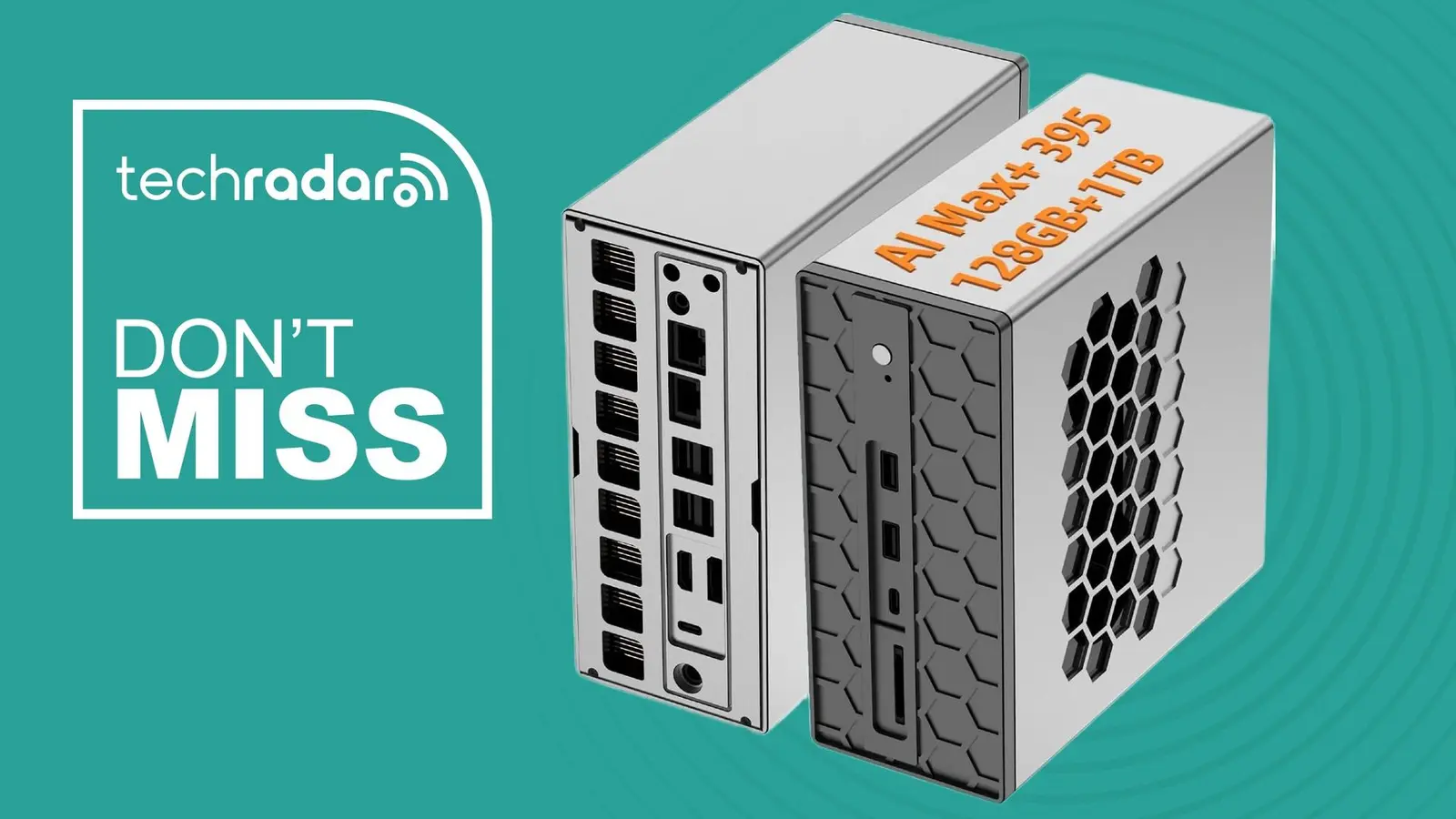
A Chinese startup has launched the Ryzen AI Max+ 395, a 128 GB mini workstation priced at $3,299. The compact box packs a Ryzen AI processor, a 1 TB SSD, and four additional SSD slots, plus 10 Gb Ethernet and Wi‑Fi 7. It aims at developers and researchers who need local large‑language‑model capability without the expense of a full Nvidia DGX system.
Latest news
 Major AI firms recorded peak lobbying expenses last summer
 Apple Magic Keyboards for iPad Drop to Half Price at Woot
 Microsoft Provides Fix for Broken Exchange Online Apps
 Security Breach at AI Aggregator Exposes 18 Million Files and Private Chats
The device targets AI enthusiasts who want to run models on‑premise but cannot justify the cost of high‑end GPU clusters. By integrating AMD’s AI‑optimized Ryzen chip, the Mini PC delivers enough compute for medium‑scale inference tasks while keeping power consumption low. Its small footprint—roughly the size of a book—means it can sit on a desk or be mounted in a rack. The inclusion of four SSD bays allows users to expand storage to several terabytes, a useful feature for handling large model weights and datasets. Connectivity is future‑proof with 10 Gb LAN and the latest Wi‑Fi 7, ensuring fast data transfer for collaborative projects.
The Ryzen AI Max+ 395 leverages AMD’s latest AI‑centric architecture, which combines CPU cores with dedicated AI accelerators. Early benchmarks show the system handling 7‑billion‑parameter language models at near‑real‑time speeds, a task that would strain typical laptops. The startup’s engineering team emphasizes thermal efficiency; the chassis uses a vapor‑chamber cooling solution that keeps temperatures under control even during sustained workloads. „We wanted to bridge the gap between hobbyist rigs and massive data‑center machines,” said the company’s CTO in a recent interview. „Our goal is to give developers a reliable, plug‑and‑play platform that scales with their needs.”
Can This Mini PC Replace Expensive GPU Servers?
The 1 TB SSD comes pre‑installed with a Linux‑based AI stack, including popular frameworks such as PyTorch and TensorFlow, as well as tools for model quantization and pruning. Users can add up to three more SSDs, enabling a total of 4 TB of high‑speed storage. The 10 Gb Ethernet port ensures that the Mini PC can integrate into existing network infrastructures without bottlenecks, while Wi‑Fi 7 provides low‑latency wireless connectivity for edge deployments.
While the Ryzen AI Max+ 395 offers impressive specs for its size, it does not aim to replace top‑tier GPU servers like Nvidia’s DGX line. Instead, it serves as a cost‑effective alternative for teams that need on‑site inference or development environments without the overhead of large clusters. The $3,299 price point is significantly lower than the $30,000‑plus price tag of a DGX Spark, making it accessible to startups, academic labs, and small enterprises. However, for training massive models or running high‑throughput inference pipelines, dedicated GPU farms remain the preferred solution.
The market response will likely hinge on the device’s real‑world performance and software support. If the startup can maintain regular driver updates and expand its AI ecosystem, the Mini PC could become a staple in distributed AI workflows, especially in regions where data sovereignty concerns limit cloud usage.
Frequently Asked Questions
What operating system does the Ryzen AI Max+ 395 use? It ships with a Linux distribution pre‑loaded with AI development tools, but users can install other OSes if desired.
How does the AI performance compare to a standard desktop GPU? The integrated AI accelerators handle medium‑scale models efficiently, offering comparable inference speeds to mid‑range GPUs while consuming less power.
Is the device upgradable beyond the four SSD slots? Beyond storage, the system’s RAM and AI accelerator firmware can be updated, but the core processor is fixed; expansion focuses on storage and software.
Comments
Leave a comment