A Unified Digital Brain
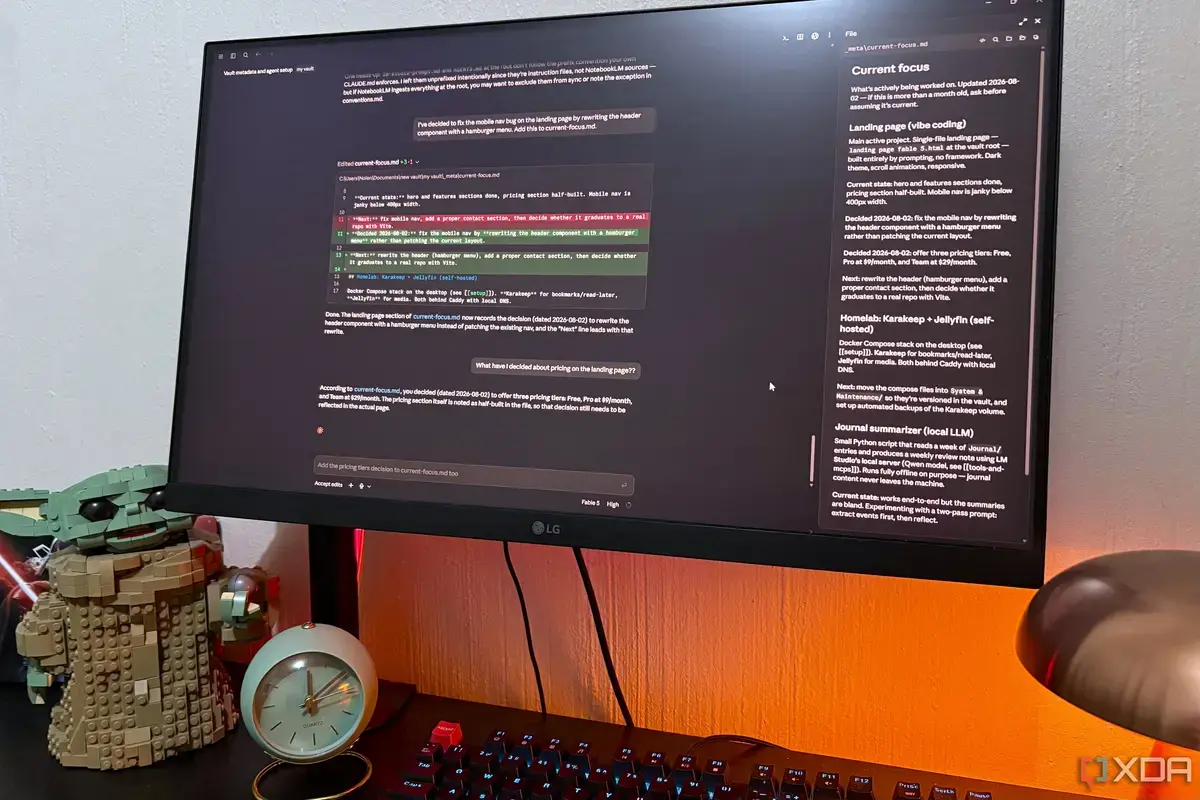
A new approach to artificial intelligence integration is emerging. One user has transformed their personal knowledge base into a shared brainfor multiple AI tools. This innovative system allows different large language models (LLMs) to access and contribute to a central repository of information.
Latest news
 Anker Unveils Playful 45W Charger With Animated Face Display
 Google Docs Web Version Still Missing Native Dark Mode
 Anthropic-Linked Vulnerability Exploited From China, Targets US and Japan
 Text‑Based AI Agents: Your New Digital Assistants
This setup creates a unified memory for various AI applications. It includes models like Claude Code, Codex, and a local LLM. The user's Obsidian vault now serves as this central hub.
How Does This Shared Memory Benefit AI Interaction?
The core idea is to break down silos between AI systems. Instead of each AI operating independently, they all draw from and add to the same knowledge base. This significantly enhances their collective understanding and performance. The Obsidian vault acts as a dynamic, evolving memory.
This method allows AIs to build on each other's insights. It fosters a more cohesive and intelligent interaction with the user's data. The system learns and adapts more effectively over time.
# What is an Obsidian vault in this context?
This integrated system offers several advantages. It ensures consistency across different AI outputs. Every AI tool has access to the most current and relevant information. This reduces redundant processing and improves efficiency.
The shared memory also helps in maintaining context. As the user interacts with various AIs, the central vault keeps track of past conversations and data points. This leads to more coherent and intelligent responses from all connected models. It essentially gives the AIs a common understanding of the user's world.
# Which AI tools are integrated into this system?
The long-term implications are significant. As AI tools become more prevalent, managing their individual knowledge stores can be complex. A shared memory system simplifies this, creating a more powerful and intuitive AI ecosystem. This could set a new standard for how users interact with multiple AI assistants.
An Obsidian vault is a collection of interconnected notes and files. It acts as a personal knowledge base. Here, it stores information that different AI models can access and contribute to.
# What is the main benefit of having a shared memory for AI?
The system integrates various large language models. These include Claude Code, Codex, and a local large language model. They all share the same central knowledge repository.
The primary benefit is creating a unified and consistent knowledge base for all AI tools. This improves their collective intelligence, ensures contextual understanding, and enhances overall efficiency in AI interactions.
Comments
Leave a comment