How Does the Blueprint Reduce Development Complexity?
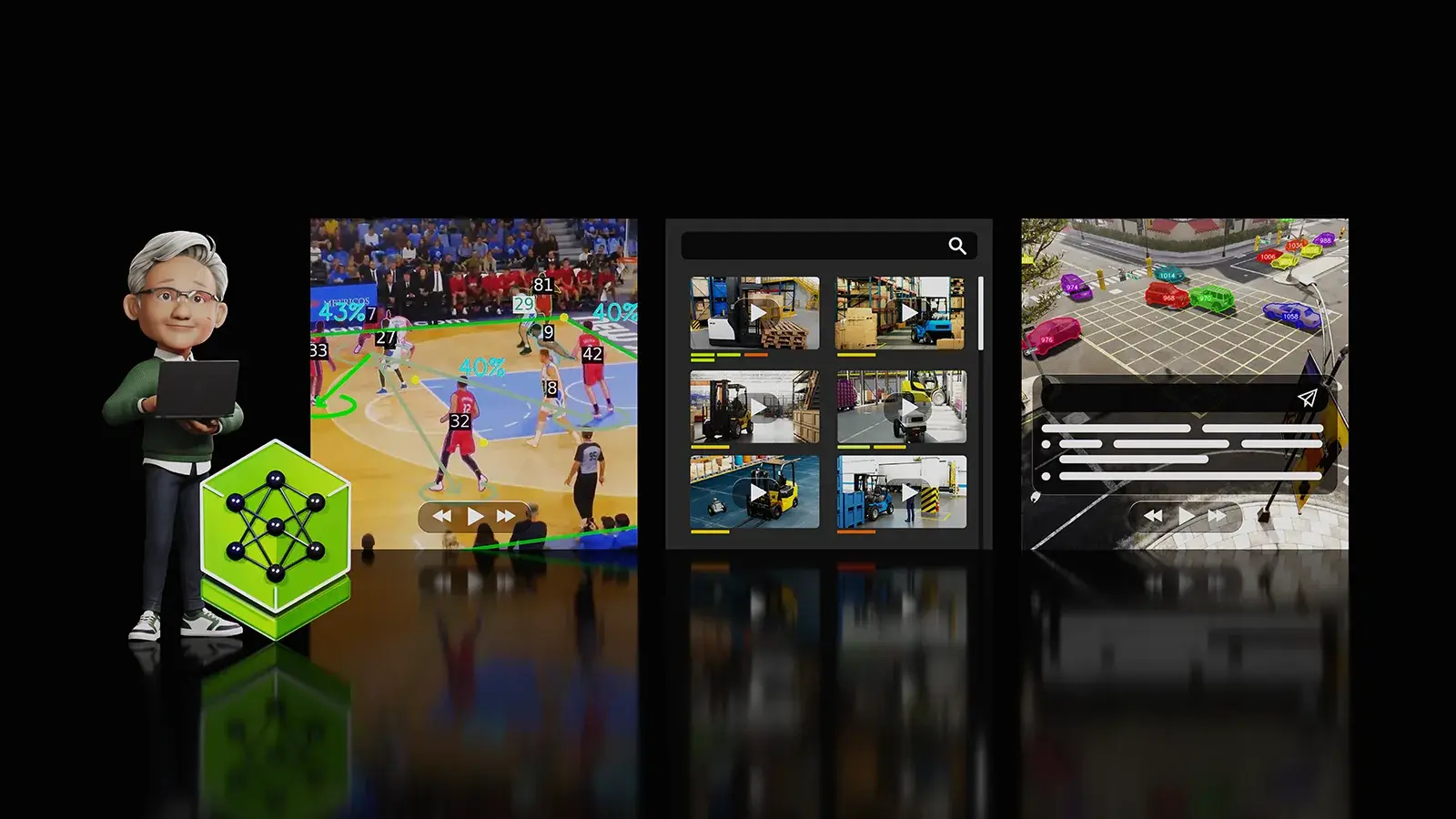
NVIDIA has released an updated version of its Video Search and Summarization Blueprint, version 3.3, designed to reduce the cost and complexity of building and operating visual AI agents at scale. The blueprint provides a comprehensive framework for integrating vision-language models into production systems that process live and archived video streams. It targets developers and enterprises seeking to deploy AI-powered video analytics without managing fragmented infrastructure.
Latest news
 Why Meta's New AI Tool Fails to Win Over Daily Users
 Assessing Risks in Open-Source Artificial Intelligence
 Autonomous AI Agents Launch Cyberattacks Against North American Government Portals
 Warlock Group Targets SharePoint Servers in Critical Infrastructure
The VSS Blueprint 3.3 addresses the gap between experimental AI capabilities and real-world deployment by unifying ingestion, stream processing, event detection, retrieval, summarization, and reporting into a single maintainable pipeline. Built on NVIDIA Metropolis, the platform leverages accelerated computing to handle high-volume video workloads efficiently. By standardizing these components, the blueprint minimizes custom engineering effort and lowers operational overhead for teams developing applications such as smart city monitoring, retail analytics, and industrial safety systems.
What Role Do Vision-Language Models Play in the System?
Instead of requiring developers to stitch together disparate tools for video processing and AI inference, the VSS Blueprint offers pre-validated modules that work cohesively. It includes optimized pipelines for decoding video streams, running vision-language models for scene understanding, and generating natural language summaries of detected events. This integration allows teams to focus on application logic rather than infrastructure tuning. Early adopters have reported faster iteration cycles and reduced need for specialized DevOps support when deploying visual AI agents across multiple camera feeds.
Vision-language models enable the AI agents to interpret video content beyond simple object detection, allowing them to understand actions, contexts, and relationships within scenes. For example, an agent can identify not just that a person is present, but whether they are loitering near a secure entrance or assisting a customer in a store. These models are deployed using NVIDIA’s TensorRT-LLM for low-latency inference, ensuring real-time responsiveness. The blueprint supports model customization and fine-tuning to adapt to specific domain requirements, such as recognizing safety hazards in manufacturing or tracking inventory in warehouses.
What types of video inputs does the VSS Blueprint 3.3 support? The blueprint supports both live video streams from IP cameras and pre-recorded video files in common formats such as MP4 and MKV. It is designed to handle varying resolutions and frame rates, with built-in scaling for high-throughput environments.
Frequently Asked Questions
Can the summarization feature be customized for different industries? Yes, the event summarization module can be tailored to generate domain-specific narratives, such as incident reports for security or operational logs for logistics, using prompt engineering or lightweight model adaptation without retraining from scratch.
Is the blueprint compatible with existing NVIDIA AI software stacks? The VSS Blueprint 3.3 integrates seamlessly with NVIDIA AI Enterprise, including tools like Triton Inference Server and DeepStream SDK, allowing deployment across on-premises, cloud, and edge environments using Kubernetes or standalone configurations.
Comments
Leave a comment