Optimizing the Agent Execution Environment
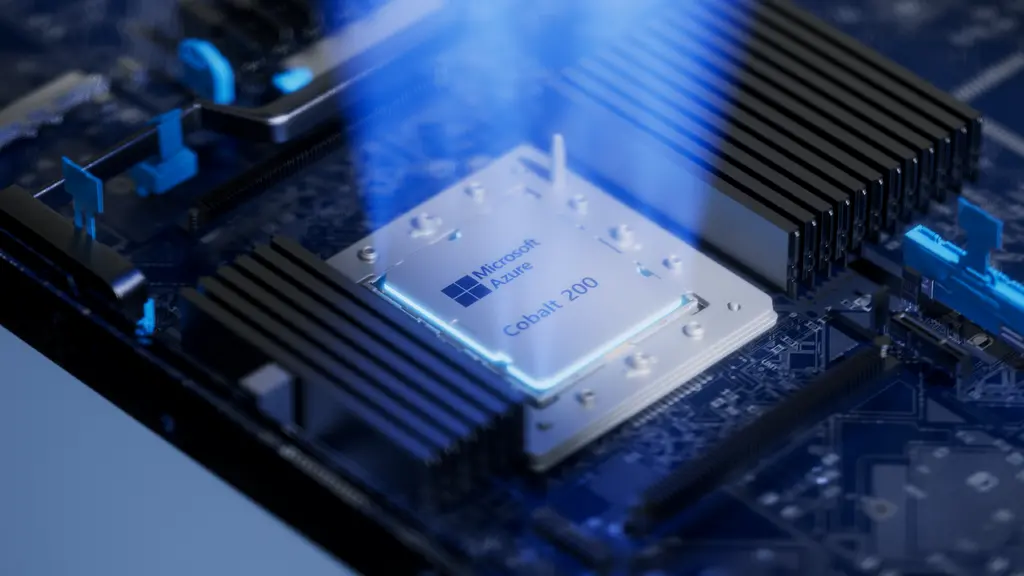
Microsoft officially launched its second-generation Arm-based Cobalt 200 processors on Tuesday. The company made these virtual machines generally available to all customers. This announcement took place during the Ignite conference in San Francisco. The new hardware targets specific demands of modern artificial intelligence systems. It focuses heavily on the infrastructure required for autonomous software agents.
Latest news
 Smart TVs frequently lose their Wi-Fi connection, leaving viewers staring at a spinning loading icon
 Why Ignoring Car Software Updates Is Risky
 Apple's foldable iPhone Duo introduces dual-display multitasking capabilities
 FCC Weighs Reciprocal Limits on Foreign Satellite Firms
The new virtual machines are now accessible across fourteen different Azure regions. This broad availability allows developers to deploy workloads globally with consistent performance. The core focus of the Cobalt 200 is not raw compute speed alone. Instead, it optimizes for the specific tasks that AI agents perform. These tasks include running sandboxes, executing code, and utilizing various development tools.
AI agents require a distinct type of computing power compared to traditional applications. They frequently spawn isolated environments to test code or run scripts safely. This process creates a high volume of short-lived, parallel tasks. Standard x86 architectures often struggle with the overhead of managing these numerous small processes. The Cobalt 200 addresses this inefficiency directly.
The Arm architecture offers a significant advantage in this specific context. It provides a higher core density relative to power consumption. This allows the chips to handle thousands of concurrent agent actions efficiently. Microsoft designed the Cobalt 200 to reduce the latency associated with context switching. When an agent needs to run a tool, the CPU can allocate resources instantly. This minimizes the wait time between an agent's decision and the execution of that decision.
Why Arm Architecture Suits Autonomous Agents
The processor improvements target the gluecode that holds AI applications together. These are the background processes that manage data flow and tool integration. By streamlining these operations, the hardware reduces the overall footprint of AI deployments. Developers can now run more complex agent loops without scaling up expensive server instances. The focus on sandboxing ensures that agent actions remain contained and secure.
The shift toward Arm-based data centers has accelerated due to AI needs. Traditional server chips were optimized for sequential, heavy-duty calculations. AI agents, however, rely on parallelism and rapid state changes. The Cobalt 200 leverages the energy efficiency of Arm cores to sustain high throughput. This is critical for applications that run continuously in the background.
Microsoft emphasizes that the Cobalt 200 is not a replacement for GPU-heavy training tasks. It complements the GPU ecosystem by handling the CPU-bound portions of the AI stack. This division of labor allows for a more balanced and cost-effective infrastructure. Companies can deploy agents that react in real-time to user inputs. The reduced power consumption per core also lowers the total cost of ownership for large-scale deployments.
Frequently Asked Questions
The general availability of these VMs signals a maturation of the Arm ecosystem in cloud computing. It moves beyond simple web serving into complex, stateful application logic. This development gives enterprises a new option for building scalable AI backends. They no longer need to rely solely on x86 hardware for their agent infrastructure.
Where can I access the Cobalt 200 virtual machines? The new instances are available in fourteen Azure regions. This global distribution ensures low latency for users worldwide.
What specific tasks does the Cobalt 200 optimize for? It is tailored for AI agent workloads, specifically code execution and sandboxing. These are the core operations that define agent behavior.
Does this replace GPU-based AI hardware? No, it complements GPUs by handling CPU-intensive tasks. It manages the orchestration and tool execution surrounding model inference.
Comments
Leave a comment