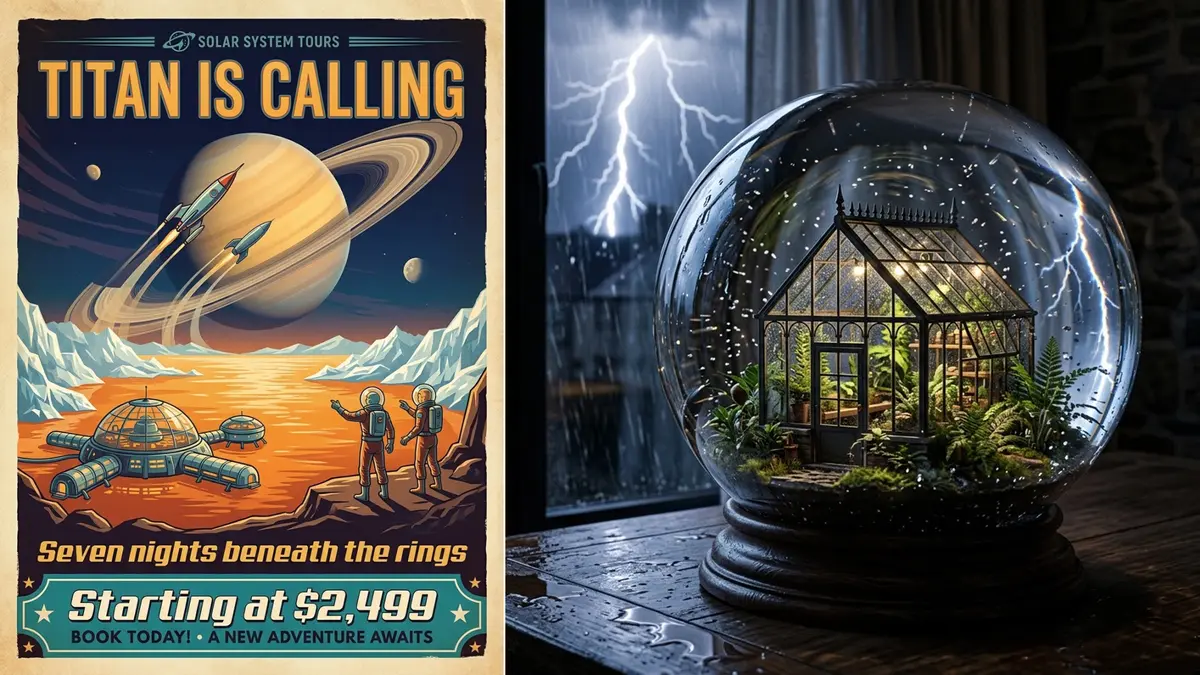
Benchmarking Generative Visual Precision
Google recently released its Nano Banana 2.1 image generator, sparking a direct comparison with the industry-leading ChatGPT. Testing both platforms side-by-side reveals a surprisingly tight competition. The evaluation, conducted this October, highlights how these advanced models handle complex prompts, visual composition, and the inevitable errors common in current generative artificial intelligence.
Latest news
 Major AI firms recorded peak lobbying expenses last summer
 Apple Magic Keyboards for iPad Drop to Half Price at Woot
 Microsoft Provides Fix for Broken Exchange Online Apps
 Security Breach at AI Aggregator Exposes 18 Million Files and Private Chats
The testing process involved feeding identical, detailed prompts into both systems to observe how they interpret creative instructions. Both platforms demonstrated significant improvements in rendering textures and lighting. While each model possesses a distinct aesthetic style, the underlying logic used to translate text into visual output appears increasingly similar across the board.
The performance gap between the two systems has narrowed significantly compared to previous iterations. Nano Banana 2.1 excels at interpreting abstract concepts, often producing images that align closely with user intent. Meanwhile, ChatGPT maintains a slight edge in handling intricate details and maintaining thematic consistency throughout a series of generated frames.
Both models occasionally struggle with the same classic AI pitfalls. Issues such as distorted anatomy or inconsistent background elements remain present in both systems. These shared shortcomings suggest that despite different underlying architectures, both platforms are hitting similar technical ceilings regarding spatial ## Can Nano Banana 2.1 Actually Outperform Its Rival?
Frequently Asked Questions
Whether one model is objectively better remains a matter of specific use cases rather than raw power. Users prioritizing artistic flair might prefer the output from Google’s latest update. Conversely, those requiring high-fidelity technical precision often find ChatGPT’s approach more reliable for professional workflows. The choice ultimately depends on the specific visual requirements of the project.
The rapid evolution of these tools indicates that the gap will continue to shrink as developers refine their training data. As these models become more sophisticated, the focus will likely shift from basic image generation to advanced editing and style control. For now, users have two highly capable options that are nearly indistinguishable in many practical scenarios.
How do these models handle complex requests? Both systems show high proficiency in interpreting prompts, though they occasionally fail on fine physical details like hands or text.
Is one model clearly superior for professional work? Not necessarily, as both platforms offer comparable quality. The preference usually depends on whether the user prioritizes specific aesthetic styles or functional consistency.
Comments
Leave a comment