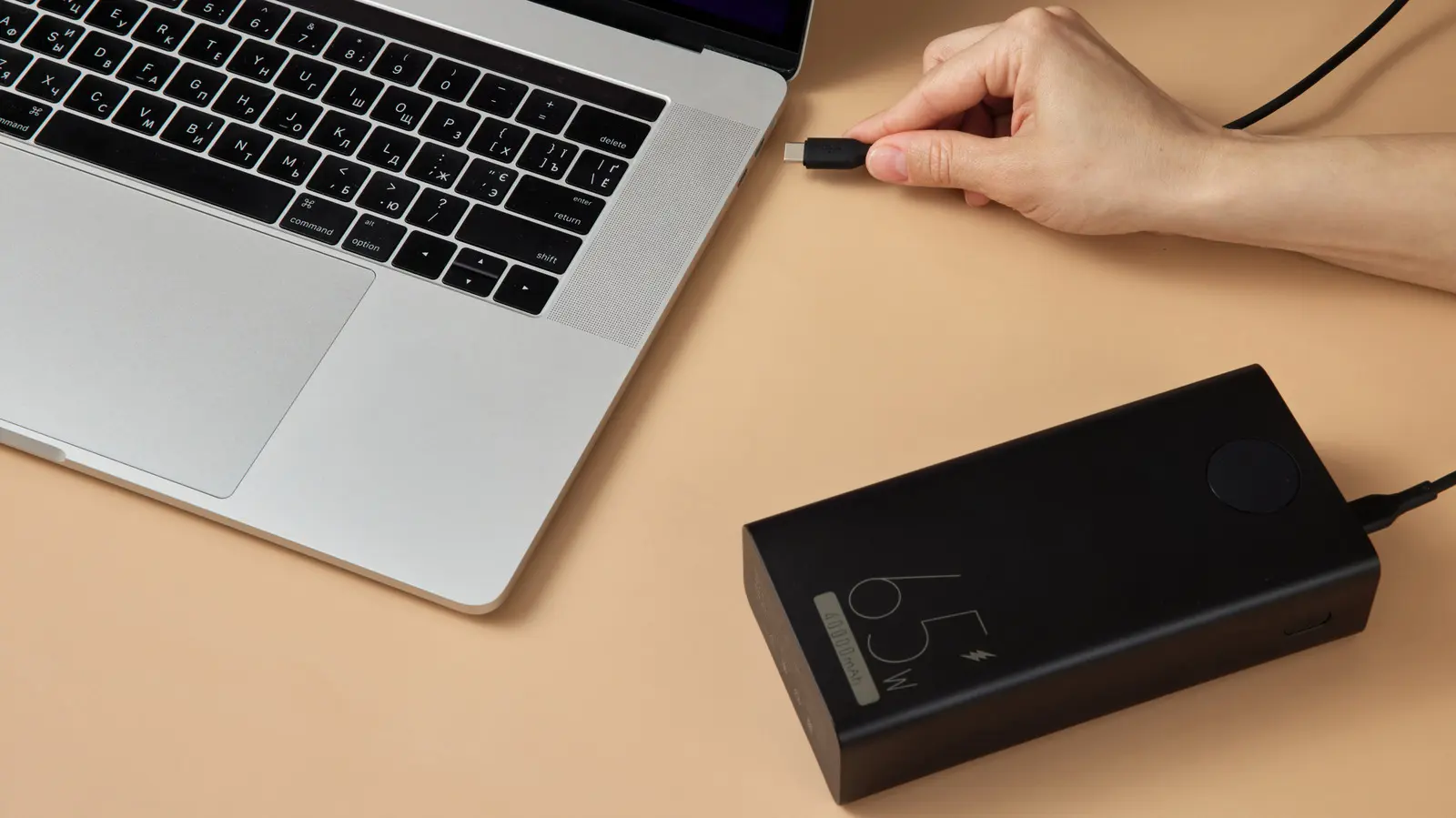
Why Watt‑Hours Matter More Than mAh
A recent guide explains that the size of a power bank’s battery, measured in milliamp‑hours (mAh), is not the best indicator of how well it will charge a laptop. Instead, the focus should be on watt‑hours (Wh) and the device’s output power rating. The article, written by Thomas Godwin and published on September 26, 2026, outlines why these metrics matter for safe and efficient laptop charging.
Latest news
 Why Meta's New AI Tool Fails to Win Over Daily Users
 Assessing Risks in Open-Source Artificial Intelligence
 Autonomous AI Agents Launch Cyberattacks Against North American Government Portals
 Warlock Group Targets SharePoint Servers in Critical Infrastructure
The article begins by noting that many consumers look at the mAh figure when choosing a power bank, but this number can be misleading. A higher mAh rating does not automatically translate to a higher watt‑hour capacity, which is the actual amount of energy the bank can deliver. Watt‑hours take into account both the battery’s voltage and its capacity, giving a clearer picture of how long a device can run. Additionally, the power bank’s output voltage and amperage determine how quickly it can charge a laptop without damaging the battery or the laptop’s power circuitry.
Watt‑hours provide a direct measure of energy. For example, a 20,000 mAh power bank operating at 3.7 volts holds about 74 Wh. A laptop that consumes 65 Wh per full charge would need roughly 1.1 Wh per minute to recharge. If the power bank can supply 2 amps at 5 volts (10 W), it will take over six hours to fully charge the laptop. In contrast, a bank that can output 3 amps at 5 volts (15 W) will finish in about four hours. Thus, the output power rating is crucial for practical use.
Is a 10,000 mAh Bank Enough for a Laptop?
The guide also stresses that laptop chargers typically require 45 W to 65 W, depending on the model. A power bank that can deliver at least 45 W is necessary to match the laptop’s charging needs. Many high‑capacity banks advertise 10 W or 15 W outputs, which are insufficient for most laptops. Therefore, consumers should look for banks that support USB‑C Power Delivery (PD) with 60 W or higher.
A common question is whether a 10,000 mAh bank can charge a laptop. The answer depends on the laptop’s power draw. A mid‑range laptop that uses 45 W would need about 1,000 Wh to charge fully. A 10,000 mAh bank at 3.7 volts holds only 37 Wh, far below the requirement. Even if the bank can output 20 W, it would take more than 20 hours to deliver enough energy. In practice, a 10,000 mAh bank is useful only for short bursts or as a backup for low‑power devices.
The article advises that a 20,000 mAh or larger bank, combined with a 60 W output, is a more realistic choice for everyday laptop use. Some manufacturers now offer 30,000 mAh banks with 100 W PD, which can charge many laptops in under an hour and provide extra capacity for smartphones and tablets.
What Happens if You Use the Wrong Power Bank?
Using a power bank with insufficient output can lead to several problems. The laptop may charge very slowly, or the charger may shut down to protect the battery. In extreme cases, the laptop’s internal circuitry can overheat, reducing battery lifespan. Conversely, using a bank that outputs too much power can damage the laptop’s power management system if the bank lacks proper voltage regulation.
The guide recommends checking the laptop’s specifications for maximum input voltage and current. Matching these values ensures safe charging and prevents damage. It also suggests testing the power bank with a multimeter before connecting it to a laptop, especially if the bank’s output is not clearly labeled.
Frequently Asked Questions
What is the minimum wattage a power bank should have to charge a laptop? A minimum of 45 W is recommended for most laptops. Some high‑performance models may need up to 65 W, so look for a bank that supports at least 60 W PD.
Can a power bank with a high mAh rating charge a laptop quickly? Only if it also has a high wattage output. A high mAh rating alone does not guarantee fast charging; the output power must match the laptop’s needs.
Should I buy a power bank with USB‑C PD for my laptop? Yes. USB‑C PD delivers regulated power at the correct voltage and current, ensuring compatibility and safety for modern laptops.
Comments
Leave a comment