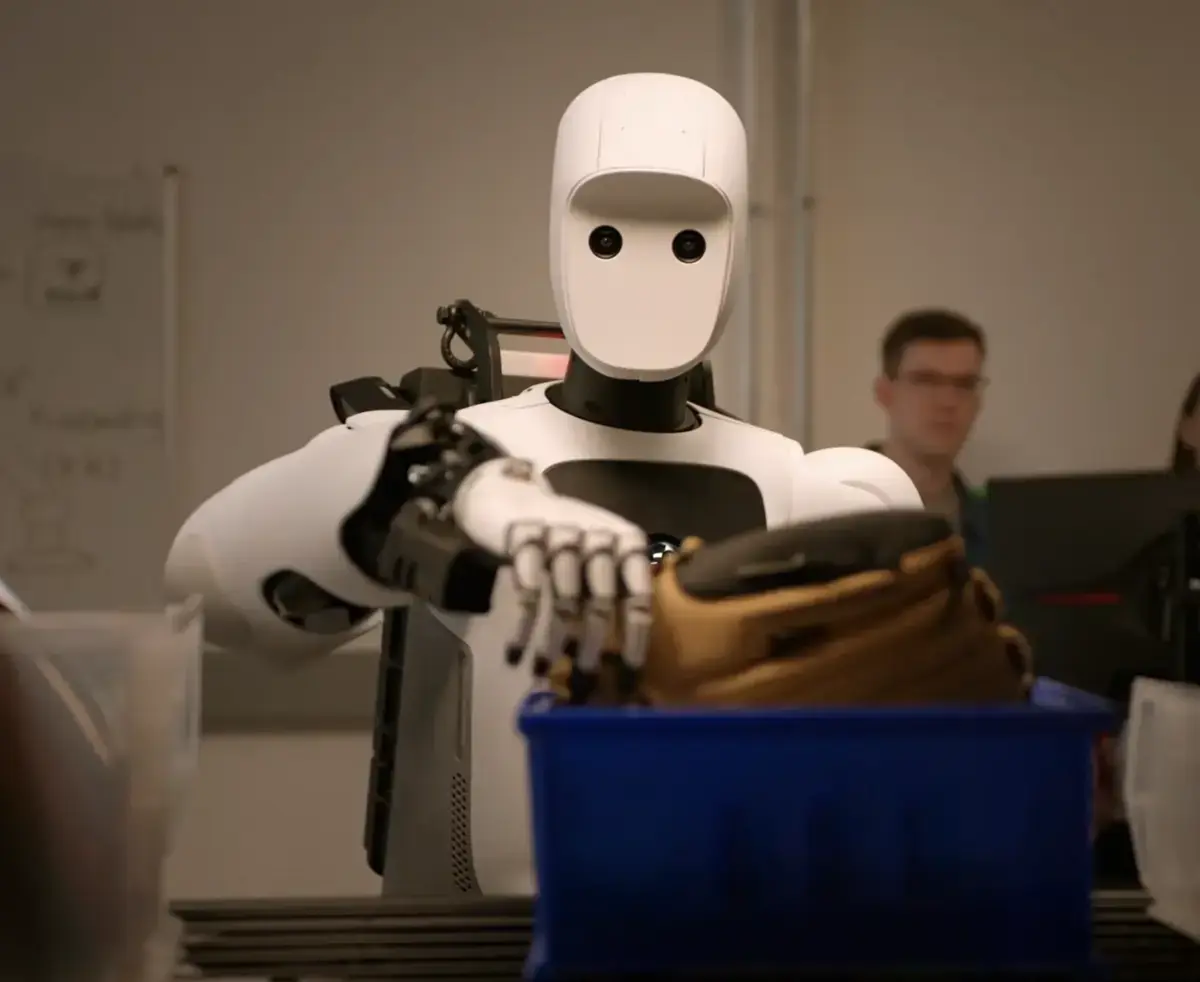
Unified neural control enables full‑body coordination
DeepMind announced its newest Gemini Robotics AI on Monday, stating the system can control an entire humanoid robot from head to toe. The breakthrough was demonstrated in a London lab, where the model performed coordinated movements in real time. Researchers say the model represents a step toward fully autonomous physical agents.
Latest news
 Minisforum Unveils High‑End Ryzen AI Max+ PRO 495 Workstation
 NASA Eyes Revival of SR‑71 Blackbird
 My Home Wi‑Fi Was Crowded by 14 Neighbors—A Free App Helped Me Find a Clear Channel
 YouTube is tightening rules for low-effort Shorts
The Gemini Robotics model builds on previous language‑and‑vision models, adding a motor‑control layer that translates high‑level commands into joint‑level actions. Engineers trained the system on millions of simulated motions before testing it on a physical robot. By unifying perception, planning, and actuation, the AI can adjust balance, grip, and gait simultaneously. DeepMind researchers claim the approach reduces latency compared with modular pipelines.
In the demo, the robot lifted a cup, walked across a room, and placed the cup on a table without human intervention. The AI generated smooth trajectories for each limb, keeping the torso stable while the arm reached. Observers noted the robot’s ability to recover from unexpected pushes, suggesting robust feedback loops. The team attributes this resilience to a single neural network that learns both high‑level intent and low‑level motor dynamics.
Will autonomous robots replace human workers in complex tasks?
DeepMind cautions that the technology is not yet ready for industrial deployment. While the model can handle simple object manipulation and navigation, it still struggles with unpredictable environments and fine‑grained tactile feedback. The researchers emphasize that human oversight remains essential, especially in safety‑critical settings. They envision the AI as an assistive tool, augmenting human workers rather than supplanting them outright.
The Gemini Robotics breakthrough could accelerate research in assistive robotics, disaster response, and space exploration. If the model scales, robots may soon perform tasks that require whole‑body dexterity, such as caring for patients or repairing infrastructure. However, ethical and regulatory considerations will shape how quickly these capabilities enter public use. Ongoing trials will test the AI on more diverse robots and real‑world scenarios, guiding future policy and safety standards.
Frequently Asked Questions
What distinguishes Gemini Robotics from earlier robot‑control AI? Gemini integrates perception, planning, and motor control in a single neural network, allowing simultaneous coordination of all body parts rather than separate modules.
Is the system currently safe for public deployment? No. DeepMind’s tests are confined to controlled lab environments, and the model still requires human supervision for unpredictable situations.
When might we see commercial applications of this technology? Commercial rollout will depend on further safety validation, regulatory approval, and integration with hardware platforms, a process that could take several years.
Comments
Leave a comment