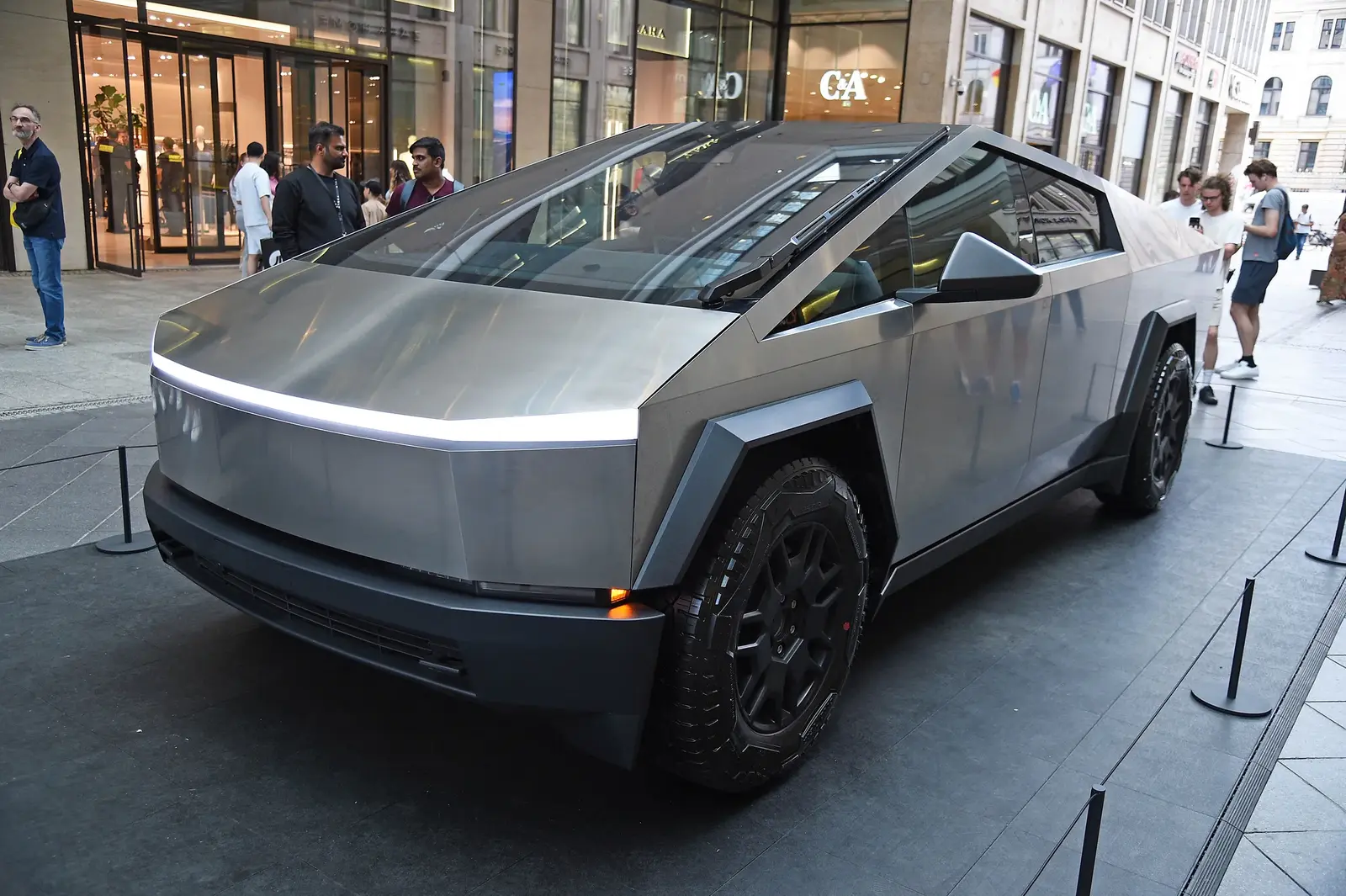
Market Evolution and Vehicle Size Trends
The Cybertruck's end highlights a decline in very large electric vehicles. This shift benefits pedestrian and motorcyclist safety. However, it poses supply chain challenges amid growing global EV demand. The Cybertruck uses a 123 kWh battery, weighing about 1,600 pounds, which is a quarter of its total mass.
Latest news
 Smart TVs frequently lose their Wi-Fi connection, leaving viewers staring at a spinning loading icon
 Why Ignoring Car Software Updates Is Risky
 Apple's foldable iPhone Duo introduces dual-display multitasking capabilities
 FCC Weighs Reciprocal Limits on Foreign Satellite Firms
Competitor Production Adjustments
Ford's F-150 Lightning uses a similar battery capacity. Ford also paused a three-row EV in 2024. Ford's large EV batteries ranged from 98 kWh to 131 kWh. These recent production stops suggest a major industry transition.
Ford's Smaller EV Strategy
Ford plans the Fathom next year. This electric pickup will cost under $30,000. It will be similar in size to the traditional Maverick. Battery capacities are likely much smaller than the Lightning or Cybertruck. Ford also plans an optimized, extended-range Lightning version.
Emerging Smaller EV Options
Slate introduced a tiny electric pickup convertible to an SUV. Its base model is under $25,000. It saw massive pre-orders, though Cybertruck's pre-orders did not sustain sales. Rivian R2 launched this year. It is smaller and less expensive than the R1S, with an 88 kWh battery and about 1,200 pounds. Rivian also mentioned a future R3 SUV.
Market Reality vs. Large EV Success
Not all large EVs are doomed. The Kia EV9 ranks among the top 10 best-selling EVs in the US, as does the R1S. However, the other nine top sellers are mid-sized crossovers, sedans, or SUVs with moderate batteries. New announcements favor smaller sizes or extended-range options.
Cost Efficiency Through Downsizing
Focusing on smaller vehicles cuts EV costs effectively. Less mass means a smaller, cheaper battery. Since the battery is the most expensive EV component, this lowers prices. This helps meet consumer needs amid high inflation. The average new transaction price is now $55,800, according to Cox Automotive.
Daily Use and Market Influences
Most Cybertruck owners use them for daily tasks like shopping and school runs. An Ioniq 5 owner uses half the battery capacity for standard tasks. US sales dropped after the Trump administration cut EV subsidies last year. Iran conflicts and rising fuel prices revived interest, though sales lag global averages. Used hybrid sales are also up due to economic strain.
Future Policy and Market Positioning
Democratic control of Congress makes EV subsidy return unlikely under Trump. However, a 2028 Democratic mandate could boost EV buyer support. Smaller model producers are best positioned for this demand. They minimize delivery delays and risk. Musk noted the Cybertruck stop frees resources for mass-producing Cybercab vehicles.
Comments
Leave a comment